Get Full Government Meeting Transcripts, Videos, & Alerts Forever!
Get email alerts on the Housing topic
No spam. Unsubscribe anytime.
Bakersfield council adopts 2023—2031 housing element, cites need for implementation tracking
Summary
Bakersfield City Council on Sept. 24 adopted the city's 2023—2031 housing element and approved a related general plan amendment and CEQA notice of exemption to seek state certification.
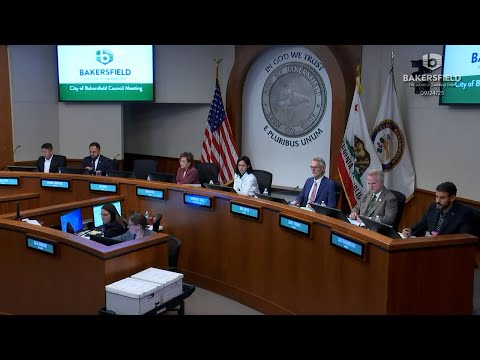
Bakersfield City Council on Sept. 24 adopted the city's 2023—2031 housing element and approved a general plan amendment and a CEQA notice of exemption to seek full certification from the California Department of Housing and Community Development (HCD). The motion passed with Councilmember Weir absent.
The housing element is a required chapter of the city's general plan that shows how Bakersfield intends to accommodate its assigned regional housing need for the sixth planning cycle (2023—2031). Cassandra Gale of Rincon Consultants, the project's consultant, told the council the plan inventories developable sites across the city and includes goals, policies and more than 100 implementation actions organized by theme.
Adoption is aimed at securing HCD certification so Bakersfield retains access to state housing funds and avoids enforcement actions that can follow a noncompliant housing element. The plan inventories capacity for the regional allocation of 37,461 units and distributes potential capacity across city subareas, including a large share in the northeast planning area.
Community partners and stakeholders who participated in the multi-year process attended the hearing. Emma Dela Rosa, landings and transportation policy manager for the Leadership Council for Justice and Accountability, said staff had integrated many community suggestions but urged stronger implementation accountability. "If there isn't any accountability of the implementation beyond just exploring feasibility, then we might not see the results that we are hoping to see from this plan," Dela Rosa said, asking the council to add an action to annually monitor and report demographic patterns to assess progress on affirmatively furthering fair housing.
City staff referenced existing program language that broadly addresses monitoring and recommended returning to council with a report on what demographic data are available from federal and partner programs and how staff could track implementation. Councilmember Gonzales asked staff to return with a recommendation for a reporting addendum; staff cautioned some HUD data elements are optional for applicants and therefore not always available.
The housing plan includes goals and programs addressing preservation and rehabilitation, incentives for affordable production, special-needs housing, homelessness prevention, and exploration of tools such as community land trusts and 15-minute neighborhoods. Staff and the consultant emphasized the element does not itself authorize construction; it is a policy roadmap intended to enable private and public actions that can produce housing.
Councilmembers commended staff and community partners for the multi-year outreach process; Vice Mayor moved adoption and the clerk recorded the motion as approved with Councilmember Weir absent. The council referred staff to return with options for implementing and monitoring demographic reporting as part of the element's follow-up work.
Clarifying details: the city's assigned regional housing need for the sixth cycle is 37,461 units; the update covers 2023—2031; staff reported five rounds of public review and four submittals to the state; the adoption was recorded as approved with Councilmember Weir absent.
Ending: Staff will return with more detail on data availability and options for an annual monitoring report; the element now moves to the state certification process.