Get Full Government Meeting Transcripts, Videos, & Alerts Forever!
Get email alerts on the Collective Bargaining topic
No spam. Unsubscribe anytime.
Fall River City subcommittee enters closed session to discuss collective bargaining
Summary
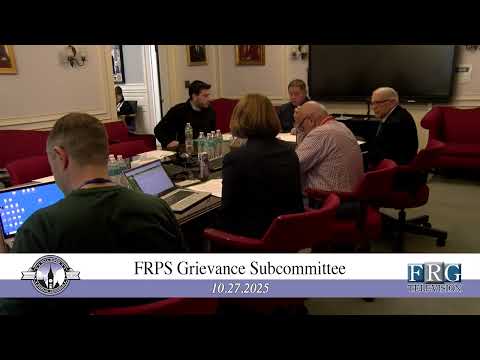
The Fall River City Grama Subcommittee voted Oct. 27, 2025, to enter an executive session to discuss strategy related to collective bargaining and grievances involving maintenance, custodial and safety/security employees represented by the American Federation of State, County and Municipal Employees (AFSCME).
The Fall River City Grama Subcommittee voted Oct. 27, 2025, to enter an executive session to discuss strategy related to collective bargaining and grievances involving maintenance, custodial and safety/security employees represented by the American Federation of State, County and Municipal Employees (AFSCME). Chair (identified only as "K.") made the motion, which was seconded; a roll call was taken before the meeting moved into closed session.
The committee opened the meeting with a roll call, a recitation of the Pledge of Allegiance and an open-meetings notice advising that recordings or transmissions of the public meeting were permitted. The chair said there would be no citizen input time.
An attorney identified in the transcript as "Kenny Assad" told the committee that the meeting would move to a closed session under "chapter 38, section 21 a 3" (as cited in the meeting) to discuss bargaining strategy. The attorney said the discussion would cover collective bargaining, including all grievances, and applied specifically to maintenance and custodial employees of the school system and to safety/security staff represented by AFSCME. The attorney stated that conducting that discussion in open session could have "a detrimental impact on the bargaining and or litigating position of the committee," language used in the meeting record.
The committee conducted roll calls after the motions to enter and to reenter executive session; members indicated their presence or votes when called. The transcript records multiple confirmations of presence and affirmative responses during those roll calls. The meeting reconvened briefly in open session and then adjourned; no public decisions about contracts, settlements or policy changes were recorded in open session.
Details cited in the meeting record about the union and statute contained garbled council and local numbers in the transcript. The meeting referenced the American Federation of State, County and Municipal Employees by name; the precise council/local identifiers as spoken in the recording were not clear and are recorded in this report only as stated on the record.
The committee did not take any open-session votes on bargaining terms or settlements during the public portion of the meeting, and no citizen comments were taken. Next steps, including whether staff will report back in a public meeting, were not specified in the transcript.