
South Country Health Alliance reports legal win, rising drug costs and program pilots
Get AI-powered insights, summaries, and transcripts
Sign Up Free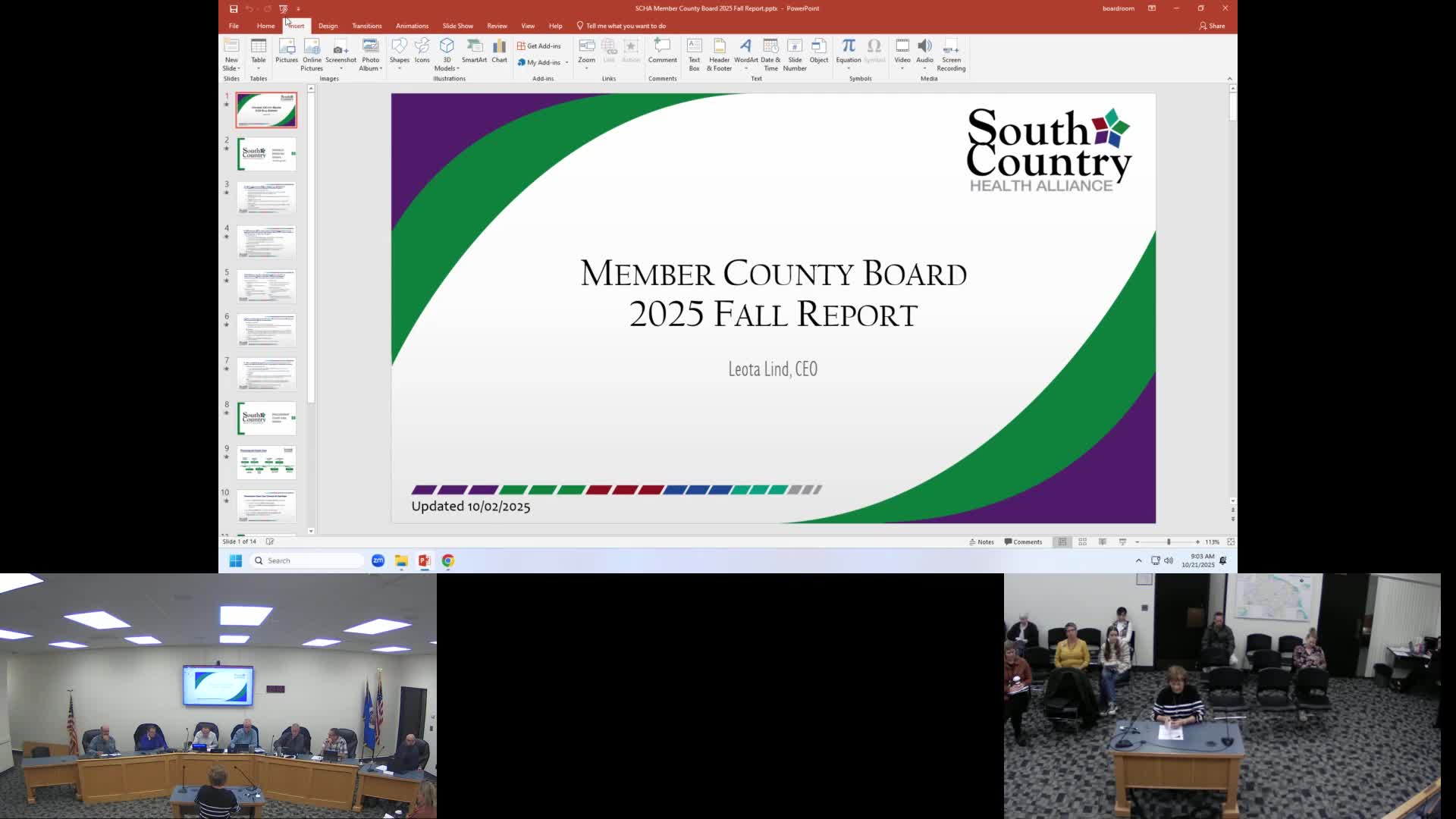
Summary
Leota, a representative of South Country Health Alliance, told the Wabasha County Board that the alliance’s multi‑year strategic plan is focused on rebuilding relations with the Minnesota Department of Human Services and strengthening county‑based purchasing.
Leota, a representative of South Country Health Alliance, told the Wabasha County Board that the alliance’s multi‑year strategic plan is focused on rebuilding relations with the Minnesota Department of Human Services (DHS), strengthening county‑based purchasing, increasing public awareness, and expanding member programs such as nutrition and mental‑health telehealth.
Leota said the alliance pushed for county‑administered rural medical assistance in 2024 and noted implementing legislation scheduled for January 2027. She said that outreach and marketing efforts — including radio, billboards and social media — increased public and legislative awareness of the alliance’s role.
On programs, the alliance piloted a 12‑month “Right Bites for Life” meal‑delivery and coaching program for people who are prediabetic or diabetic; the pilot ends at year‑end and the alliance will review health‑outcome data before determining future adoption. The alliance also offered Doctor On Demand for behavioral health and urgent care and reported gradual increases in utilization.
Leota summarized ongoing litigation tied to county‑based purchasing. She said the case was filed in February 2022, the district court initially ruled against the county plans, the appellate court ruled largely in favor of the plans, and the Minnesota Supreme Court accepted then later dismissed review — a dismissal that returns the favorable appellate ruling to district court for enforcement. She said a hearing on enforcement is expected in December.
On finances, Leota said August financials showed a net loss of about $3.7 million, worse than budgeted, primarily because claims and higher‑acuity member care increased; pharmacy costs were a major driver due to heavy utilization of GLP‑1 drugs for weight loss. She said total revenue is up (more members than anticipated) but the loss ratio stood at 98.8%, about four percentage points higher than the same period last year. The alliance reported a capital and surplus position of about $36.8 million and said 2026 Medicaid and Medicare contracts reflected historically large rate increases with an up‑and‑down risk corridor shared with the state.
Board members did not take formal action on the presentation. The alliance asked for questions and expressed appreciation for county staff collaboration.
The presentation included legislative and administrative context and did not propose county action items; the board was informed that a tentative deputies’ agreement is pending separate bargaining‑unit ratification.