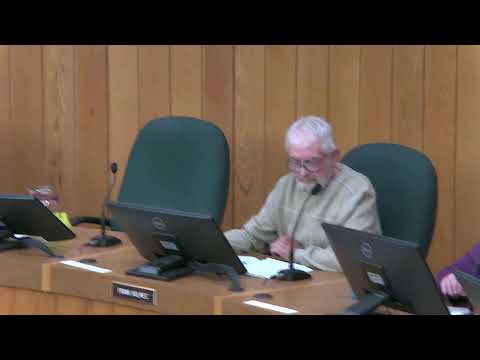
Eaton County planning commission urges county not to repeal land development code after public hearing
Loading...
Summary
The Eaton County Planning Commission voted Oct. 28 to recommend to the Eaton County Board of Commissioners that the Eaton County Land Development Code not be repealed, following a public hearing in which township supervisors, conservation officials and residents urged the county to retain the existing countywide zoning framework or, at minimum, delay any repeal to allow townships time to prepare.
The Eaton County Planning Commission voted Oct. 28 to recommend to the Eaton County Board of Commissioners that the Eaton County Land Development Code not be repealed, following a public hearing in which township supervisors, conservation officials and residents urged the county to retain the existing countywide zoning framework or, at minimum, delay any repeal to allow townships time to prepare.
Commission Chairman Jim Ma opened the hearing and said the county was considering repeal because some townships are pursuing independent zoning and the county must create a new approach. “We have to repeal this ordinance,” Ma said, but he also suggested allowing time for townships to prepare and proposed a July 1 target as part of the county’s planning timeline.
Why it matters: Public commenters said county zoning provides a single, professional point of contact that enforces driveway and road-safety requirements, sets haul-route and financial-security conditions for gravel pits, protects wetlands and farmland, and reduces conflicts among neighbors. Many township supervisors urged the commission to preserve the county code or to provide at least six months to one year of continued county services so townships can recruit and train board members and adopt ordinances if required.
“Planning is not a restriction on liberty. It is an act of responsible stewardship that protects property rights, property values, and ensures continuity within our community and neighborhoods,” said Michelle Stahl, a former Eaton County planning commissioner who spoke during the hearing.
Road and public-safety concerns: The Eaton County Road Commission’s written submission from Matthew Hannes, engineer-manager, warned that eliminating county zoning would sever an established coordination process. The letter describes county requirements that applicants obtain preliminary driveway approval to ensure safe sight distance and confirms the county’s ability to require haul-route permits and financial security for gravel-pit operations—authorities the road commission cannot enforce on its own.
Environmental and conservation arguments: Mark Swetman of the Eaton Conservation District and other speakers said the county land development code helps protect water quality, habitats and prime farmland and provides predictable standards for developers and residents. Several conservation and zoning-board officials warned that repealing the code could create a patchwork of inconsistent local rules that would weaken long-term resource protections.
Requests from townships: Multiple township supervisors — including Justin Vetter (Chester Township), Scott Wilson (Eaton Rapids Township), Bob Starkweather (Walton Township) and others — urged commissioners to delay any repeal for at least six months to a year. Sunfield Township’s letter, signed by township board members, asked the board to extend county planning and zoning services at no additional cost for six months to one year and said inconsistent communications from county staff have left townships unable to make an informed decision.
Other public concerns raised during the hearing included: frustration over reduced county services (police presence, 4-H support, animal control), fears about large-scale solar and wind developments on farmland, enforcement gaps involving wetland-designated properties, and the burden on townships to recruit qualified planning and appeals-board members.
Commission action and next steps: After public comment the planning commission debated whether the ordinance should be repealed immediately or whether a staged transition would be preferable. Commissioner [name not specified in the public motion text] moved that the planning commission recommend the county not repeal the Eaton County Land Development Code; the motion carried on a roll-call vote. The recorded vote was: Scott Hanson — yes; Ben Terrell — yes; Lisa Lewitski — yes; Ed Kemp — yes; Tim Catron — yes; Zachary Dillinger — yes; Frank Holmes — yes; Brian (Ryan) Ross — yes. The planning commission’s recommendation will be forwarded to the Public Works & Human Services committee and then to the full Eaton County Board of Commissioners at its November meeting.
What the action does and does not do: The planning commission’s vote was a recommendation to the county board; it does not itself rescind or preserve the county ordinance. Several commissioners noted that the final decision will rest with the county board and will be influenced by county budget constraints and by whether townships can fund or otherwise provide planning and zoning services.
Context and public response: Speakers at the hearing repeatedly asked for clearer and timelier communication from county staff about the status and timing of any repeal and about what support the county would provide to townships during a transition. Many residents stressed that losing a countywide code would likely produce uneven local regulations and impose new costs and administrative burdens on townships that currently lack trained planning officials.
The planning commission closed the public hearing and formally forwarded its recommendation opposing repeal to the county board’s committee for further consideration at the November county meeting.