
Council briefed on Brownfield land‑bank proposal; ordinance must name initial board under state law
Get AI-powered insights, summaries, and transcripts
Subscribe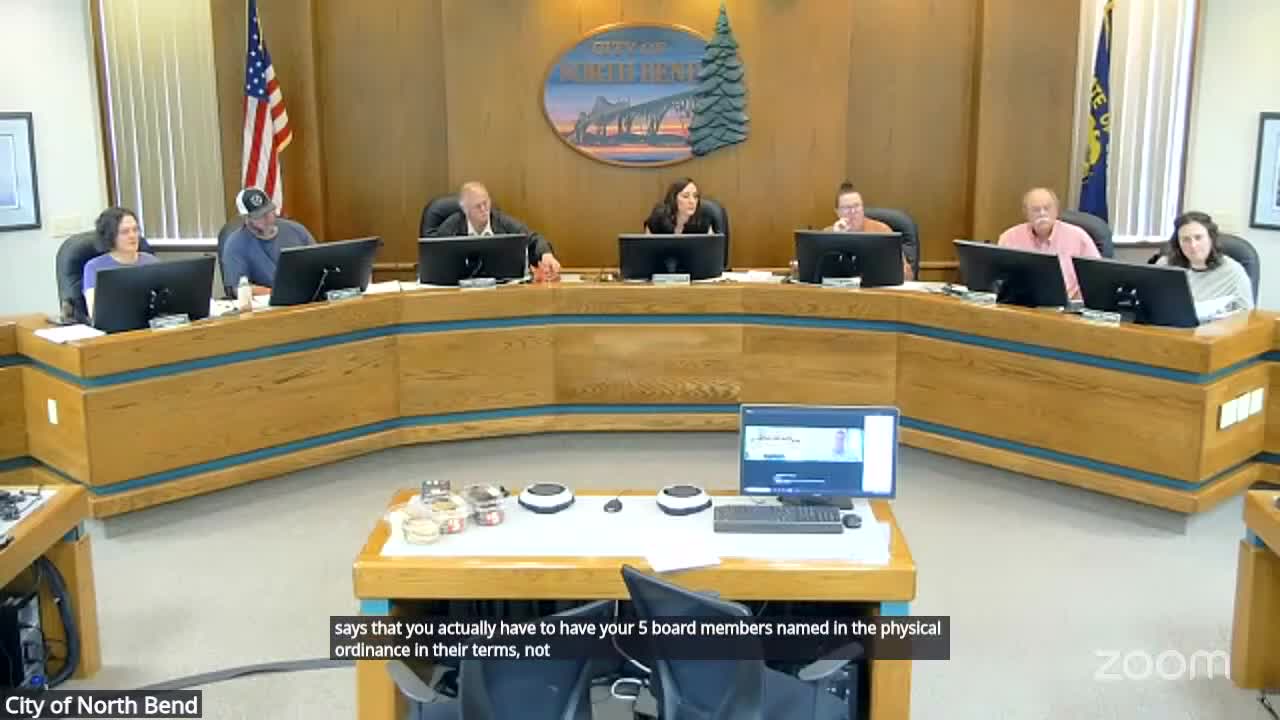
Summary
City staff updated council on efforts to enable a Brownfield‑focused land bank to acquire and remediate contaminated or distressed properties for housing. Staff said state enabling language requires initial board members and terms be listed in the ordinance; councilors asked about liability, funding, and relationship to the Urban Renewal Agency.
City staff briefed the North Bend City Council on Oct. 27 about plans to create a Brownfield‑focused land bank under state enabling legislation and solicited council input before advertising appointments and returning an enabling ordinance for formal action.
The city manager said the original plan had been to create a model land bank for contaminated properties that could be replicated statewide and to rely on federal and state Brownfield grants for assessment and cleanup. He told council that an enabling statute requires the names and terms of the initial five board members to be specified in the ordinance. "We figured, well, let's go ahead and make sure that the council is still cool where we are," the city manager said, explaining staff will solicit candidate names and include them in the ordinance to return for a vote.
Staff described the land bank as a separate public entity that could take property with stipulations and pursue federal and state Brownfield grants for assessment and remediation, noting the goal of prioritizing housing. Councilors asked how liability would be handled and whether seed funding was required. Staff replied the land bank would be an independent governing body with protections under Brownfield rules and could seek grant funds; staff said initial technical assistance is available from national land‑bank organizations and current grants could fund startup work.
Council discussion addressed the relationship between a land bank and the Urban Renewal Agency (URA), appointment authority, and the board’s meeting frequency. Staff noted the land bank could accept properties from other public entities and pursue cleanup grants to return blighted parcels to productive use. The city manager said he could serve temporarily as executive director if the council preferred, but described the entity as independent.
Staff said they will return with a modified ordinance that includes the initial board member names and terms so the council can act at a future meeting; no vote was taken at the work session.