
Court of Criminal Appeals hears challenge to eyewitness ID and disclosure in State v. Amir Spears
Get AI-powered insights, summaries, and transcripts
Sign Up Free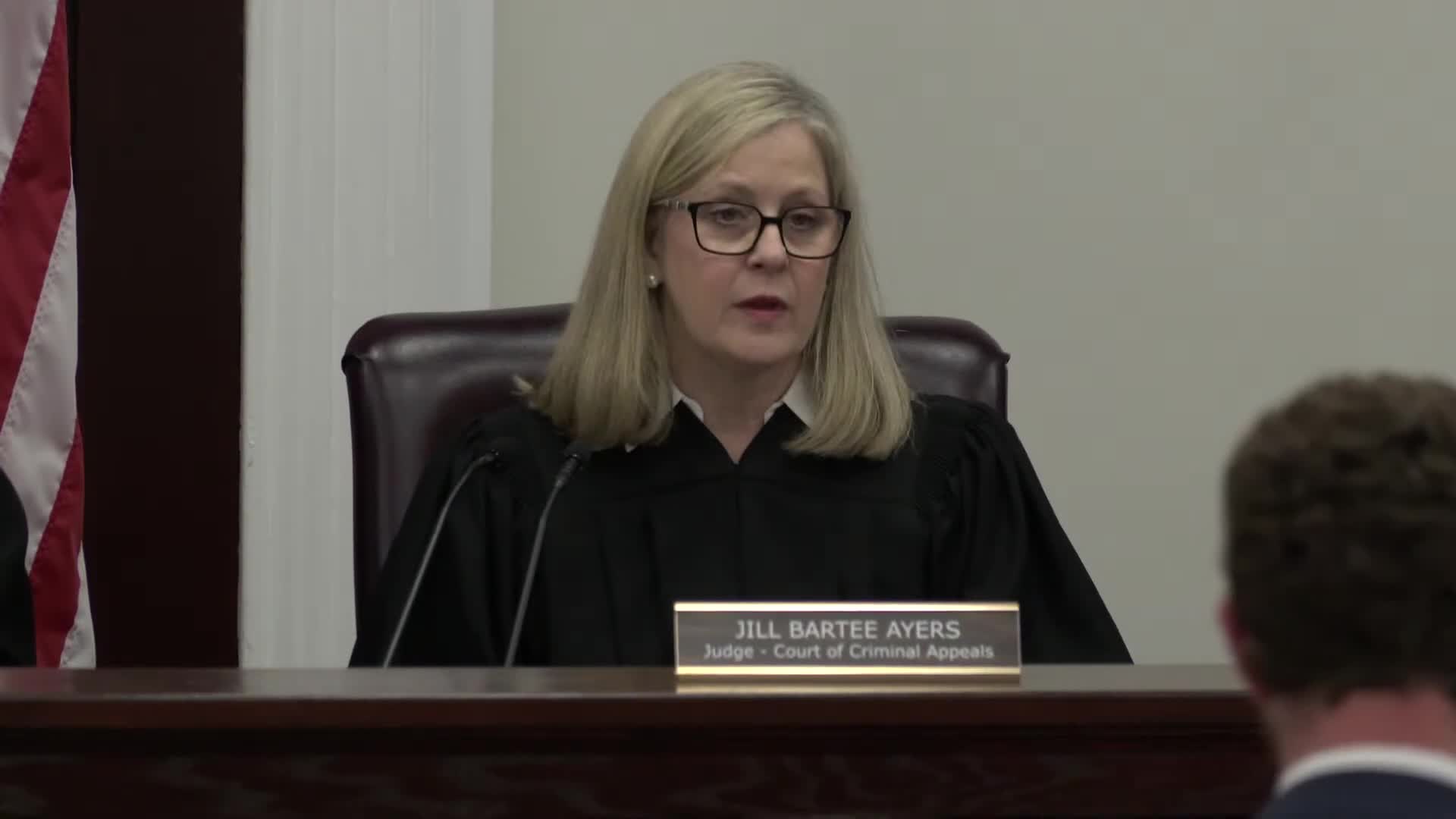
Summary
A three-judge panel of the Tennessee Court of Criminal Appeals heard oral argument in State of Tennessee v. Amir Spears, where the defendant challenges his convictions for homicide and related offences based chiefly on allegations the state failed to disclose the circumstances of a key eyewitness identification.
A three-judge panel of the Tennessee Court of Criminal Appeals heard oral argument in State of Tennessee v. Amir Spears, where the defendant challenges his convictions for homicide and related offenses on several grounds, chief among them a claim that the state failed to disclose the circumstances surrounding a crucial eyewitness identification.
Appellant Joshua Hedrick told the court that Deontre Woods initially told police he had ‘‘less than 10 seconds’’ to view the rifleman and at the hospital said, ‘‘I can't help you.’’ Hedrick said Woods later conducted social-media searches, provided the name Amir Spears to investigators and then identified Spears in a photo lineup. Hedrick argued the post‑event social‑media research and the attendant circumstances were Brady material that should have been produced to the defense before trial and that the delayed disclosure deprived trial counsel of the opportunity to call an eyewitness‑identification expert earlier.
The argument focused on whether the information was subject to Brady v. Maryland disclosure obligations, whether it was merely impeachment evidence or could have led to ‘‘fruitful defense investigation,’’ and whether a discovery request triggering the state's obligation was made. Hedrick acknowledged the record does not contain a clear discovery demand but argued the lineup materials provided to defense counsel should have carried with them the attendant circumstances describing how the identification was generated.
The state, represented by Benjamin Barker, urged the court to affirm the convictions. Barker characterized the matter as a delayed disclosure rather than a nondisclosure and said the record was too ‘‘murky’’ to show the government suppressed exculpatory evidence. He also argued the defendant could not show a reasonable probability of a different outcome because the record contained corroborating identifications from co-defendants and Woods’ trial testimony.
Counsel and the panel discussed whether the contested material was covered by Jenks or similar rules on witness statements and whether defense counsel was deficient for not seeking a continuance or mistrial when the material surfaced during the defense case. The state said trial counsel explored alternatives at trial, including calling the investigator as a defense witness, and therefore was not deficient for failing to seek a continuance.
Hedrick pointed the court to expert testimony presented at the motion‑for‑new‑trial hearing. Quoting Dr. Neuschatz, Hedrick said the expert testified that ‘‘it is not possible to separate what mister Woods remembers from the event from what he remembers from social media,’’ and argued that the jury should have been instructed about the risk that post‑event suggestion can conflate memory and later information.
The convictions at issue, as described by the state, include first‑degree felony murder, criminally negligent homicide, two counts of especially aggravated robbery and aggravated assault. The panel pressed both sides on whether Woods’ testimony and the co‑defendant testimony were circularly used to corroborate one another and whether the record, as developed, demonstrates prejudice sufficient to warrant reversal.
No decision was announced from the bench. The court concluded the docket, thanked students and staff at LMU and indicated the lawyers would remain available for any additional matters.