Get Full Government Meeting Transcripts, Videos, & Alerts Forever!
Get email alerts on the Zoning Text Amendments topic
No spam. Unsubscribe anytime.
Planning Commission reviews broad zoning text amendments to commercial and conversion rules
Summary
Staff previewed a package of zoning text amendments intended to streamline review of commercial uses and to create a clearer, predictable path for office‑to‑residential conversions.
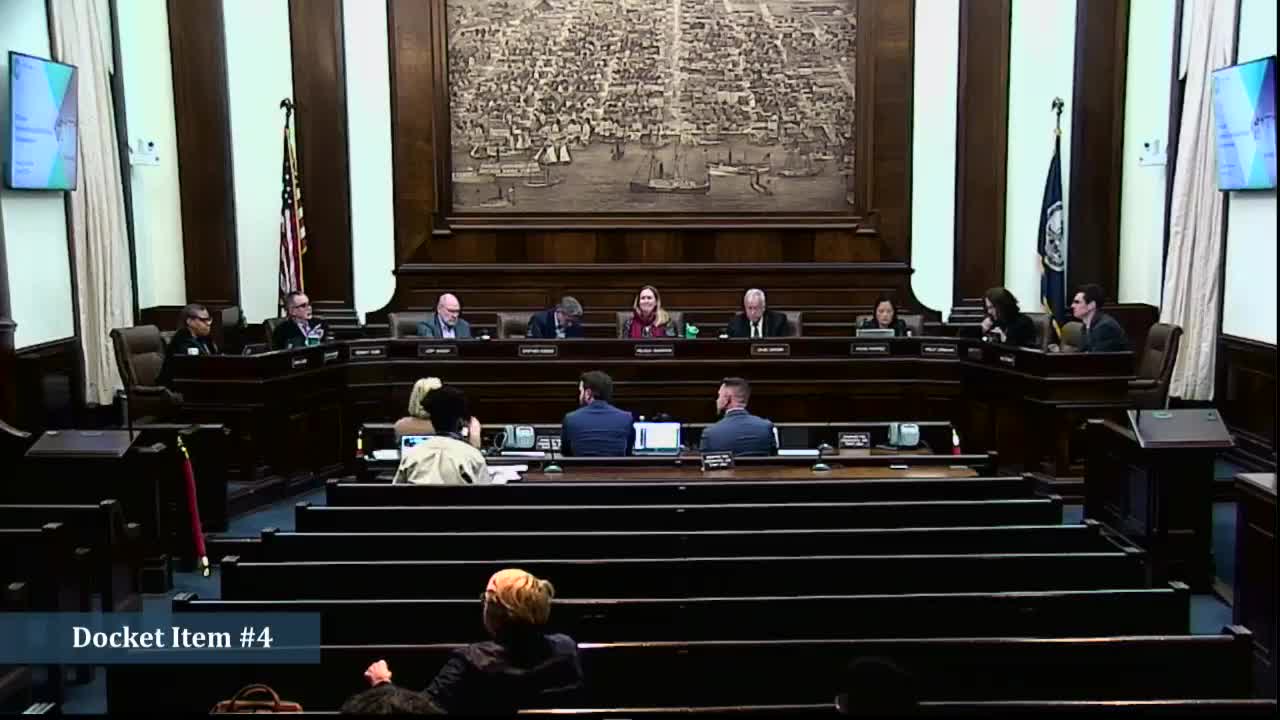
Staff from the Department of Planning and Zoning used the Oct. 9 Planning Commission public hearing to preview proposed zoning text amendments intended to streamline review of commercial uses and to create a clearer, more uniform process for office‑to‑residential conversions.
Anne Horowitz, land use division, told commissioners the city has revisited commercial use rules about every five years and is proposing to shift several administrative special use permit (SUP) categories to by‑right status or to an administrative SUP track. “We would are proposing considering that restaurants would shift from an administrative SUP to a buy right use,” Horowitz said. Staff said the change would standardize conditions now scattered across decades of SUP approvals, and enforcement would remain under the zoning ordinance and the city’s noise code.
Sam Shelby, also with Planning and Zoning, summarized staff proposals on conversions and noted a long history of ad hoc approvals for office‑to‑residential projects. “We’re an old city so there’s been a lot of change back and forth with buildings over the years throughout the city,” Shelby said, and proposed expanding a 2002 conversion pathway used on King Street citywide while offering multiple approval levels (by‑right building permits, administrative SUP, or full SUP) depending on project characteristics.
Commissioners welcomed the effort to simplify a complex rule set but pressed staff on several items. Commissioner Dubay said private academic schools may need more than a pickup/drop‑off plan to address neighborhood impacts; Dubay asked for more details on how enrollment levels would be limited and enforced. Commissioner Brown asked for a staff paper about how the Americans with Disabilities Act and Fair Housing Act apply to conversions, noting practical accessibility problems in recent converted buildings and asking how the city can ensure renovated units and common areas offer meaningful accessibility.
Other topics in staff’s package include: moving some indoor live‑entertainment uses to by‑right with standards (e.g., doors/windows closed, square‑footage limits), allowing certain school trailers on city or ACPS sites as by‑right, tightening administrative SUP procedures (proposing two‑week processing for change‑of‑ownership filings with informational notices and a limited appeal), updating antiquated use definitions, and aligning ground‑floor use rules for older high‑rise apartment buildings with modern mixed‑use zones.
Staff said the commercial package will be docketed formally in December, and commissioners asked staff to provide an accessibility white paper and more refined guidance on how the restaurant changes will be messaged to neighborhoods that hold legacy SUP conditions. The commission did not take formal action on the text amendments on Oct. 9; staff will return with draft ordinance language and a public engagement schedule in the coming months.
Ending: Commissioners requested follow‑up briefings and written materials — including an ADA/ Fair Housing guidance note and a short FAQabout the restaurant change — before the formal December hearing to help the commission and the public evaluate the proposed rules.