Get Full Government Meeting Transcripts, Videos, & Alerts Forever!
Get email alerts on the Communications Infrastructure topic
No spam. Unsubscribe anytime.
Jefferson County board denies variance for proposed T‑Mobile tower after residents object
Summary
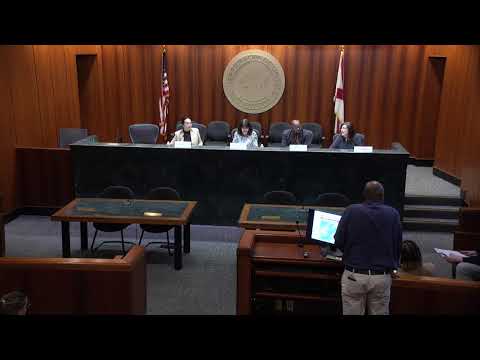
The Jefferson County Board of Zoning Adjustment on Oct. 27, 2025, denied a T‑Mobile tower variance (case A25‑0036) after residents raised concerns about notice, visual impact and property values and the board failed to obtain three affirmative votes.
The Jefferson County Board of Zoning Adjustment on Oct. 27, 2025, denied variance request case A25‑0036, which would have allowed a communications tower with reduced setback distances on property owned by Leslie John Crosby II and Christy Jo Janana Crosby. The denial followed resident opposition and a tied board vote that failed to reach the three affirmative votes required for approval.
Staff presentation said the request sought to place the proposed tower 42 feet from the front property line instead of the ordinance requirement of 63.5 feet, to allow the tower to be 350 feet from the nearest residential structure under separate ownership instead of the required 510 feet, and to locate the equipment compound 7 feet from the front line instead of 15 feet. Planning staff displayed RF‑coverage maps and said the proposed facility would markedly increase local T‑Mobile coverage in hilly terrain; staff recommended approval. The staff presentation referenced the county zoning code sections cited during the hearing ("Section 12 18.05 b 1" and "Section 12 18.05" as discussed in the record) for tower setbacks.
T‑Mobile contractor Shelton Todd, who identified himself as a contractor and retired T‑Mobile employee, told the board that topography made coverage spotty despite existing towers and that the proposed structure would "improve that whole area" on the applicant's propagation map. Todd said the design allows co‑location and that "four other carriers other than T‑Mobile can go on this tower." He also said the immediate population served by the site was below 5,000 and that the company had evaluated water towers and other locations but found them unsuitable for the RF plan.
Several nearby residents opposed the request at the public hearing. Terry Smith asked whether the facility could be built as a "stealth" structure that looks like a tree and said current carriers (Verizon and AT&T) "work down there" and that he had "no issues with our cell phones." Vicky Hughes, whose property would back up to the proposed site, said the area is "very rural" and that residents "just don't want a cell phone tower there," and she suggested attaching equipment to existing water towers instead of building a new tower. Residents also raised concerns about property values and said some neighbors were not aware of the proposal.
Board members questioned the RF justification, existing tower compliance and alternatives. After discussion, a motion to deny the variance was made and seconded. The roll call produced a tie among the four members who voted during the recorded sequence, and the chair confirmed the variance was denied because it did not receive the three affirmative votes required by the board's rules. Staff reminded the public that a denial can be appealed in circuit court within 15 days.
The denial leaves the applicant and carrier the option to revise the proposal, pursue alternative sites or appeal the decision. Planning staff also recommended additional community outreach after multiple attendees said they had not received or had not recognized mailed notice about the application.