Get Full Government Meeting Transcripts, Videos, & Alerts Forever!
Get email alerts on the Energy Regulation topic
No spam. Unsubscribe anytime.
NRG warns Dorchester County council proposed state sulfur limit could imperil local peaker plant
Summary
John Fiestro, an attorney for NRG, and David Bacher, the company’s senior regional manager, told the Dorchester County Council that a pending Maryland Department of the Environment regulation to reduce sulfur in residual fuel from about 2% to 0.3% could impose heavy costs and technical changes on the Vienna Generating Station and asked the county to consider supporting regulatory flexibility.
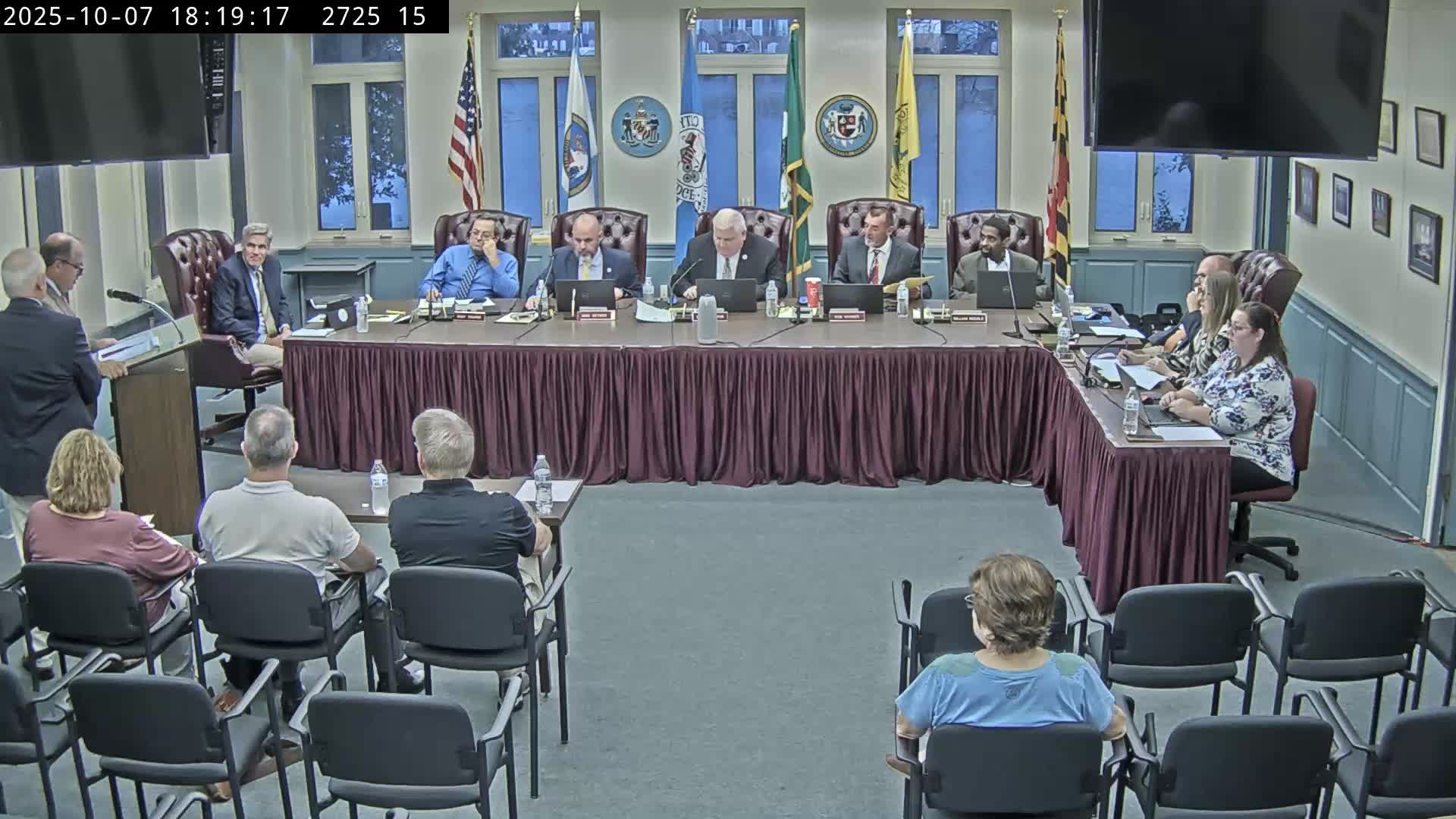
John Fiestro, an attorney for NRG, and David Bacher, the company’s senior regional manager for the Mid-Atlantic, told the Dorchester County Council during public comment that a pending Maryland Department of the Environment regulation would cut sulfur content in residual fuel burned at the Vienna Generating Station from about 2% to 0.3%, with a proposed effective date of Jan. 1, 2026.
"Right now, the facility burns 2%." said John Fiestro, describing the proposed change in MDE’s notice of proposed action. Fiestro told the council MDE staff had informed NRG that the agency intends to publish the rule as final before the end of the year.
David Bacher described Vienna Unit 8 as "a 165-megawatt residual fuel–fired unit that operates as a reliability peaker at a very low annual capacity factor," and said the unit runs less than 2% of the year but is called by PJM during peak demand. Bacher said the station supports reliability on the Eastern Shore and employs about 15 people.
NRG officials told the council that changing fuel sulfur content to 0.3% presents logistical and engineering challenges. They said suppliers told them meeting a 0.5% standard would be feasible; meeting a 0.3% standard would be substantially harder because of barge-transfer constraints, blending complexity and the plant’s fuel-handling and boiler design. NRG representatives said barge blending and required equipment changes could materially increase fuel cost and require engineering, procurement and installation lead times.
NRG asked MDE to consider three alternatives for Vienna: an exemption for low-hour units (the company cited a U.S. EPA precedent for low-capacity exemptions), a 0.5% limit instead of 0.3%, or a one-year implementation extension to allow time for engineering modifications and supply arrangements. Fiestro said NRG has submitted formal comments to MDE and has discussed the matter with the governor’s office and neighboring Wicomico County.
Council members asked questions about natural-gas conversion and fuel supply. NRG said natural gas is not readily available at the site and that conversion would require significant transmission or distribution upgrades. NRG also said recent regional retirements of other plants have increased the Vienna plant’s operational importance.
NRG representatives asked the council to consider supporting the company’s appeals to state regulators and to make time on a future agenda for a fuller presentation. Council staff invited NRG to provide contact information so the council can schedule a dedicated meeting for more detailed discussion.
The presentation was delivered during the public-comment portion of the meeting; the council took no formal action on NRG’s requests at this session.