Get Full Government Meeting Transcripts, Videos, & Alerts Forever!
Get email alerts on the Chapter 63 Review topic
No spam. Unsubscribe anytime.
Dorchester County board adopts rules of procedure and reviews Chapter 63 burial‑site code
Summary
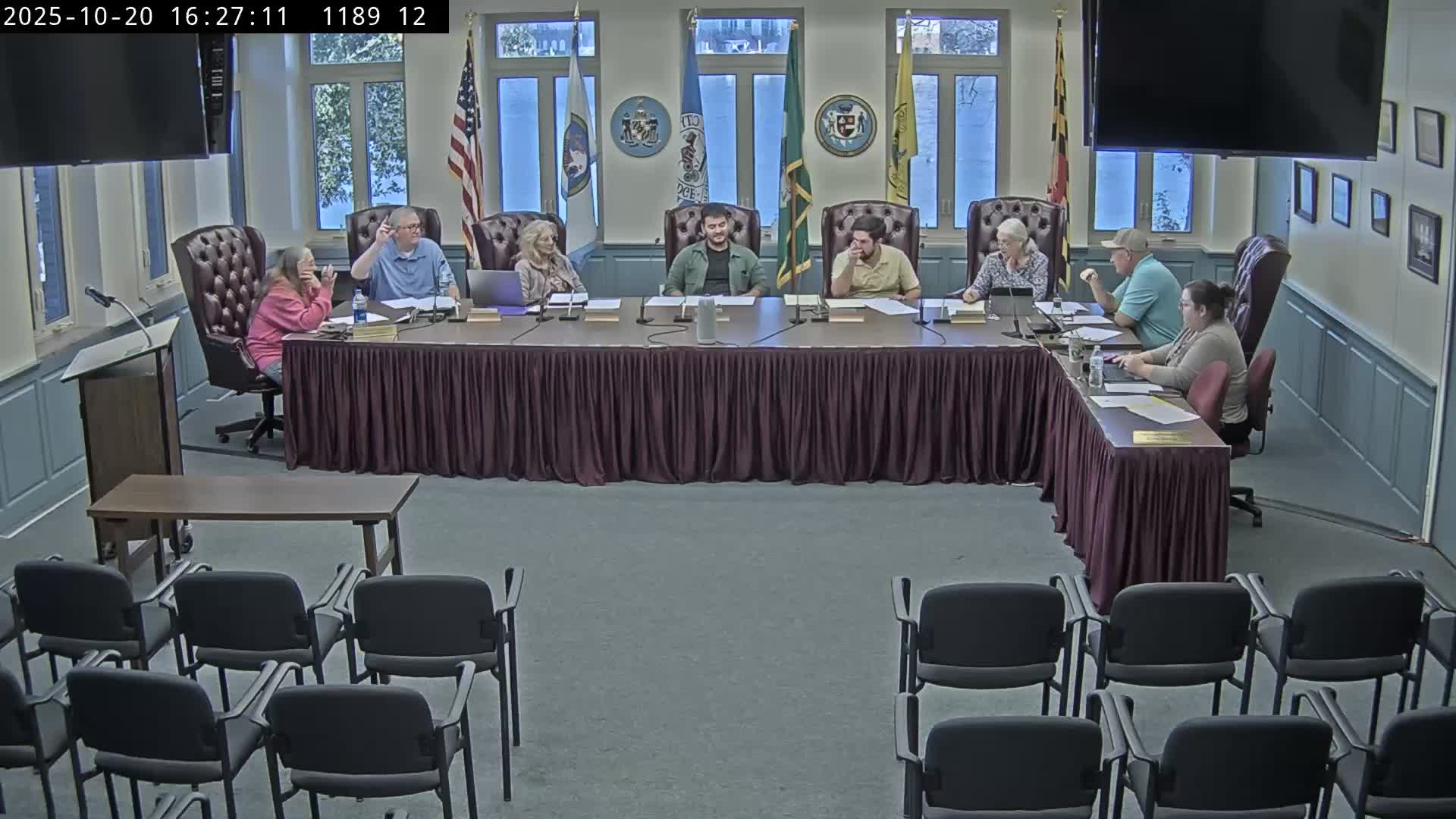
The Dorchester County Burial Site Preservation Board voted Oct. 20 to adopt rules of procedure referencing the Maryland Open Meetings Act and Robert's Rules of Order, then conducted a detailed read‑through of Chapter 63 (the county's burial site preservation code).
The Dorchester County Burial Site Preservation Board voted Oct. 20 to adopt rules of procedure that reference the Maryland Open Meetings Act and use Robert's Rules of Order as a guide for meetings. The motion to adopt a rules statement—"the board shall adopt rules of procedure in concert with the Maryland Open Meetings Act and follow Robert's Rules of Order as a guide"was made, seconded and approved by members present.
After adopting the procedural statement, the board conducted a line‑by‑line review of Chapter 63 of the Dorchester County code, the ordinance that establishes the Burial Site Preservation Board and sets out definitions, membership, powers, duties and enforcement provisions. Kelly, county staff, read sections aloud while members paused for clarifying questions and suggested small edits.
Key points discussed:
- Jurisdiction and applicability: Chapter 63 applies to unincorporated areas of Dorchester County; municipalities may request the chapter apply within their corporate limits by submitting a written request to the county council. Board members noted that the document does not, by itself, extend county jurisdiction into incorporated municipal limits without municipal consent.
- Definitions and development: The chapter's definition of "development" is broad (construction, grading, fill, infrastructure, etc.). Members debated whether to explicitly name project types such as solar arrays or wind turbines or to rely on the broader catch‑all language. Members agreed to leave more‑detailed drafting to follow‑up edits but flagged renewable‑energy projects as frequently recurring community concerns.
- Inventory: Chapter 63 directs the board, in cooperation with the Department of Planning and Zoning, to establish and maintain an inventory of known burial sites that includes a geographic description and a record of owners. Board members proposed adding "including, but not limited to" to make clear the inventory should capture additional useful fields (for example, inscriptions, approximate counts, and known descendant information) while noting they want the county's inventory standards to align with any state guidance.
- Discovery/stop‑work procedure: The board reviewed statutory text requiring immediate suspension of work and notification of the county (department or 911 outside business hours) when previously unknown remains, funerary objects or other evidence of a burial site are discovered during grading or construction. Members asked staff to post that stop‑work and reporting language prominently on the board's web page and to create a short FAQ for the public explaining whom to contact and the likely next steps.
- Enforcement and referral: The chapter authorizes suspension of permits and referrals to county departments; criminal acts may be referred to the state's attorney. The board noted it is advisory: enforcement actions (civil infractions or criminal prosecutions) fall to county departments and legal authorities, not to the advisory board itself.
- Maintenance and restoration guidance: Members discussed using existing guidance (the Coalition's guidelines and sample county manuals) as interim public resources and creating a Dorchester County‑specific preservation guide over time. They agreed the board should recommend that any substantial restoration work be performed by qualified professionals rather than by untrained volunteers, and suggested a future subcommittee draft a concise maintenance/repair checklist for public use.
Next steps assigned to staff included circulating a list of editorial edits and items for county staff (notably posting the discovery/stop‑work text), checking with Planning & Zoning about existing intake/regulatory language concerning burial sites and permitting, and preparing materials for the board's February presentation to the county council.