Get Full Government Meeting Transcripts, Videos, & Alerts Forever!
Get email alerts on the Special Education topic
No spam. Unsubscribe anytime.
Forest Hills reports large rise in special‑education needs; leaders warn of staffing and funding pressure
Summary
Human Resources and special-education staff told the board of substantial increases in certain special-education categories and the district detailed recent hires and retention rates; the board and public raised concerns about possible federal changes to IDEA funding and the district—inancial exposure after the federal office staffing reductions.
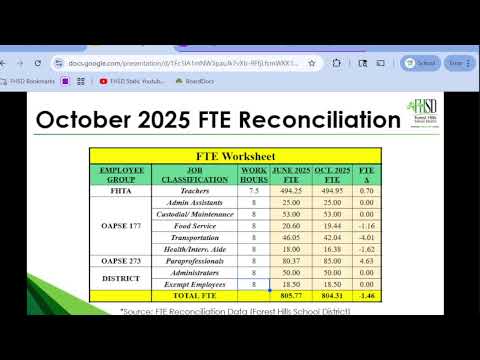
Human Resources and special-education staff told the board that the district has added multiple intervention specialists and paraprofessionals to meet rising needs, and that the increase in students qualifying for specialized programs is driving higher staffing and cost requirements.
At the HR update, the presenter said the district hired 34 new certified employees this year, six new administrators and 34 new classified employees. On the certified side the new hires included 29 teachers, 10 intervention specialists, a speech‑language pathologist, a school psychologist, a school counselor and a student support advocate. The HR presenter reported retention rates near industry norms: about 93% for certified staff and 88% for classified staff.
Staff described notable increases in special‑education categories: emotional disturbance up about 77% since 2016, autism up roughly 61%, and Other Health Impaired (OHI) up about 64%. The district said overall special‑education child counts (EMIS) have risen substantially over recent years; staff summarized that a 100‑ to 175‑student increase in specialized needs can have the resourcing effect of adding several hundred general‑education students because of lower student‑to‑teacher ratios and additional paraprofessional support.
Public comment by Jeff Nye referenced recent layoffs in the federal office that administers the Individuals with Disabilities Education Act (IDEA) and asked the board and superintendent, "what is the plan to make sure that that doesn't interrupt the supports and the services we're getting for our students and families?" Staff responded that the district's current federal and state allocations are in place for this year and noted the district is on a state funding guarantee that limits near‑term exposure.
Staff also cited IDEA Part B allocation figures: an initial allocation around $1,607,000 last year and approximately $1,592,000 this year (a difference of roughly $16,000 on an allocation of about $1.6 million). Administrators said the guarantee protects the district for at least the next two years but urged continued monitoring of federal and state distributions if federal enforcement or funding responsibilities are reshaped.
Board and staff said they will present a consolidated special‑education report (including staffing and fiscal impacts) in November and continue working on targeted professional development for general‑education teachers, reallocation of FTEs and options to meet increased demand without compromising services.