Get Full Government Meeting Transcripts, Videos, & Alerts Forever!
Get email alerts on the Historic Preservation Code topic
No spam. Unsubscribe anytime.
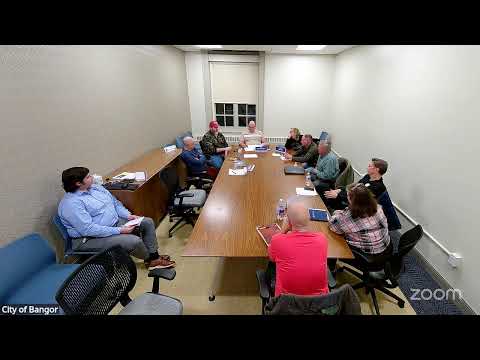
Bangor preservation commission begins rewrite of historic-preservation code, seeks clearer guidance and outreach
Summary
The Bangor Historic Preservation Commission convened a special workshop to review proposed changes to the city's historic preservation code, with staff and neighborhood representatives outlining edits and requesting guidance on draft language and outreach.
The Bangor Historic Preservation Commission convened a special workshop to review proposed changes to the city's historic preservation code, with city planning staff and neighborhood representatives outlining specific edits and asking the commission for direction on draft language and outreach.
"The purpose of this session is to review possible changes to the historic preservation code. That is all that we are specifically looking to do today," said Evan Trasky, chair of the commission, opening the meeting and framing it as a working session rather than a final vote.
Why it matters: commissioners said the code needs clearer, less subjective language and better public-facing guidance so homeowners, buyers and contractors understand what is permitted in Bangor's historic districts. Commissioners and staff repeatedly emphasized outreach: a plain-language brochure or illustrated guide, improved disclosure to buyers, and targeted presentations for realtors and developers.
What was proposed and discussed
- Emergency provisions. City staff recommended adding an emergency minor-revision pathway for situations such as fires or other immediate threats; commissioners asked staff to define which events qualify and to ensure any local rule aligns with higher-level guidance. Participants referenced federal guidance on emergency procedures for Section 106 projects (36 CFR 800.12), noting the federal rule's 30-day applicability window for undertakings after a declared disaster and the exemption for immediate rescue and salvage operations.
- Visual guides and outreach. Commissioners discussed creating a Portland-style illustrated packet for owners and contractors showing common historic features and acceptable repairs or replacements. Staff said a presentation for realtors and developers is planned in January as part of an ongoing grant; commissioners asked staff to include tax-credit information and to explore title-record or registry notations so buyers learn a property is subject to the preservation ordinance before closing.
- Substitute materials and visual compatibility. Both staff and neighborhood representatives urged clearer standards for substitute materials (examples given: Azek/PVC trim, aluminum- or vinyl-clad windows, and replacement slate vs. alternative roofing). Staff recommended language that replacement materials, "when viewed from the street, should be as visually compatible as possible with the material being replaced," and proposed removing some wording that had produced inconsistent outcomes. Speakers emphasized balancing authenticity with durability, energy efficiency and affordability.
- Economic feasibility and hardship. Staff proposed clearer definitions of "economically feasible" and discussed using objective criteria to trigger hardship review; one stakeholder's draft suggested that if historic restoration costs exceed 1.5 times the cost of reasonable substitute materials, hardship proof could be required. Commissioners cautioned against a rigid formula and asked staff to propose workable evidence standards that avoid arbitrary results.
- Permit term and minor revisions. Staff suggested lengthening the effective approval period (current practice ~12 months) and allowing extensions, possibly matching the planning board's two-year window and using a minor-revision/extension process handled administratively (chair/vice-chair or staff) for routine delays.
- Solar, generators, heat pumps and non-visible changes. Commissioners asked for clearer language to govern solar panels, generators and heat pumps installed in historic districts, and for policies allowing staff to approve minor changes invisible from the street (awning fabric, rear-yard work, some signage adjustments for second-floor retail).
- Enforcement and stop-work authority. Commissioners debated whether to add explicit stop-work authority tied to historic-preservation violations or to rely on existing code-enforcement tools. Several participants asked staff to consult the city's code enforcement office to determine the appropriate enforcement language and how it would interact with existing stop-work powers for health-and-safety or land-development violations.
- Certificate-of-appropriateness voting threshold. Staff raised changing the local threshold for a certificate of appropriateness from a four-member affirmative requirement to a simple majority of a quorum (three votes); staff said they would research the origin of the current rule and provide a legal check.
What commissioners directed staff to do
Commissioners asked planning staff to draft clearer code language and an illustrated guidance packet, circulate the draft to neighborhood representatives (including those who prepared the community proposals) for comment, and return the language to the commission at a follow-up workshop. Staff said it would try to share drafts earlier in the packet cycle so stakeholders can review before the meeting. Staff also said the real-estate/realtor presentation will proceed in January under an existing grant.
Quotes and attributions
"The purpose of this session is to review possible changes to the historic preservation code," Evan Trasky said at the start of the meeting.
Rick, representing the Broadway Historic District HOA, offered specific draft language for substitute-materials lists and suggested that products previously approved by the commission be posted publicly so property owners and contractors can identify preapproved alternatives.
Anya, a planning staff member, told the commission, "we do actually have a presentation planned for realtors and developers in January," and said staff would emphasize district boundaries and available tax-credit information during that outreach.
Community context and details
Commissioners said Bangor has multiple historic districts clustered around downtown and noted practical local concerns: the availability and cost of original materials and trades, safety and building-code constraints (for example, egress from windows), and inconsistent realtor disclosure practices. Participants reported local patterns such as high use of asphalt roofing in some corridors and the practical difficulties of sourcing and installing historic materials.
Next steps and timing
Staff will draft revised code text and illustrated guidance, circulate drafts to commissioners and the stakeholder group that prepared community recommendations, and schedule a subsequent workshop for detailed review before any formal public hearing or ordinance change is advanced to city council. No formal votes or ordinance changes were made at this workshop.
Ending
Commissioners framed the workshop as the start of a multi-step process aimed at making the preservation code more predictable and easier for property owners to follow while retaining the commission's ability to protect the city's historic character. They emphasized outreach, clearer objective standards where feasible, and careful drafting to avoid unintended legal or practical consequences.