Get Full Government Meeting Transcripts, Videos, & Alerts Forever!
Get email alerts on the Infrastructure Hvac topic
No spam. Unsubscribe anytime.
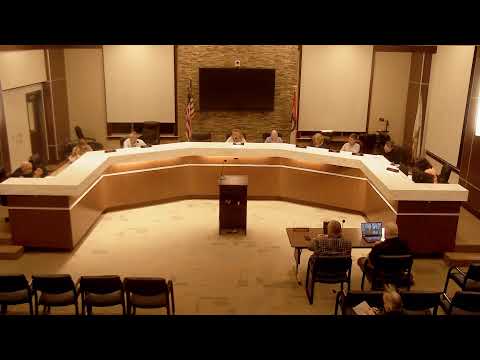
Board declines $257,296 Daikin "Hero" HVAC package after technical briefing
Summary
The Board of Aldermen heard a technical presentation from Daikin/TMI about the city—s failing HVAC system and voted 0—5 against entering the vendor—s $257,296 Daikin Hero agreement.
The Board of Aldermen heard a technical presentation from Jonathan Poole of Daikin/TMI about the city—s troubled variable-refrigerant HVAC system and declined to enter the vendor—s $257,296 Daikin Hero package.
At the Oct. 7 meeting, Poole said the system, which the company believes was installed around 2011—2012, "didn't really have any serious problems until 2020," and that failures since then point to indoor component deterioration and maintenance gaps rather than poor compressor design. He described options including replacement of outdoor compressor modules, phased indoor unit replacement, a cloud-based monitoring system (Daikin Hero) and multi-year parts and labor coverage that could be billed across several years.
The proposal packet included three service/warranty options and an estimate for replacement and first-year service work; staff said four compressors are currently not operating and that repairing those four would cost roughly $40,000 in parts and labor. Poole told the board the proposal includes money to locate and repair refrigerant leaks and that the vendor can phase billing for extended warranty options to spread the cost across budget years.
Council members focused questions on the cause of repeated compressor failures, the contents of the warranty packages, long-term maintenance, the availability of local contractors, and procurement procedure. Alderman Cleave pressed whether the city had sought multiple bids; Poole said Daikin has an Omnia/Region 4 cooperative contract and that local contractors would receive the same vendor package, so competitive bids would generally route back to Daikin quantities and pricing. Attorney Carr and staff suggested obtaining a formal sole-source/cooperative-purchasing letter to document that pathway for the city—s procurement file.
Staff and Poole discussed maintenance cadence (coil cleaning and preventive maintenance), the number of indoor evaporator modules (about 30), estimated replacement cost for an indoor module (roughly $5,000—9,000 depending on size) and the vendor—s $180-per-hour technician rate under contract. Poole also described the Daikin Hero diagnostics dashboard, which would send continuous email alarms and troubleshooting steps to help local technicians identify likely causes before dispatching specialized service.
Aldermen expressed concern about where the up-front money would come from and whether the city should buy the package immediately or split the decision: approve only immediate repairs now and resolve warranty/long-term options during upcoming budget revisions. The mayor acknowledged repair needs: staff said some repairs could be done quickly but warned new failures could occur without addressing root causes.
A motion to enter into the Daikin Hero agreement at $257,296, moved by Alderman Cleave and seconded by Alderman Stewart, failed on a 0—5 vote. Mayor Kelly announced the motion had not passed and staff will return with additional procurement documentation, answers about warranty cadence and a possible sole-source/cooperative letter for the next meeting.
The board handled several related housekeeping items: staff confirmed the price proposal was valid for 30 days, that extended labor coverage could be added during the first year without immediate full up-front payment, and that the 10-year parts coverage was included regardless of whether labor coverage was selected. No contract was signed and no construction work was authorized at this meeting.