Get Full Government Meeting Transcripts, Videos, & Alerts Forever!
Get email alerts on the Signs topic
No spam. Unsubscribe anytime.
Smithville staff outlines proposed sign‑ordinance rewrite, flags temporary‑sign conflicts and enforcement challenges
Summary
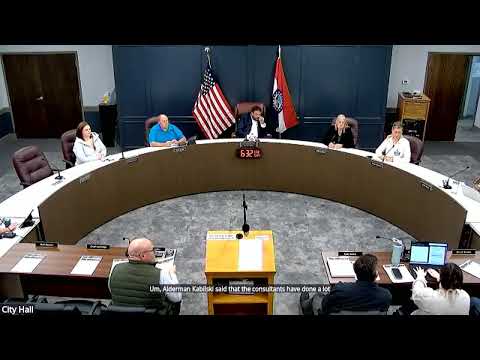
City staff reviewed a draft rewrite of Smithville’s sign ordinance, stressing definitional clarity and enforcement limits. Council members raised concerns about temporary‑sign conflicts during event season and asked staff to wait for new legal counsel before making major changes.
City staff presented a proposed rewrite of Smithville’s sign ordinance, tracing its history back to 1968 and describing substantial trimming of the code from an original 37 pages to roughly 14–18 pages in recent drafts. The presentation outlined separate regulatory tracks for permanent signs (ground/monument, pole, wall, projecting and roof signs) and temporary signs (vinyl, cardboard, coroplast and similar materials).
Jack, the presenting staff member, said, “I prepared a memorandum for y'all. It's much longer than I wanted it to be, but it kind of is necessary,” and explained that the ordinance’s definitions determine much of how rules are applied. He noted the projecting‑sign definition remains in the draft and described it as “a wall sign that projects more than 30 degrees from the parallel face of the facade.”
The draft limits temporary signs to one per business or lot and lists common temporary types—snipe signs (political or campaign signs commonly on small wire frames), garage‑sale signs (typically about 12 by 18 inches), and thin/flag signs used for commercial promotions. Jack said certain real‑estate and subdivision signs do not require permits and that Brandy, the city permit issuer, provides day‑to‑day guidance to applicants at the counter.
A council member raised a recurring operational concern about competing temporary signage during event season, saying, “I don't think that a business should have to take down their temporary sign for a nonprofit or someone have an event to put up theirs,” and suggested staff consider sharing high‑use locations such as the city lot at Highway 169. Jack and other council members discussed exemptions for designated nonprofit organizations (which can be exempted from permit fees but must follow other rules) and the practical difficulty of enforcement when multiple definitions interact in the code.
On process, Jack asked the council to defer major changes until the new legal counsel is appointed so counsel can review any proposed revisions. There was no formal vote on the sign ordinance at this meeting; staff said the ordinance will be scheduled for board consideration at a future meeting.
Next steps: staff will accept feedback, work with legal counsel once appointed, and bring ordinance language back to the council for formal consideration.