Hays County moves to rewrite subdivision rules; staff to draft regulations, prioritize water protections and conservation options
Loading...
Summary
Consultants presented a diagnostic report proposing a new minor-plat process, a submittal calendar, third-party review/inspection, conservation-subdivision standards, stronger groundwater certification and developer participation rules. Commissioners backed expedited items and asked staff to begin drafting regulations with public re-engagement.
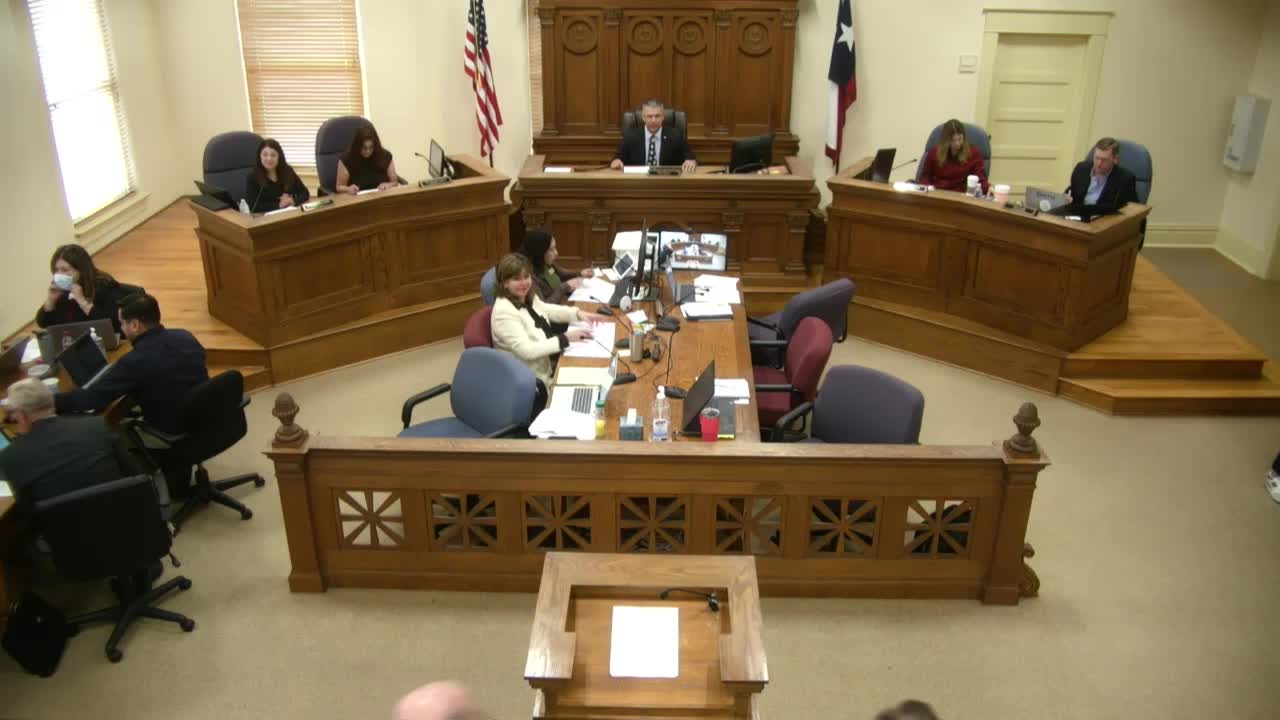
SAN MARCOS, Texas — Hays County commissioners on Tuesday heard a diagnostic report from Friese & Nichols that lays out changes county officials say are intended to make subdivision and development rules more predictable while protecting groundwater and stream corridors.
The consultant team described a three-phase rewrite of the county's subdivision regulations: (1) finish the diagnostic and identify high-impact revisions, (2) draft new regulations through the winter and spring with public engagement, and (3) move toward adoption with interlocal agreements where needed.
Key proposals in the diagnostic report included creating a minor-plat process (drawing on state authority in Chapter 232), adopting a submittal calendar to align the 'shot clock' for plat review with court schedules, adding standards for conservation subdivisions and for so-called 'flag lots,' facilitating third-party review and inspection paid through pass-through fees, strengthening groundwater certification requirements and building formal roles for local groundwater-conservation districts, and clarifying plat requirements for condominium-style shared infrastructure.
Mark Pacheco, Hays County director of development services, told the court staff would publish a finalized diagnostic report and begin drafting the updated regulations in November. He said several items could be 'expedited': flag-lot standards, a submittal calendar, allowing third-party reviews, and conservation-subdivision standards.
Commissioners broadly supported moving forward and prioritized several near-term items. One commissioner urged quick progress on third-party review options to ease burdens on county staff; another urged early work on conservation subdivision standards and an overlay map to guide developers toward less-sensitive areas. Commissioners repeatedly emphasized that the county must remain mindful of groundwater recharge areas, flood-prone places and affordable-housing needs.
Public outreach will continue. The consultant plans re-engagement with stakeholders and additional public workshops in multiple precincts before the county approves a draft for formal public review.
What's next: Staff will begin drafting replacement regulations guided by the diagnostic report. The county will post the final diagnostic report on its website and return to stakeholders with draft regulatory language for comment before a formal adoption process begins.
Quote from the meeting:
• Mark Pacheco, director of development services: "We will be publishing the finalized version of the diagnostic report as well as all presentation materials on the county's website... You'll find all information and resources as well as an opportunity to provide any input and feedback throughout the duration of this project."