Edmonds School District panel recommends later high-school start; 08:05 option favored
Summary
A two-year committee convened by the Edmonds School District recommended moving high-school start times later, presenting two concrete options to the board and asking for further community outreach on timing and implementation.
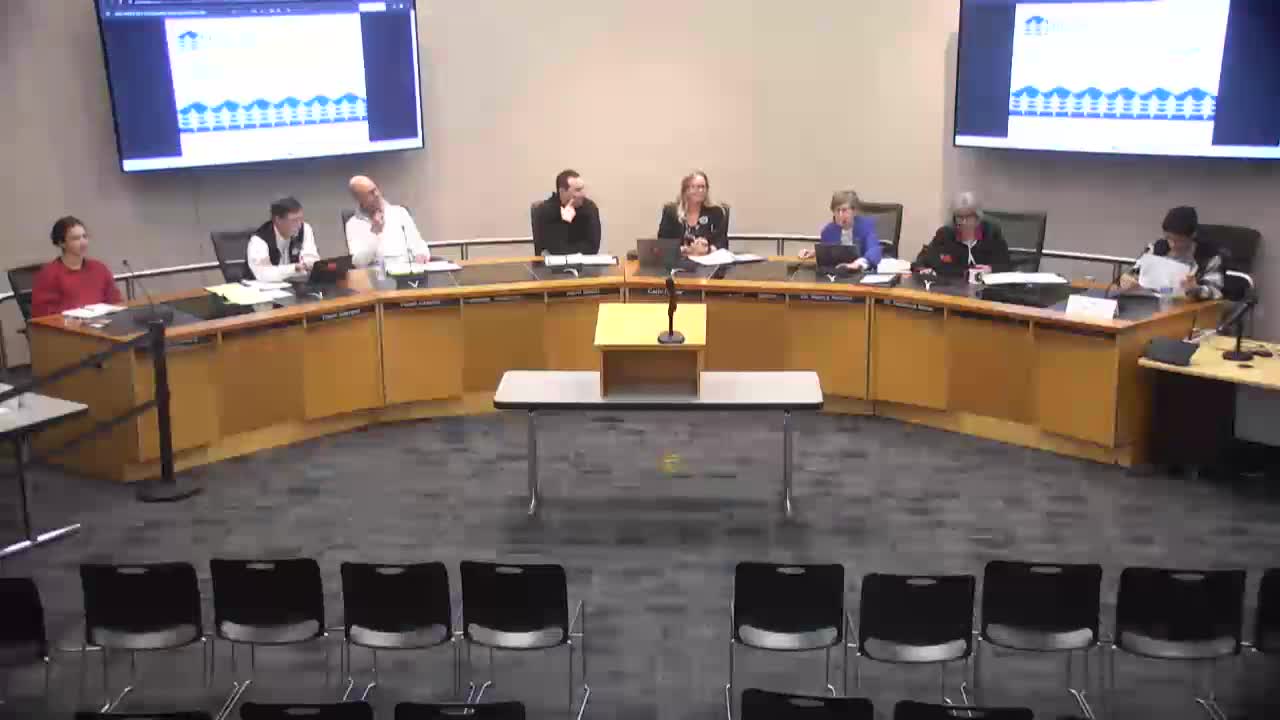
A two-year committee convened by the Edmonds School District recommended moving high-school start times later, presenting two concrete options to the board on Oct. 14 and asking for further community outreach on timing and implementation. Assistant Superintendent Greg Schwab said the committee's work began in September 2023 and included parents, staff, students, and administrators.
The committee considered research showing academic and health benefits of later secondary start times. Schwab cited multiple studies, including a Seattle study showing students gained about 34 minutes of sleep and a 4.5% grade improvement in the studied course when high schools started one hour later. He told the board that local data showed trends toward higher absences and lower grades in early-morning classes, and that an initial community survey of more than 7,000 respondents found 88% support for later high-school start times.
After testing two concrete schedule models in a spring 2025 follow-up survey (about 3,000 responses), the committee reported that the option placing high schools in an 08:05 start tier had the strongest support from families, staff and students. The alternative, an 08:45 start, was judged by presenters to push dismissal and after-school activities too late for many students.
Operational limits were central to the committee's analysis. Schwab and staff emphasized the district's existing four-tier transportation model and a shortage of bus drivers as constraints: moving a high school later typically requires placing certain elementary schools into the earliest tier, which would move those elementary start times earlier. Staff told the board that the committee had committed to evaluating changes in a cost-neutral manner, without purchasing additional buses or adding runs.
Board members and student advisors discussed likely impacts and mitigation steps. Staff said they are working with regional childcare providers (including local Boys & Girls Club and other community providers that attend regular childcare-provider meetings) to help families who would need before- or after-school care as a result of the tier changes. The board also discussed safety concerns (dark, cold morning pick-ups), athletic schedules and after-school employment, and the possibility of rotating tier assignments across years; staff said survey responses were roughly split on rotation and that adding a rotation would complicate routes and operations.
No formal policy decision was made Oct. 14. The board directed staff to conduct additional targeted community outreach about timing (options discussed included implementing changes in 2026-27, 2027-28, or 2028-29) and to return with refined implementation plans and messaging about how schools would be assigned to tiers. Staff noted that 2028-29 coincides with the district's planned conversion to a 6-8 middle-school model, which could argue for coordinated timing if the board chooses a later implementation year.
Why this matters: Later secondary start times are linked in multiple studies to better sleep, modest gains in academic outcomes, improved attendance and, in one large study, fewer teen driver crashes. The district's committee concluded that a modest later start (the 08:05 option) balances student benefits with the district's operational and equity constraints, but community feedback and childcare planning will be crucial before any change is adopted.