
Snoqualmie Valley principals report reading, math gains and new preschool model; SEL work continues
Get AI-powered insights, summaries, and transcripts
Subscribe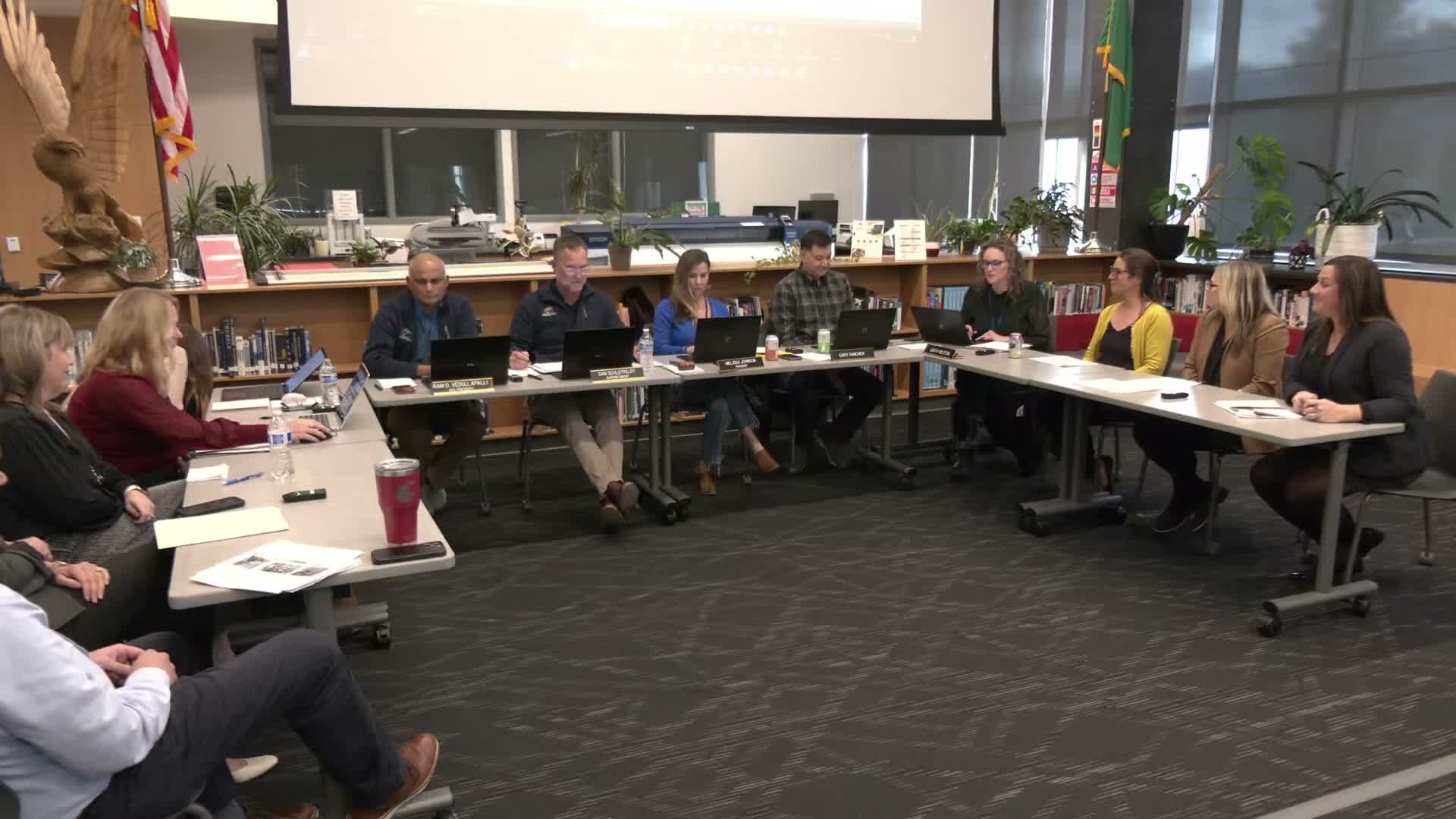
Summary
Cascade View, Fall City, North Bend and other elementary principals told the Snoqualmie Valley School Board on Oct. 23 that targeted interventions, deeper use of assessment data and expanded social‑emotional work helped drive gains in student growth and proficiency this year.
Cascade View, Fall City, North Bend and other elementary school leaders told the Snoqualmie Valley School Board on Oct. 23 that targeted interventions, deeper data use and schoolwide social‑emotional work produced measurable student gains this past year. The district’s newly opened Early Learning Center also described a move to full‑day, age‑separated preschool and outlined priorities for literacy, self‑regulation and kindergarten transition.
Cascade View principal Caitlin reported that the school’s median student growth percentile in math rose from 54 to 64, and that fifth‑grade proficiency increased without the typical dip from fourth to fifth grade. Staff used targeted WIN math boost groups to help students on the cusp of proficiency; 13 of 15 students in a named boost group reached proficiency on the Smarter Balanced assessment, Caitlin said. Cascade View also noted inconsistencies between end‑of‑year STAR reading scores and Smarter Balanced proficiency levels, which staff attributed in part to testing fatigue and said they will investigate so the school can rely on consistent data for intervention decisions.
A recurring classroom target across the elementary schools was fluency with the four operations — addition, subtraction, multiplication and division — and conceptual understanding that supports automaticity when students move to multistep problems. Schools described a mix of push‑in co‑teaching, small‑group WIN pull‑outs and instructional rounds used so teachers can observe and calibrate practices across classrooms.
Fall City principal Jamie Warner reported the school’s overall student‑growth percentile for ELA was 69, with 87 percent overall proficiency in ELA and 79 percent in math. She highlighted 12‑point gains in both third‑ and fifth‑grade ELA and an accelerated two‑year jump in fifth‑grade math. Fall City’s strategy emphasized backward planning from assessment targets, GLAD strategies to support multilingual learners, daily testing literacy routines for new SBA test takers, and an earlier start for small boost groups.
North Bend Elementary principal Rebecca Westra said the school used a focused PD cycle tied to a concise set of priorities — tier‑1 instruction, writing and math fluency — plus a social‑emotional goal of increasing students’ sense of belonging. North Bend’s model uses month‑by‑month teacher teams that bring boost plans, evidence and pictures of practice to rapid follow‑up meetings; Westra said that de‑privatizing instruction has led teachers to try approaches, collect evidence and iterate quickly.
On social‑emotional learning (SEL), several principals cited the SABERS screener as the district tool. Cascade View and other schools reported an increase in students classified as low‑risk in spring SABERS data, and leaders said they will use fall windows to flag grade levels with increased emotional‑behavior needs and plan targeted interventions. Practices described included morning 'brain smart starts', conscious discipline routines, explicit play instruction (Fall City’s ‘Panthers at Play’), parent education (Cascade View’s 'Bear University') and family videos to build universal language and predictable classroom routines.
The Early Learning Center principal described a programmatic shift from mixed‑age half‑day preschool classrooms to seven age‑segregated classes: two 3‑year‑old half‑day classes and four 4‑year‑old full‑day classes that follow an elementary‑style day. ELC staff said the building now employs roughly 25 adults supporting about 100 children (about half of whom have IEPs, primarily for social‑emotional supports). The ELC will use Teaching Strategies GOLD (TS Gold) as its primary assessment and has partnered with the district literacy specialist to choose five high‑priority early‑literacy objectives to progress‑monitor monthly. The school is also beginning a multiyear roll‑out of conscious discipline training and aligning early learning expectations with kindergarten standards to smooth transitions.
Why this matters: The presentations showed common districtwide priorities: more intentional data cycles, earlier targeted interventions, math‑fluency work, and expanded SEL that moves beyond a single daily block into routines and embedded practices. School leaders said those investments are designed to reduce later intensive interventions and increase students’ readiness for upper grades.
What remains unsettled: Principals and board members acknowledged gaps and next steps — notably, discrepancies between STAR and Smarter Balanced scores that need reconciliation, a few grade‑level cohorts with elevated SEL or academic needs, and the resourcing choices required to scale deeper MTSS (multi‑tiered system of supports) work across all schools. Several principals requested continued district support for coaching, time for teacher collaboration, and supplies for enriched programming such as elementary art.
Looking ahead: District staff and the board discussed the resource implications of expanding MTSS and preschool access and flagged those items as priorities during the levy planning work session that followed the regular meeting. Board members asked staff to return with costed options tied to measurable student outcomes.
(Exact quotes in the article are drawn from school presentations recorded on the Oct. 23 board meeting transcript.)