Get Full Government Meeting Transcripts, Videos, & Alerts Forever!
Get email alerts on the Affordable Housing Tefra Pelican Harbor topic
No spam. Unsubscribe anytime.
Huntington Beach council narrows Pelican Harbor affordability term, approves TEFRA recognition 4-3
Summary
The Huntington Beach City Council on Oct. 31 approved recognition of tax-exempt financing for Pelican Harbor and substituted the developer’s proposed 99-year affordability covenant back to the original 60 years, passing the measure 4‑3 after a public hearing and debate.
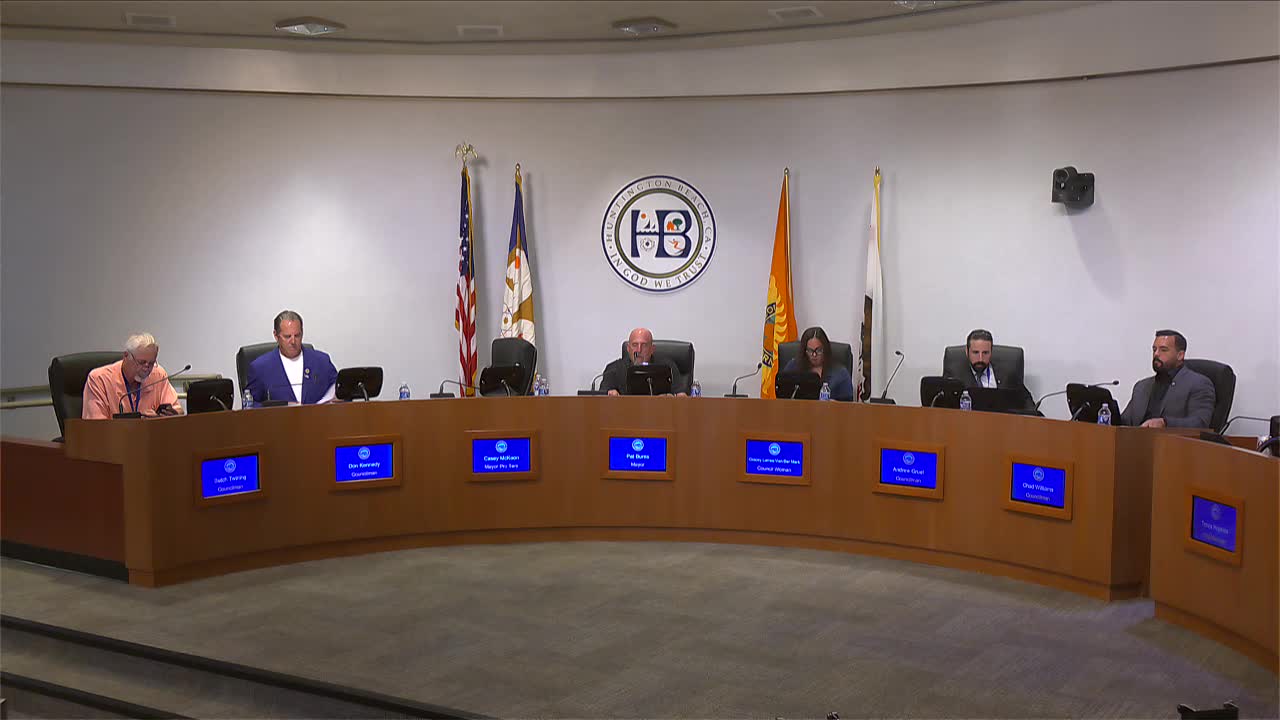
HUNTINGTON BEACH, Calif. — The Huntington Beach City Council on Oct. 31 approved recognition of tax-exempt financing for Pelican Harbor and substituted the developer’s proposed 99‑year affordability covenant back to the original 60 years, passing the measure 4‑3 after a special public hearing and lengthy public comment.
The action recognized a California Municipal Finance Authority (CMFA) tax‑exempt bond financing package tied to Pelican Harbor, a 43‑unit affordable senior housing development completed in recent years and operated by nonprofit Jamboree Housing. Council members spent more than two hours questioning the project’s financing, developer compensation, long‑term tax effects and whether denying the TEFRA approval could put current residents at risk.
Supporters of the project — including residents, faith leaders and people involved in local homelessness outreach — urged council members to approve TEFRA so the financing could close and the property’s affordability obligations would be extended. Father Nathan Bjornstead of St. Wilfred’s Episcopal Church told the council he was “here to speak in favor of giving tax exempt bonds to the Pelican Project” and asked the council to “extend these tax exempt status and to do so, quickly.” Several residents said most current occupants have Huntington Beach connections and that the building removed a formerly vacant, blighted lot from the street.
Jamboree’s chief development officer, Mike Massey, and other representatives explained the project’s capital stack and the role of tax credits and TEFRA in completing financing. Massey said the project faces a remaining capital gap and that Jamboree had addressed timing issues and contingency financing; he told the council the developer was “not asking for anything additional from the city other than approval and recognition of the TEFRA.” During the hearing, Massey acknowledged an earlier misstatement about the outstanding financing and provided documentation that the remaining financing gap was $4,800,000.
Opponents and skeptical council members focused on the long fiscal horizon of a 99‑year affordability term, potential lost property tax revenue and whether the developer’s management of multiple publicly supported projects produces excessive executive compensation. Speakers and several council members repeatedly said they worry a 99‑year term would set a precedent that future developers could cite to request similar long exemptions. One public commenter criticized the council for spending on events and questioned why the city should extend preferential tax treatment for decades.
Council debate also weighed immediate risks and benefits. Supporters of approving TEFRA said a yes vote would preserve long‑term affordability and lower the risk that the property’s subordinate city loan and the housing for 43 low‑income seniors — many of whom are disabled — would be jeopardized. Opponents argued the city should avoid expanding long‑term tax exemptions and push for stronger concessions from the developer.
Votes at a glance
- Substitute motion (approved 4‑3): Replace the developer‑proposed 99‑year affordability term with a 60‑year affordability covenant; all other recommended terms remain. The substitute carried by a 4‑3 vote after a brief procedural clarification and re‑vote.
What the council asked and what staff said
Council members sought details on the project’s financial mechanics, the source of operating revenue, resident referral pathways and the size of the outstanding capital gap. City staff said the city does not itself build housing but manages a portfolio of approximately 3,000 affordable units and that Pelican Harbor was identified as an affordable site in prior housing planning. Jamboree and its consultants explained that a $20 million tax‑exempt bond and Low Income Housing Tax Credit equity are common pieces of this capital structure, that the current net operating income was reported at $314,000 annually and that many units are supported by Section 8 vouchers. Staff also said previous property tax receipts when the site was vacant were small (approximately $18,000 annually by the city’s 1% levy share, as stated in staff comments).
Public process and next steps
The hearing record includes roughly 20 emails submitted to the clerk and more than a dozen public speakers. The council’s substitute vote authorized recognition of the CMFA tax‑exempt bond while returning the affordability covenant to 60 years; the clerk recorded the final action after the vote and adjourned the special meeting.
The council’s action does not itself change property tax law; rather it recognizes the TEFRA hearing and approves the financing package with the substituted covenant period. Staff noted state law requires notification and additional preservation attempts when affordability covenants approach expiration, and that at a minimum the owner must maintain five more years of affordability if covenants expire without a preservation purchase.
City officials and Jamboree said they would implement the council’s direction and return any required paperwork to finalize financing; the city clerk also confirmed the next public financing authority meeting is scheduled for Nov. 4, 2025, at City Council Chambers.
Sources: Meeting transcript and statements from city staff and Jamboree representatives as recorded at the Oct. 31, 2025 special meeting of the Huntington Beach City Council/Public Financing Authority/Housing Authority.