Get Full Government Meeting Transcripts, Videos, & Alerts Forever!
Get email alerts on the Infrastructure topic
No spam. Unsubscribe anytime.
Huntington Beach reviews completed street and signal projects, highlights rubberized asphalt use on 17th Street
Summary
City public works staff presented completed Zone 2 overlays, a 17th Street rehabilitation using rubberized asphalt that diverted about 5,000 waste tires, and traffic signal upgrades, telling council the projects were delivered on time and within budget.
City of Huntington Beach public works officials on Oct. 21 presented completed capital improvement projects that officials said extended pavement life, improved safety and averted anticipated future maintenance costs.
Chao Vu, the city’s director of public works (presenting at council request), outlined an overlay program for Zone 2 — part of a 12‑zone pavement management plan — that included cold milling, localized repairs and an asphalt overlay designed to provide 12+ years of additional service. Vu said the Zone 2 work was completed with no change orders and within budget.
Vu then described the 17th Street arterial rehabilitation from Main Street to Palm, a project the city chose because the pavement’s PCI (pavement condition index) was 42, which staff termed “poor.” The 17th Street improvements included a two‑inch layer of rubberized asphalt concrete containing crumb rubber from California waste tires; Vu said the project diverted roughly 5,000 waste tires and that the surface is expected to last about 20 years while also reducing road noise and improving skid resistance.
The presentation also covered two traffic signal upgrade projects at Warner & Ash and Main & Delaware. Vu said crews added protected left‑turn arrows at both intersections, upgraded foundations and conduit, improved ADA ramping, and worked to minimize disruption to nearby schools. Vu noted one change order of $21,600 related to additional concrete replacement items and two smaller change orders totaling about $8,000 for signing and striping in the 17th Street project.
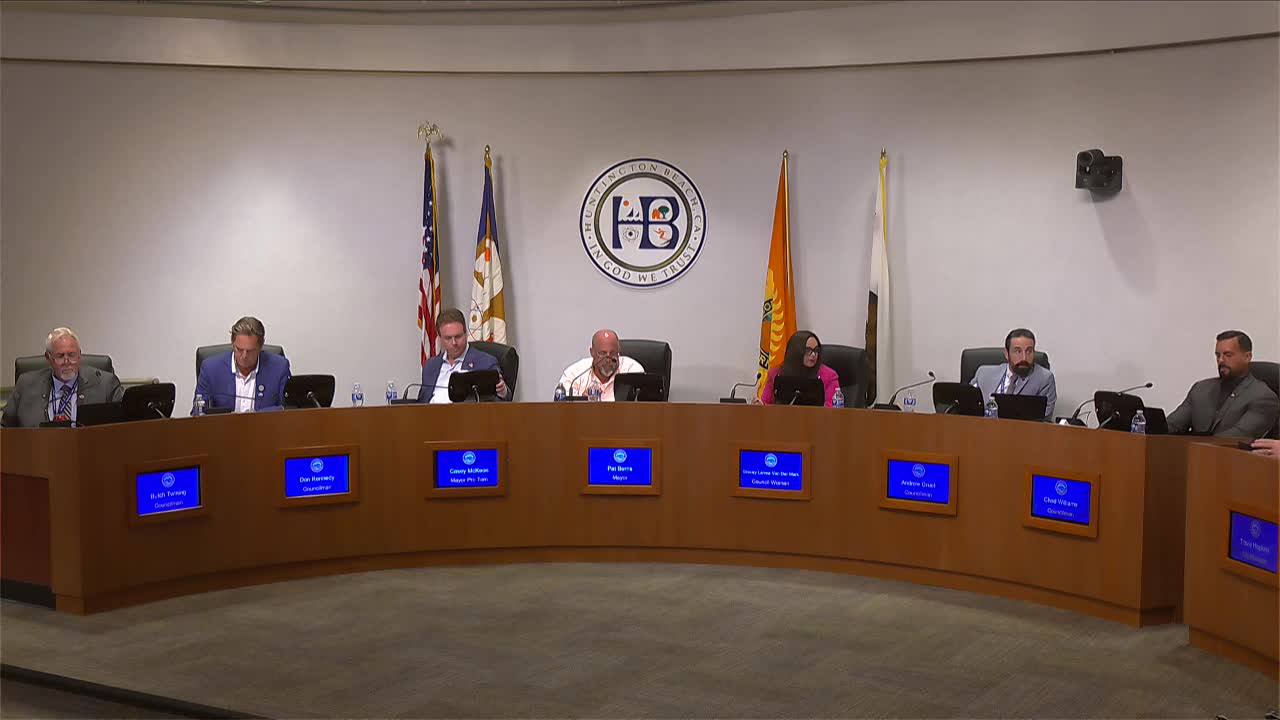
Council members thanked staff for bringing before/after photos and for the transparency requirement that prompts staff to report on projects above $500,000. Several council members said they toured projects and emphasized that documenting on‑time and on‑budget delivery helps public confidence regarding tax‑dollar spending. “This project will last at least 20 years,” Vu told the council when describing the 17th Street pavement life estimate.
Funding sources for the projects included a mix of local infrastructure funds, Measure M, state gas tax and water/sewer funds, Vu said. Staff said contractor collaboration and project scheduling minimized disruption to schools and local services, and that the projects serve as models for future CIP work.