Get Full Government Meeting Transcripts, Videos, & Alerts Forever!
Get email alerts on the Rezoning topic
No spam. Unsubscribe anytime.
Rezoning for Riverplace fails after wide public opposition on traffic and farmland concerns
Summary
A proposal to rezone the Riverplace property to allow higher-density housing failed after 15 public comments and council debate. Council members said engineering, traffic and planning reviews remain available at the preliminary plat stage, but the rezoning motion did not secure majority support.
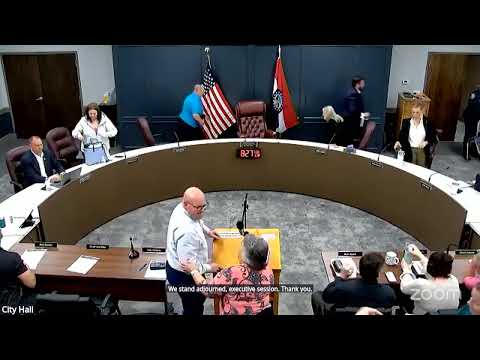
The Smithville Board of Aldermen declined to approve a rezoning for the Riverplace property (bill 3086-25) after extensive public comment and council discussion. The motion failed on roll call: Aldermen Stone, Dana, Atkins, Hartman and Kabilski voted no; Alderman Wilson voted yes.
Fifteen members of the public addressed the council during the Riverplace rezoning item. Speakers raised concerns about traffic at the KK/169 intersection, the narrow bridge and limited snow removal on KK, lack of shoulders for pedestrians and schoolchildren, floodplain issues, loss of farmland and potential effects on property values. Several speakers said they had only recently learned of the proposal and asked for additional time and information, including MoDOT traffic results and environmental or wildlife impact reviews.
The developer's engineer, Robert Parks, said a preliminary plat and a stormwater study have been prepared and that planned development would avoid the floodplain. Parks also said MoDOT controls KK and is reviewing traffic. Several aldermen acknowledged a local need for more housing while expressing concern that this particular site may not be suitable for duplexes or high density because of traffic and location constraints; some noted that density can be revisited during preliminary plat review.
Following debate, the council voted no on the rezoning. The failure of Bill 3086-25 means the rezoning request does not move forward; any future development would require the developer to return with revised proposals and to meet planning and zoning and engineering requirements.