Get Full Government Meeting Transcripts, Videos, & Alerts Forever!
Get email alerts on the Sober Living Group Homes topic
No spam. Unsubscribe anytime.
Bellflower Drive residents press council to close "drug house"; La Mesa subcommittee to study sober‑living rules
Summary
Residents of Bellflower Drive told the La Mesa City Council on Oct. 14 that a nearby property they described as a "drug house" remains open and asked the city to permanently close it; the council’s subcommittee will study sober‑living ordinances and travel to Santa Ana to review model rules.
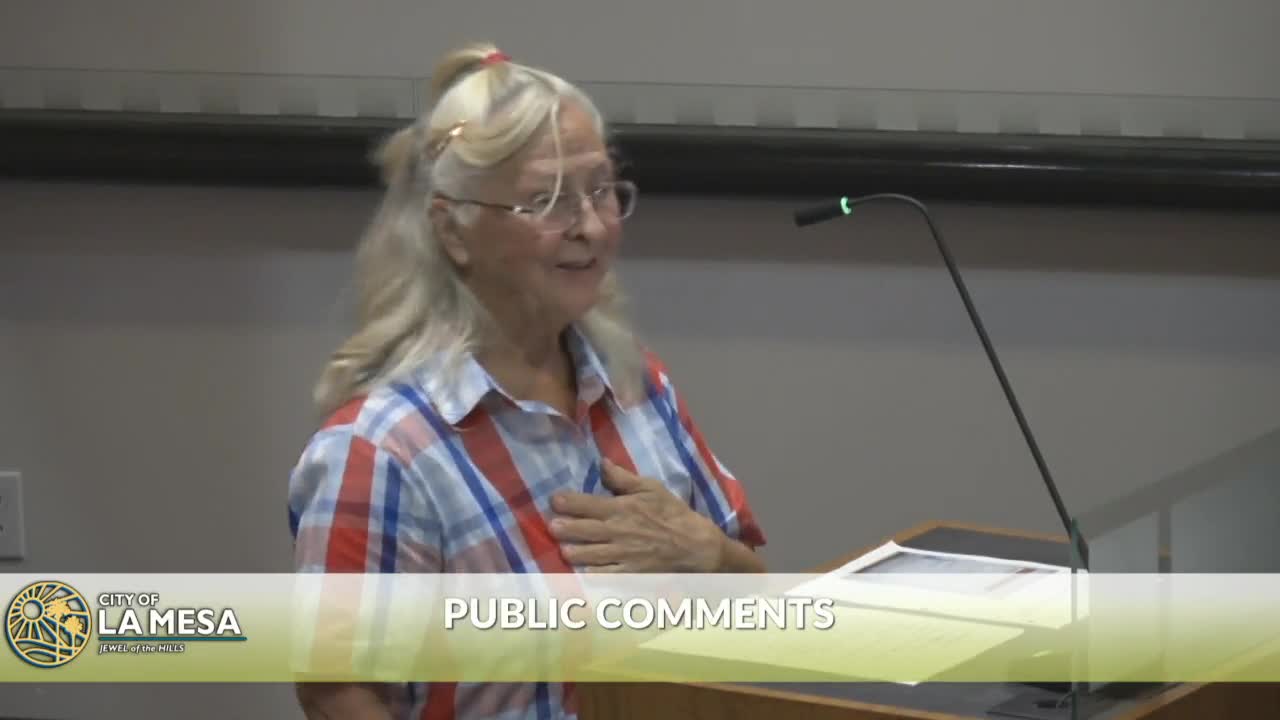
Residents of Bellflower Drive told the La Mesa City Council on Oct. 14 that a nearby property they described as a "drug house" remains open and asked the city to make closures permanent and provide updates. Barb(e)ie Wheeler (transcript: Barbie Wheeler) spoke on behalf of neighbors and said they are "against having a drug house" and that the group home operator had told her she was losing money because of neighbor protest.
Wheeler asked for an update from a council subcommittee that the council previously formed to review regulations governing group homes and facilities. "We were told that they could not give us the information about the youth," Wheeler said, and asked the council to investigate whether the recent closure is only temporary. She thanked the council for creating the subcommittee to review regulations.
Councilmembers said the subcommittee, led by Vice Mayor Casares and Councilmember Lothian, will travel this week to Santa Ana to consult the California Sober Living and Recovery Task Force and study ordinances other cities have adopted. Councilmember Lothian said the Task Force includes Orange County cities that have developed ordinances (some of which were litigated and upheld) and that La Mesa hopes to learn from those models. Lothian also reported the city appears to have about 20 group homes of various types and emphasized the distinction between licensed facilities and unlicensed operations; she said if a facility obtains licensing the city and neighbors gain more enforcement leverage.
The discussion was framed as investigative and preparatory: councilmembers described the travel and review as a fact‑finding and policy‑development step rather than a formal regulatory action. No ordinance or closure was adopted at the Oct. 14 meeting; the subcommittee will return with information and recommended next steps after reviewing model ordinances and legal outcomes from other jurisdictions.
Public safety and neighborhood quality were central concerns in public comment; councilmembers acknowledged legal limits on immediate closure of unlicensed facilities and emphasized the need to craft enforceable local rules informed by other cities' experiences.