Get Full Government Meeting Transcripts, Videos, & Alerts Forever!
Get email alerts on the Water Quarry topic
No spam. Unsubscribe anytime.
Residents warn proposed Watterson quarry could harm Duck River watershed
Summary
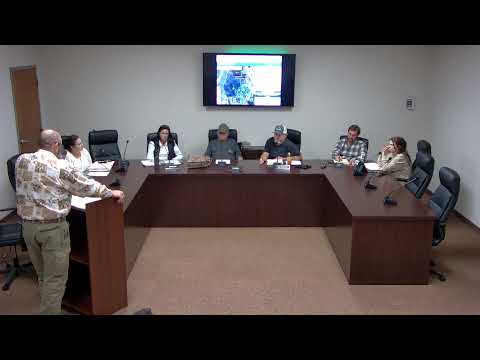
Residents told the Coffee County Planning Commission on Oct. 28, 2025, that a proposed project on roughly 60 acres attributed to Terrell Watterson appears to be a quarry and could cause long-term damage to groundwater and the Duck River watershed.
Residents told the Coffee County Planning Commission on Oct. 28, 2025, that a proposed project on roughly 60 acres attributed to Terrell Watterson appears to be a quarry and could cause long-term damage to groundwater and the Duck River watershed.
"I have some concerns about the proposed Watterson Farm Lakes project," a resident identified in the hearing as Mr. Sandstrom said, arguing the site lies in the headwaters of both the Duck River and the Middle Fork of the Stones River and that blasting could produce "irreversible" effects.
Why it matters: speakers said the planned excavation — described in public remarks as up to about 175 feet deep across some portion of 60 acres — could create voids that hold billions of gallons of groundwater. Using figures cited at the meeting, speakers estimated the full excavation could represent roughly 3,400,000,000 gallons, which they said would be enough water to supply nearby cities for more than two years if it were held in impoundments.
Cam Sandstrom, who identified himself as a neighbor and said he had spoken with Jeff Klein of the Tennessee Department of Environment and Conservation, told the planning body the application includes two six-acre lakes that are, in practice, settling ponds for quarry operations.
"The purpose of those lakes are settling ponds to settle out those suspended solids so that a quarrying operation can continue without being shut down by the state," Cam Sandstrom said. He explained that TDEC's permit process addresses surface-water impacts (for example, stormwater, suspended solids and pH) and that public comment to TDEC would be limited to surface-water issues.
Cam Sandstrom described elements in the application that he said point to quarrying rather than mere cattle-water ponds: engineered roads, creek crossings that would require a 56-foot water crossing or 36-inch culverts, multiple access points, and dams and lake basins that must be surveyed and mapped in advance.
Speakers also offered onsite context. Mr. Sandstrom said the property’s owner has historically watered cattle there, and that typical pond dimensions (two six-acre ponds three feet, three inches deep, in his example) would be sufficient to water livestock for a year if no other sources existed. He told the commission he believes the scale and depth described in the permit application indicate a quarrying operation aimed at rock extraction for sale.
County response and permit status: those who spoke said the Coffee County Commission voted unanimously at a recent meeting to send a letter — drafted by the county attorney — to state officials and the applicant expressing opposition; County Commissioner Sammy Anderson acknowledged the prior vote and said he would follow up, telling residents, "I will." Cam Sandstrom told the planning commission that, as of his conversation with TDEC, engineers had not submitted required corrections to the application and that the permit could not advance until those deficiencies are addressed. He said once corrected the agency would likely take about two weeks and then a 30-day public comment period (limited to surface-water topics) before final approval.
Process and next steps: planning staff said the planning commission cannot take action on an item that is not before it; speakers acknowledged the applicant has the option to return and request a zoning change. Residents asked the commission to monitor the TDEC timeline and noted the time-sensitive nature of required submittals and the 30-day public-comment window.
Other business: the planning commission approved the meeting agenda on a motion from Renu, seconded by Laura Vasquez, and approved the previous meeting minutes on a motion from Laura Nettles, seconded by Sammy Anderson. A motion to adjourn was later made by Sammy Anderson and seconded by Randy; the meeting then ended.
What the record shows: speakers raised concerns about groundwater depletion, downstream impacts to Shelbyville, Columbia, Lewisburg and Spring Hill, and described features in the permit application they say are consistent with a quarrying operation. TDEC was described as the permitting authority only for surface-water impacts; no TDEC decision was announced at the meeting. The planning commission did not vote on any zoning change or the permit itself during this session.