Get Full Government Meeting Transcripts, Videos, & Alerts Forever!
Get email alerts on the Water Treatment topic
No spam. Unsubscribe anytime.
Harrisonburg utilities describe "moving target" turbidity event; staff to optimize backwash, test chemicals and evaluate future supplies
Summary
City utilities staff told council that a recent turbidity spike forced repeated filter cleaning and short runs, reduced treated-water production and drew down storage, and they described immediate and longer-term steps to reduce vulnerability.
City utilities staff gave council a detailed, technical account of a multi-day turbidity event that sharply increased raw-water turbidity and strained the water-treatment facility operations.
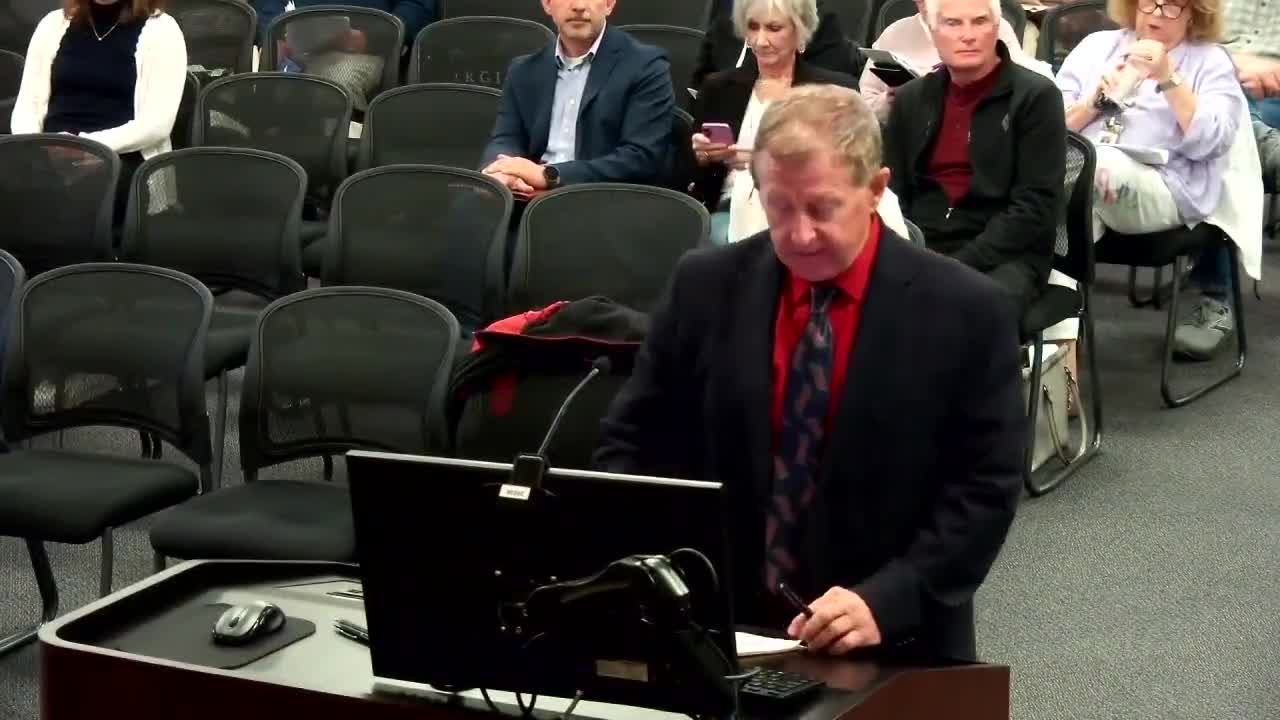
Mike Collins (public utilities staff) told council the plant is a Class 1 facility running multiple surface-water sources and normally operates near 85% capacity. He said the May event produced turbidity readings as high as 180 NTU at the intake and that the plant experienced shortened filter-run times (from roughly 30 hours to about 10 hours), frequent cleaning and backwash constraints that reduced net production and drew down distribution storage. "The minute you get it solved, it's changed again," Collins said, characterizing the problem as a "moving target." He added, "Never would we let that come through to our citizens" and emphasized staff halted production when necessary to protect safety.
Collins described four categories of follow-up action. Immediately, staff will try to optimize the backwash/disposal system so filter cleaning is not delayed by constrained disposal capacity. Staff also will re-engage chemical vendors and consider independent consultants and university resources to find better coagulant/alkalinity mixes and to pilot treatment combinations. Over the next year, the South Fork of the Shenandoah River supply will come online; staff said that source has different alkalinity characteristics that could improve treatability but that they have not yet run critical-period treatability tests. Longer-term, staff will accelerate planning for supplemental groundwater or quarry sources that can provide drought supply and potentially different alkalinity, and they signaled the authority will revisit the plant expansion timeline and rates impact if growth and supply needs change.
Council then considered a staff resolution to rescind the local emergency related to the event; staff said the emergency powers were not used and council voted to rescind the declaration.