
Salem School Board targets major budget areas as 2026-27 proposal tops discussion
Get AI-powered insights, summaries, and transcripts
Subscribe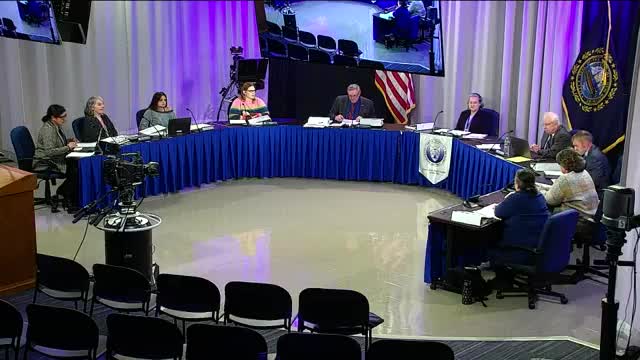
Summary
Board members spent most of the Oct. 28 meeting reviewing the proposed 2026-27 operating budget, focusing on substitute pay, rising maintenance and contract costs in information technology, transportation and athletics, special-education placements, and several capital items including HVAC and athletic-field lights.
At its Oct. 28 meeting, the Salem School Board spent the bulk of the session on a line-by-line review of the proposed 2026-27 operating budget, raising questions about rising maintenance and contract costs, transportation and athletics expenses, and several capital requests.
Assistant Superintendent for Business Operations Debbie Payne told the board the district’s Sept. 30 operating report shows federal grant reimbursements lagging expenses and “roughly $2.6 million” remaining in the budget at this early point in the fiscal year. Payne described several lines that are over budget to date — including costs related to in-district behavior technicians and rooftop-unit repairs at Salem High — and noted that some expenses that were previously bought as capital purchases have rolled to operating as multi-year service agreements expire.
Why it matters: Board members emphasized that several recurring maintenance and contract renewals — particularly for core information-technology systems and security — are moving sizeable costs from capital to operating. That shift, coupled with higher projected transportation and athletics costs, has tightened the margin for discretionary items.
Major items discussed
Substitute pay: Administration recommended raising day-to-day teacher substitute pay from $100 to $110 and building-based substitutes from $105 to $115, with long-term subs tied to the SEA (Salem Education Association) step-1 schedule. Board members pressed whether higher pay or a separate retired-certified-teacher rate would attract more experienced substitutes; the board asked administration to return with a specific cost estimate for adding differentiated rates targeted at retired certified teachers.
Information-technology maintenance: David, the district IT lead, told the board that several three-year maintenance and support agreements are again appearing in operating budgets as their original multi-year terms expire. He cited the return of Genetec security maintenance, renewed server and backup-storage maintenance, and increased Fortinet support on replacement firewalls as drivers of higher IT operating costs.
Transportation and athletics: Payne said athletics transportation is rising because of longer trips and increased away contests. The budget shows notable increases in athletics transportation allocations (middle school projected to rise roughly from $28,000 to $48,000; high school from about $73,000 to $111,000). Board members requested an analysis of current mini-bus utilization and a buy-vs-rent analysis for vans or a third mini-bus to reduce recurring contractor costs.
Special-education placements and tuition: The budget reflects out-of-district placements and residential costs. Payne said the district currently has 17 students placed out of district and three students in residential placements; she noted those placements drive tuition and private-placement lines and are a primary driver of projected increases.
Facilities and capital: The board discussed several capital items including rooftop unit repairs at Salem High, the Woodbury temperature-control contract (previously paid from construction funds), and instrument lockers requested for Woodbury’s music program. Members debated prioritizing dugout repairs, playground upgrades, and an approximately $200,000 estimate for replacing aging Grant Field lights with LEDs; administrators and some board members said LED replacement yields long-term energy savings but several trustees favored deferring the lights or placing them on a warrant article. A board member suggested creating a playground trust fund so operating contributions can accumulate until a full playground set can be purchased.
Insurance and claims: Administration presented PrimeX pooled-insurance claim trends and noted a large 2024 building-and-contents claim tied to a freezer failure and food loss. Legal and due-process costs also contributed to higher liability figures in the most recent year.
Board direction and next steps
Board members asked administration to return with more precise cost estimates in several areas: the financial impact of a differentiated retired-certified substitute rate; a mini-bus utilization and purchase analysis; a three-year look at athletics and transportation trips and costs; and a clearer amortization of multi-year IT maintenance renewals. Trustees also discussed the possibility of moving selected large capital items to warrant-article consideration.
Votes at a glance
- Adopt Oct. 14 regular meeting minutes: motion made and approved, vote 5–0. - Adopt Oct. 14 nonpublic session minutes: motion made and approved, vote 5–0. - Adopt Oct. 21 planning-session minutes: motion made and approved, vote 5–0. - Approve consent agenda (one resignation; one professional nomination—Sarah Breen, special-education teacher at Lancaster Elementary, salary $55,655): approved 5–0. - Adjournment: motion and approval 5–0.
Who said what (selected speakers): Assistant Superintendent Debbie Payne presented the financial details and answered line-item questions; Superintendent Mara Palmer introduced substitute-pay recommendations; IT lead David explained maintenance renewals; several board members — including Mike Carney and Kelly Moss — asked for follow-up costings and analyses.
What’s next: The board scheduled further budget review at its Nov. 4 meeting (start time adjusted to 6:30 p.m.) and discussed potential additional meetings in November to meet the district’s budget-delivery deadlines.