
Manchester outlines Chromebook inventory, repair rates and a high-school device pilot
Get AI-powered insights, summaries, and transcripts
Subscribe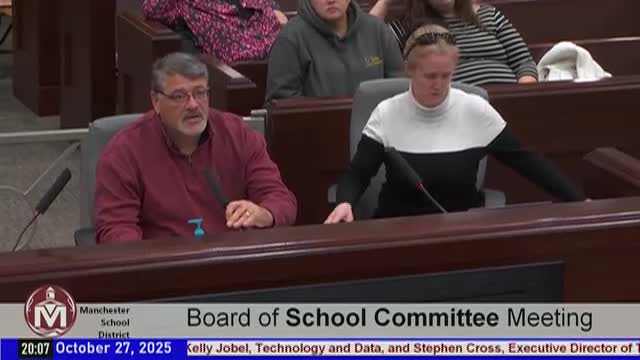
Summary
IT and district leaders told the board the district currently has more Chromebooks in inventory than enrolled students and outlined repair/asset-management practices, warranty-life extensions and a proposed pilot to issue individual Chromebooks to high-school students to solve study-hall access problems.
Steve Cross, director of information technology, told the Board of School Committee that the district's asset-management reports show more student Chromebooks on hand than current K—2 enrollment and that IT can track "devices syncing in Google" to confirm active use. Cross said the district excludes teacher devices from the student inventory count and that some schools use iPads (not included in the Chromebook counts).
Cross and administration explained the district is repairing 250 to 500 Chromebooks per month and currently has about 1,500 newer Chromebooks in inventory. Cross said Google—2s declared "end of life" dates for some models shifted (extending usable life for some devices), which reduced the immediate replacement need. IT said the replacement cadence still requires a recurring annual purchase and that a multi-year asset-replacement spreadsheet exists to estimate ongoing costs.
Superintendent Dr. Camille Espinola told the board the district is exploring a high-school pilot to issue a dedicated Chromebook to each student at one high school and monitor the break/damage rate before wider rollout. The administration said it chose a high-school pilot because middle schools currently show higher device breakage and the district wants to limit initial risk. Dr. Espinola also described coordination with assistant superintendents and principals on how schools deploy carts and devices for study halls and other periods.
Board members pressed IT and administration on whether the district tracks devices by student (Destiny asset-management), whether schools use fines/fees for damaged devices and whether building-level technical staff are available to perform repairs. Administration said Destiny is used for asset tracking and schools have processes for charging fees (though collection is inconsistent). The district said it does not have a full-time technician in every middle or high school; IT asked the board to consider funding staffing to improve turnaround and asset accountability.
Context: Student members, parents and school leaders raised instances where students lacked access during study hall or had to share limited carts. Administration committed to pilot a one-to-one issuance at a high school, provide the board with repair/replacement budget numbers and present a costed plan for staffing and replacement cadence.