
Spruce Elementary students and principal present school improvement plan focused on English-language arts and belonging
Get AI-powered insights, summaries, and transcripts
Subscribe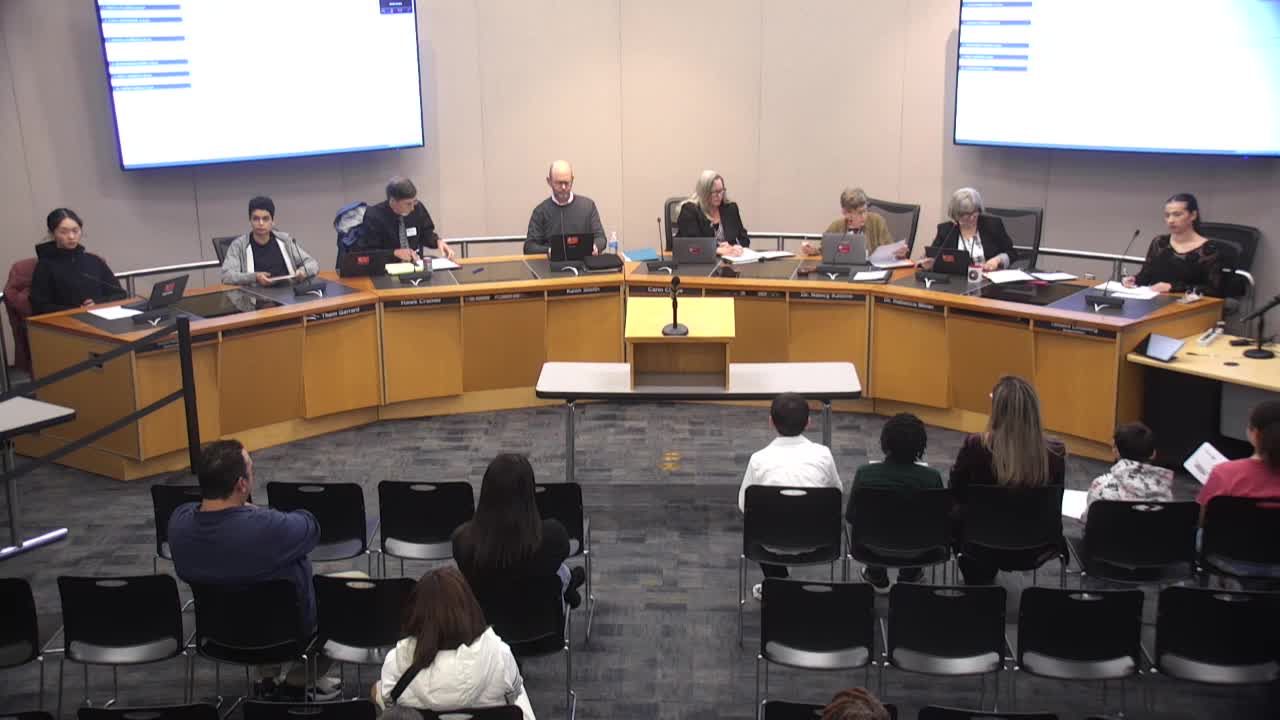
Summary
Students and Spruce Elementary Principal Rana Nakore presented the school’s priorities, student programs and a three‑year School Improvement Plan (SIP) aimed at raising ELA proficiency, expanding multilingual supports and increasing student belonging.
Spruce Elementary Principal Rana Nakore and student leaders presented the school’s demographics, student programs and a three‑year School Improvement Plan to the Edmonds School District Board on the meeting’s student-presentation agenda.
Nakore told the board that Spruce is a Title I dual‑language school serving about 651 students, with more than 300 multilingual learners, approximately 304 students receiving Title services and 97 students qualifying for special education supports. She said the school has 90 staff members.
The SIP presented to the board set a three‑year ELA target: by the end of the 2026–27 school year, third‑ through sixth‑grade students will increase the percentage meeting grade‑level standards in English language arts by at least 10 percentage points (from 37% to 47% based on SBA scores). The principal said the annual goal is aligned to i‑Ready diagnostic assessments and that the school’s quarterly assessment cadence will inform interventions and progress monitoring.
Nakore described a “theory of action” centered on strengthening Tier 1 instruction through targeted GLAD and SIOP literacy strategies, a K–6 multilingual push‑in model to integrate language and content supports, and regular MTSS collaboration to monitor multiple data sources. She listed classroom strategies adopted by staff: structured interaction (think‑pair‑share), turn and talk, visuals and realia, QSSSA (question, signal, stem, share, assess), academic sentence stems, and focused academic‑vocabulary instruction.
Students who spoke described school clubs and community events: Student Council, STEM club, athletics for upper elementary grades, Art With Heart, Books for Bears (a readathon that triggers a community donation from a local business), and family‑oriented events such as multicultural night and movie night. At the podium, one student recited the Spruce pledge: "As Spruce, we are compassionate citizens. We are responsible and respectful even when it's not easy. Even when no one's looking, we have the courage to work for the common good. We are Spruce."
Board members asked clarifying questions about newcomers, the district assessments used at different grade bands, and the equitable master schedule. Nakore said the newcomers cohort numbered "over 25" at the time she prepared the presentation and that newcomer placement and duration vary by student needs. She explained the school’s plan to prioritize schedule alignment to reduce missed Tier 1 instruction, and said the multilingual team is leading GLAD strategy implementation and co‑teaching in some classrooms.
Nakore also described professional development tied to the SIP: training on the district‑adopted 95% phonics curriculum, structured time for teachers to collaborate with MTSS teams, i‑Ready training and WIDA administration for designated multilingual students. The principal said the school uses i‑Ready quarterly for grades 1–6 (with kindergarten assessed in winter and spring) and the SBA in spring for grades 3–6.
The presentation closed with board commendations for the students and school staff and questions about family communication and interventions. The principal thanked the board and highlighted the school’s focus on belonging as a driver for engagement and academic growth.