Town and Country hears updated design, tighter constraints and higher program estimate for city hall, police and fire renovations
Loading...
Summary
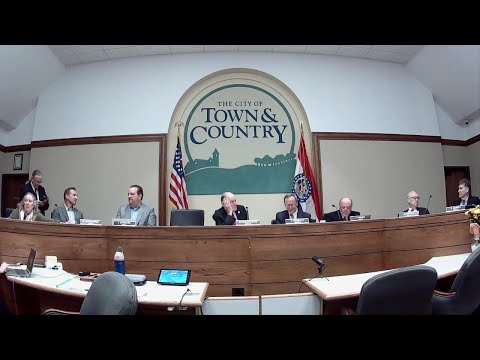
City of Town and Country officials on Oct. 27 received an extended schematic design and budget update on proposed renovations to city hall, the police department and the fire station.
City of Town and Country officials on Oct. 27 received an extended schematic design and budget update on proposed renovations to city hall, the police department and the fire station.
The presentation, led by Joe Switzer, the city's owner's representative from Navigate, and Roy Mangan, an architect with Arch Images, described site surveys and geotechnical work that revealed underground utilities and easements limiting exterior additions and suggested reusing space vacated by public works rather than building outward.
The discussion mattered because the constraints and program choices changed the project's scope and cost estimates. Sam, a city staff presenter, reminded the board that the original total program allocation was $5 million, with $2 million earmarked for the fire station. Multiple independent estimates produced different construction values: an August estimate briefly showed about $6.5 million, a later internal takeoff reduced a construction estimate to about $4.6 million, and staff presented a total program estimate of roughly $7.2 million when fees, furniture, contingencies and other nonconstruction costs are included.
"We are within arms reach because an estimator's estimate, it's not bid opening," Switzer told the board, urging continued attention through design development and construction documents to keep the work near budgeted contingencies.
Design choices presented Thursday included a secured sally port and booking area in a remodeled basement garage, two separate detainee cells, evidence processing that separates unsecured and secured zones, and a dedicated elevator location to provide internal multistory access. Roy Mangan described how the existing footprint would be used: "we are able to have then up to 5 detainees at a time," he said, noting that increasing capacity further would add mechanical and safety systems and costs.
Aldermen pressed consultants on accessibility requirements. Switzer and Mangan advised the board that federal accessibility rules implemented by the Department of Justice can be triggered by capital improvements that change layout or move walls and that the project likely crosses that threshold, making an internal elevator and related ADA upgrades necessary. The presenters said they had evaluated options to limit the scope where possible but that legal and building code interpretations made the elevator requirement difficult to avoid.
The plan also calls for administrative changes: relocation of the mayor's office, consolidation of scattered server and IT systems into a single secure server room, a public works service window within a public corridor, upgrades to HVAC, and interior security and records storage improvements. For the fire station, the consultants recommended exterior maintenance, new apparatus bay doors, thermal insulation in sleeping and attic spaces and HVAC upgrades to extend the building's useful life.
Project costs shown to the board include construction cost estimates plus contractor allowances, utility tap fees, furniture fixtures & equipment, and professional services. Staff said the program retains a 15% contingency and includes a 3% escalation assumption. Switzer warned that estimates are not final bids and that the project will require continued value engineering during the design process.
Police leadership indicated the design team had coordinated operational needs. "This has been a team effort from the beginning," the police chief said, endorsing the general approach.
Next steps include further design development, additional estimate rounds in January and coordination with a planned public works relocation so interior space can be repurposed rather than constructing new exterior additions. Staff told the board they would return with further cost refinements and a schedule for next design milestones.
The board did not take a final funding vote on the project at the Oct. 27 meeting; the presentation was an update and review.