
Alamance County tax office previews 2027 revaluation, reports staffing and technology upgrades
Get AI-powered insights, summaries, and transcripts
Subscribe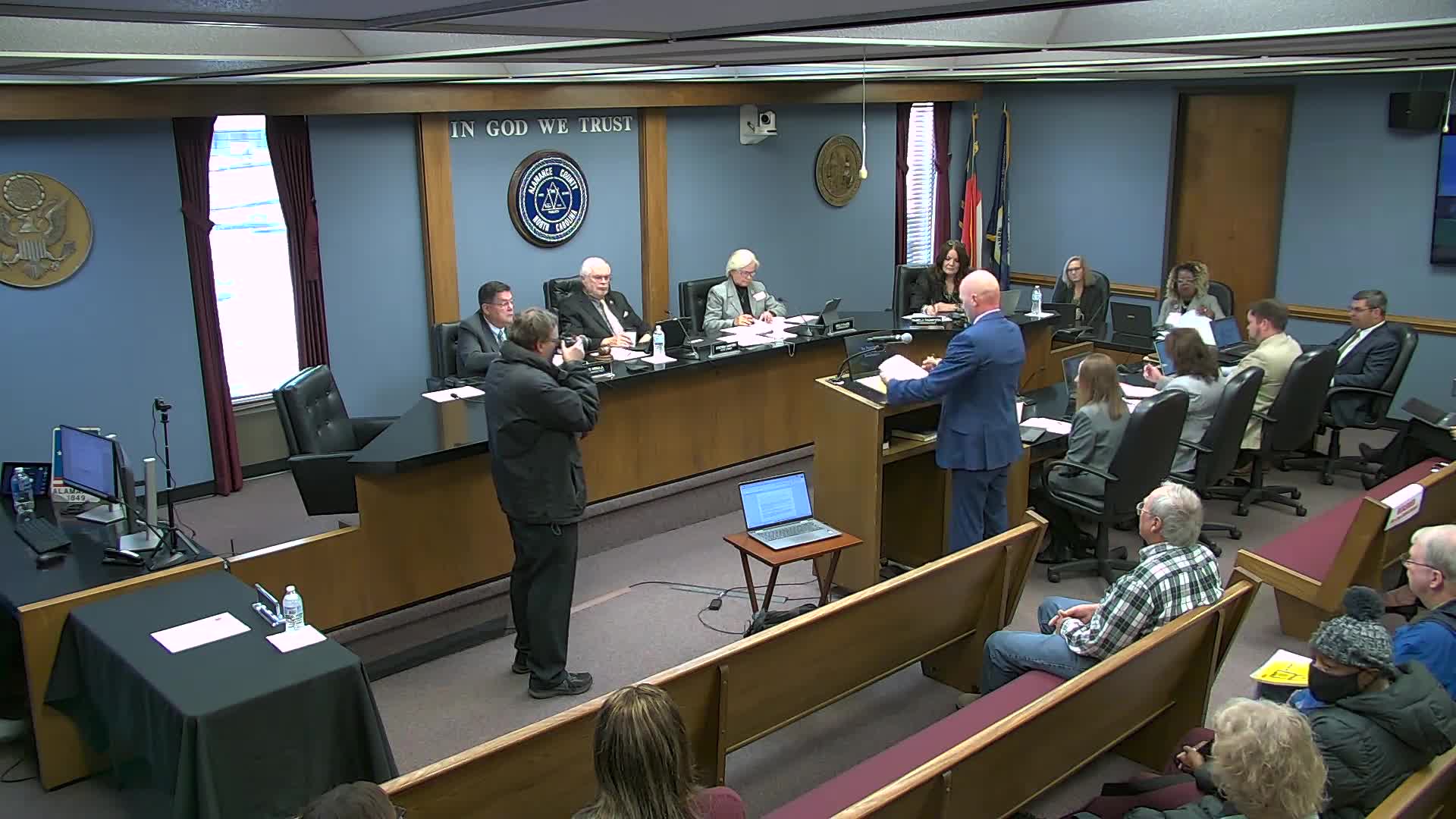
Summary
Brad Fowler, speaking for the Alamance County Tax Office, gave commissioners a 180‑day update on Nov. 3, outlining staffing changes, new online tools and the county’s plan for the 2027 revaluation.
Brad Fowler, speaking for the Alamance County Tax Office, gave commissioners a 180‑day update on Nov. 3, outlining staffing changes, new online tools and the county’s plan for the 2027 revaluation. "We did find or did have a 99.21% collection rate, which was really good for the county," Fowler said, and reported the office’s vacancy rate had fallen from 26% when he arrived to about 3% as of that morning.
Fowler described a newly redesigned tax website and a property‑record portal that allows residents to view building photos, sales in their neighborhood and to submit corrections to records online. The office also added tap‑to‑pay terminals for in‑person payments and launched a pro bono business personal property audit program with the state secretary of state’s office to identify unlisted businesses.
On the revaluation, Fowler said the county elected to move to a four‑year cycle and contracted Vincent Valuations to perform a full list‑and‑measure and to prepare the schedule of values for a Jan. 1, 2027 valuation date. "North Carolina general statute 105 to 86 says that all counties in the state must revalue property at least once every 8 years," he said (as stated in the meeting). He reported Vincent had completed 37,000 parcels in the data‑collection phase and described a timeline that includes residential review in March 2026, commercial review beginning in September 2026 and valuation notifications to taxpayers in early 2027.
Fowler emphasized the role of appeals and quality control: county staff will run sales‑ratio analyses, monitor coefficients of dispersion and the price‑related differential to check for horizontal and vertical equity, and use internal and contractor quality‑control checks. He told commissioners he will deliver a proposed schedule of values for the board’s review in August 2026 and that statutory public notices and a hearing are planned during the adoption process.
Fowler also addressed resident concerns about field staff identification, saying Vincent employees will drive marked vehicles and carry county ID badges and that they should not ask to enter homes; residents were instructed to call the sheriff if someone asked to enter. He described other operational changes — GPS monitors on appraisers’ vehicles, weekly production metrics for appraisal staff and a goal to canvas one‑eighth of county properties annually after the contractor work is complete.
Commissioners asked about the coverage of commercial properties, whether parts of the revaluation could be brought in‑house, and how Alamance’s collection rate compares with neighboring counties. Fowler said the residential portion could be performed in‑house with training but that commercial valuation expertise would likely remain contracted. He also said the contract’s full list‑and‑measure is an atypical expense meant to catch records up and that staff will continue ongoing canvassing after the contractor completes the 2027 work.
Why this matters: Revaluation affects assessed values and tax notices for nearly 80,000 parcels; the board and residents will receive multiple points of public outreach and a formal appeals process when the valuations are issued.