Get Full Government Meeting Transcripts, Videos, & Alerts Forever!
Get email alerts on the Home Business Dog Boarding topic
No spam. Unsubscribe anytime.
Cobb commissioners deny home dog-boarding permit after residents and code enforcement raise safety and nuisance concerns
Summary
The Cobb County Board of Commissioners denied a land‑use permit request for a home‑based dog‑boarding and training business after neighbors and county inspectors detailed repeated calls, alleged incidents and code violations.
The Cobb County Board of Commissioners denied a land‑use permit request for a home‑based dog‑boarding and training business after neighbors and county inspectors detailed repeated calls, alleged incidents and code violations.
Anne Lucasville, the applicant, described her operation as a “board and train” business that houses dogs temporarily for behavior and obedience instruction and said she holds a Georgia Department of Agriculture kennel license. Lucasville told the board the work is her primary income and that clients and neighbors had provided letters of support.
Opponents told a different story. Several homeowners and neighbors described ongoing noise, alleged dog‑bite incidents they said occurred in the yard, and a pattern of calls to 911, animal control and code enforcement. “They use barbaric methods to keep multitude of dogs quiet,” said neighbor Michelle Cubay, who told the board she had witnessed fighting and alleged animal welfare problems. Other neighbors cited trespass, increased traffic, lost peace and potential impacts to property values.
Lisa Forrester of Cobb County Code Enforcement told the board officers had investigated and documented outside storage, noncompliant vehicles, and vehicles with expired tags associated with the property during multiple inspections. Forrester said a white van seen in photographs was registered to the home’s address and that enforcement had issued a notice of violation earlier this year. The record also contains email documentation of multiple county responses to neighborhood calls.
Lucasville disputed some allegations and said neighbors’ complaints grew from a personal dispute; she also said state inspectors visit the property periodically. She told commissioners the business provides therapy and service‑dog training, that dogs are kept in controlled, one‑on‑one settings, and that she had installed an enclosed storage area for items such as mulch and a new fence. “This is my only income and the career I chose to help our community,” she said.
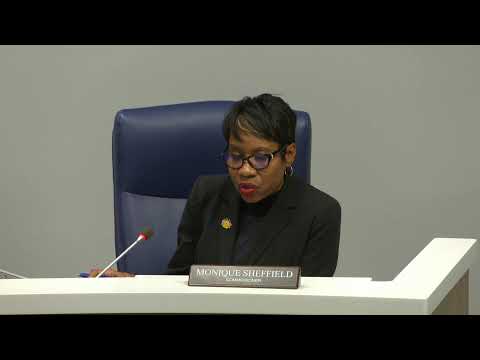
After hearing testimony from both sides and noting the code enforcement record, the board voted to deny the permit request and instructed Lucasville to come into compliance within 30 days. The board emphasized the distinction between private‑home care and a commercial, higher‑intensity operation in an established residential neighborhood.
What happened next: The denial does not preclude the applicant from correcting code issues and pursuing a different path, but the board said it expects the applicant to follow up promptly with code enforcement and to remove any nonconforming storage or vehicles identified in inspection reports.