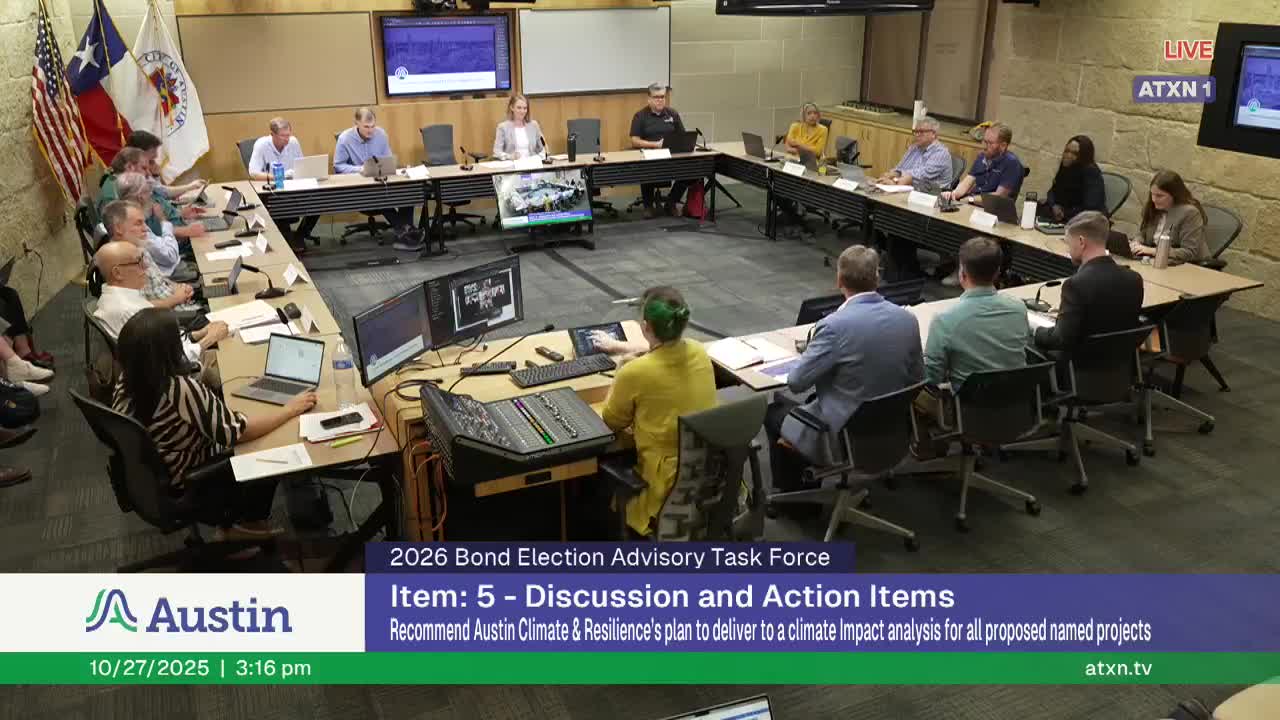
Austin climate office to produce screening life‑cycle carbon analysis for 66 proposed bond projects
Loading...
Summary
The Office of Climate Action and Resilience will prepare a screening life‑cycle carbon analysis for 66 candidate bond projects and present preliminary results to the task force on Nov. 17, focusing on embodied and operational greenhouse‑gas emissions.
The Office of Climate Action and Resilience (OCAR) told the 2026 Bond Election Advisory Task Force on Oct. 27 that it will prepare a screening‑level life‑cycle carbon analysis for the 66 projects included in the July 31 mayoral memo and deliver draft findings to the task force on Nov. 17.
Zach Bomber, director of the office, said the analysis will focus on embodied carbon (materials and construction) and operational carbon (energy use), using industry standard assumptions and city data where available, and will estimate greenhouse‑gas emissions for each project and for the package as a whole. The team emphasized the need to define scope and use consistent assumptions to make cross‑project comparisons useful.
Philip Drawn, senior climate analyst, gave two illustrative examples: a proposed 40,000‑square‑foot Northeast public health center (estimated at roughly 13,000 metric tons CO2 over a 50‑year lifetime using standard assumptions for embodied materials and operational energy) and a $20 million Safe Routes to School sidewalk and bike project (which the team estimated could yield net‑negative lifecycle emissions, roughly ‑7,000 metric tons CO2 over 50 years, by inducing walking and biking and avoiding vehicle trips). Both examples depend on assumptions flagged by the presenters.
OCAR cautioned that some project types — notably programmatic affordable‑housing funding or projects that lack site‑level details — may not be suitable for meaningful screening quantification and could require different treatment or exclusion from the initial analysis. The office said it will review assumptions with departments, reconcile programmatic vs. project distinctions, and provide visualizations and confidence guidance to help the task force interpret results.
OCAR proposed a one‑page visualization and recommended the task force use the screening results to identify which projects would justify more detailed, project‑level life‑cycle analyses as design progresses.