Get Full Government Meeting Transcripts, Videos, & Alerts Forever!
Get email alerts on the Probation Extension topic
No spam. Unsubscribe anytime.
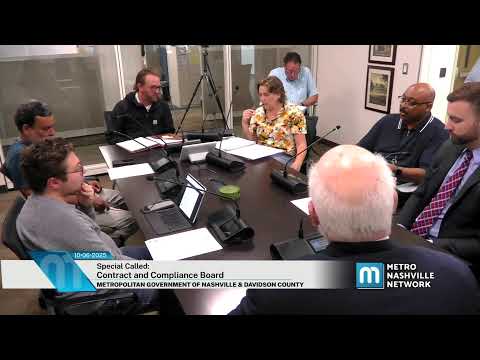
Contract and Compliance Board recommends six-month extension of executive director’s probation
Summary
The Contract and Compliance Board voted to recommend that the Civil Service Commission extend executive director Trey’s probationary period by six months to allow the board time to finish bylaws and set evaluation standards.
The Contract and Compliance Board voted to recommend that the Civil Service Commission extend the probationary period for the board’s executive director, Trey, by six months.
Staff member said the extension is necessary because the board has not completed bylaws or established evaluation protocols. “We are proposing, to recommend the civil service commission to extend the probation period for our executive director for a number of months,” the staff member said.
The move matters because civil service rules require a formal performance evaluation within the probation window. The staff member told board members that, under civil service rules, the board must provide a performance evaluation but that “in this case, it wouldn't be a reasonable performance evaluation” given that bylaws and role definitions are incomplete.
Presiding member emphasized that standards should exist before judging performance. “If we are going to judge his performance, it has to be based on the bylaws that we established, which we have not finished,” the presiding member said. Board members said the board’s work test for new employees is typically six months and that the six-month extension represents the maximum allowable window; evaluations could be completed earlier if bylaws are ready.
A board member who chairs the bylaws subcommittee said the group is close to finishing the bylaws and hoped to present them within a month. The staff member added that the mayor and human resources are supportive of the request.
A motion was made to recommend the six-month extension to the Civil Service Commission. The motion was seconded, and the presiding member called the vote. Members who voiced support said “aye,” and the presiding member declared the motion passed.
After the vote there were no further substantive comments and the board adjourned.
The board did not record a formal, named roll-call vote in the transcript; the transcript records members saying “aye” and the presiding member announcing the motion passed.