Get Full Government Meeting Transcripts, Videos, & Alerts Forever!
Get email alerts on the Child Protective Services topic
No spam. Unsubscribe anytime.
CPS caseloads rise; staff and committee note increased youth alcohol use and truancy efforts
Summary
Child and family services staff reported 27 children in out-of-home care as of Nov. 1 and an increase in CPS reports in 2025 compared with 2024; the committee discussed rising alcohol use among youth, ankle-monitor alcohol detection and truancy/diversion incentives funded by grants through 2026.
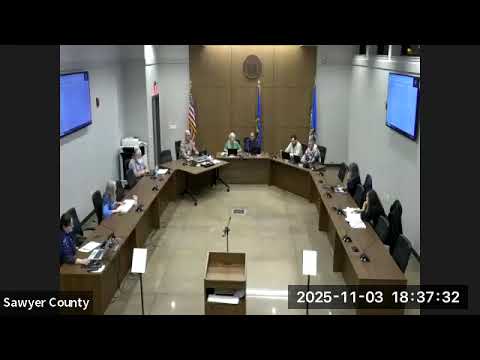
Child and family services staff told the Sawyer County Health & Human Services Committee on Nov. 3 that 27 children were in out-of-home care as of Nov. 1. Staff provided a breakdown: 18 in foster care, five in residential care, three in institutions and one in a group home. They also reported that CPS reports increased from 172 (Jan.–Sept. 2024) to 204 (Jan.–Sept. 2025).
A staff member flagged growing alcohol use among younger clients as a notable trend. "One of the things that was brought to our attention was the increase in alcohol use with those younger kids," the staff member said, noting many youth presenting to juvenile services have alcohol use along with other substances. The committee discussed that ankle monitors now detect alcohol, which has influenced supervision practices.
Committee members also reviewed truancy and diversion efforts. Staff said roughly 32 youth are participating in diversion-style programming designed to improve school attendance. Incentives such as gift cards and gas cards are included in program budgets and were purchased with grant funding; staff said grant funding for the incentives is expected through 2026, but community donations may be sought if grant funding declines.
The committee discussed the need to ensure timely access to inpatient and outpatient behavioral-health services for youth and noted tribal partnerships as part of referral pathways. No formal policy change was adopted; staff were asked to continue monitoring trends and service needs.