Get Full Government Meeting Transcripts, Videos, & Alerts Forever!
Get email alerts on the Elementary Instruction And Culture topic
No spam. Unsubscribe anytime.
Kirkwood R-VII elementary leaders present unified instructional plan emphasizing Win Time, PLCs, restorative practices and new math resource
Summary
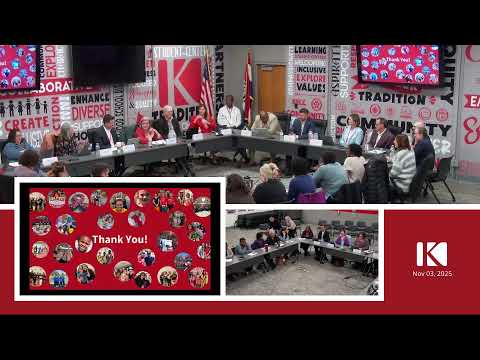
KIRKWOOD R-VII — Elementary principals and assistant principals from all five Kirkwood elementary schools presented building-level strategic-plan highlights to the school board, emphasizing coordinated instructional structures, social‑emotional supports and renewed family engagement.
KIRKWOOD R-VII — Elementary principals and assistant principals from all five Kirkwood elementary schools presented building-level strategic-plan highlights to the school board, emphasizing coordinated instructional structures, social‑emotional supports and renewed family engagement.
"We are excited to have our elementary school leadership teams here with us this evening to talk about the work that exists in their strategic plans," said Liz Grama, assistant superintendent, opening the presentations. Leaders said the presentations were intended to highlight both districtwide initiatives and school‑specific priorities.
Why this matters: Board members and administrators said a consistent set of expectations across elementary schools — matched with site flexibility — helps ensure students receive similar core instruction while principals tailor supports and programming to local needs. The presentations focused on four recurring themes: Win Time (What I Need) as a scheduled intervention block tied to MTSS and PLC work; grade‑level PLCs and learning labs; restorative practices and counseling; and the district’s year‑one adoption of Amplify/Desmos for math instruction.
Win Time, PLCs and learning labs Leaders described Win Time as a common, data‑driven block at each grade level intended to deliver targeted instruction based on PLC decisions and benchmarking. "Win Time stands for what I need, and it happens in all of our schools at each of our grade levels for ELA, typically for reading, and for math time," an elementary leader said. Teachers meet weekly in PLCs to review academic and SEL data; teams also schedule learning labs that allow colleagues and coaches to model instruction and study classroom practice.
School leaders said LitLink coaches, FastBridge benchmarking and shared language around intervention levels (supplemental, intensive) are used to guide placements and instructional decisions. District staff said they administer pre/post surveys for PLCs and monitor correlations between PLC functioning and student achievement.
Restorative practices and SEL Presenters said restorative practices are embedded districtwide and that the district provides PD for both certified teachers and support staff. "Restorative practices is not something that we do. It's really who we are," said Jen (staff member), who presented the restorative-practices overview. Schools described daily community‑building circles, monthly guidance lessons from counseling teams and SEO coach support for classroom staff. The district confirmed that Second Step remains the SEL curriculum in use.
Idea Lab, STEAM and hands‑on learning Administrators reported that Idea Lab and MySci units give students extended, hands‑on experiences; buildings said classes spend about 18 days in Idea Lab units to complete engineering and design challenges. Schools cited STEAM nights and family engagement events as ways to connect classroom learning to families.
Math adoption and professional development The district is in year one of a full adoption of Amplify/Desmos for elementary math. Administrators outlined a common lesson structure — warm‑up (“notice and wonder”), two partner or small‑group activities, a whole‑group synthesis and either center time or an independent "show what you know" task — with built‑in reteach and enrichment pathways. The curriculum rollout included initial trainings in May and August and a recent three‑hour training session; district coaches and vendor support are scheduled throughout the year. Leaders said teachers will continue to receive grade‑level coaching and targeted PD tied to observed needs.
School highlights and community engagement Each principal summarized building priorities and initiatives: Kaiser emphasized adult learning, a belonging committee and expanded fifth‑grade leadership; North Glendale highlighted outdoor learning, student repair/mentorship projects and an expanding musical; Robinson described a principal’s lunch‑bunch and student counseling groups; Tillman detailed site action‑research projects, brain‑based movement research and a tech cadre with an Apple facilitator; Westchester described rotating guiding‑coalition cohorts, staff committees and trust work with an outside consultant.
Questions from the board During Q&A, board members asked how the district balances consistent expectations with school autonomy, how PLCs measure impact and whether learning‑lab priorities (for example, prioritizing print books in reading lessons) are uniform across buildings. Administrators said the PK–5 leadership meetings and a shared agenda support cohesion, while building leaders retain discretion to meet local student needs. District leaders said they will gather teacher feedback on schedules and movement breaks before formalizing any unified changes.
What was not decided Presenters said the district is actively gathering feedback on elementary schedules, recess/movement frequency and the balance of technology use; no districtwide scheduling changes or new policies were adopted during the meeting. Formal actions or votes on these subjects were not taken.
Looking ahead Administrators and the board identified continued work for the year: refine PLC measures, collect staff and family feedback on schedules and movement, deepen restorative‑practice participation, and continue coaching for the Amplify/Desmos roll‑out. The meeting concluded with routine announcements about upcoming district events.