Get Full Government Meeting Transcripts, Videos, & Alerts Forever!
Get email alerts on the Tree Policy topic
No spam. Unsubscribe anytime.
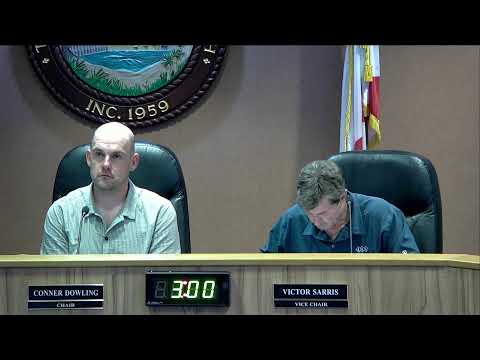
Planning board debates tighter rules for flexible setbacks to save trees; approves comprehensive-plan edits for transmittal
Summary
Board members discussed tightening the city's flexible-setback rule for saving trees, urging higher DBH thresholds, a short protected-species list and mandatory arborist documentation; staff was asked to draft ordinance language for the board to review.
Board members spent an extended portion of the meeting discussing the city's flexible-setback process, which lets applicants request reduced setbacks to preserve "significant" trees. Staff said the existing flexible-setback rule treats trees with DBH of 8 inches or greater as potentially significant; members expressed concern that the threshold and species list were too broad and had been abused in some recent cases.
Jennifer, planning staff, reviewed staff recommendations and noted a key constraint: state law enacted via House Bill 1159 (2019) means an ISA-certified arborist's written determination that a tree is a danger to a structure can limit the city's ability to prevent removal. Board members discussed options including raising the DBH threshold (for example to 20'24 inches), excluding palms and smaller ornamentals, and requiring a professional arborist or landscape report that documents age, health and minimum distances to foundations. One member suggested a short list of species the city would treat as qualifying for flexible setbacks (for example large live oaks and certain long-lived native trees), rather than a universal 8-inch rule.
Several members emphasized that a flexible-setback approval should not be a way to expand usable lot area for later projects such as pools; staff reminded the board that mitigation and replacement language exists elsewhere in the code for tree removals. The board directed staff to draft an ordinance amendment that: (1) requires the qualifying tree to be on the applicant's property, (2) requires an arborist or landscape report with condition and minimum distance, and (3) incorporates a short list of qualifying species and minimum DBH values. Staff agreed to draft proposed text and return to the board.
On separate business the board completed a first reading of modest comprehensive-plan corrections and clarifications, including edits requested by the commission (wording fixes, updating references from "climate action plan" to "resiliency plan", and updated maps). A board member moved to accept the amendments as presented; after the required reading of the ordinance caption the board voted to forward the amendments for transmittal to regional and state review. The vote to accept and transmit the comprehensive-plan edits passed as recorded in the minutes. The meeting closed with no additional old business.