Get Full Government Meeting Transcripts, Videos, & Alerts Forever!
Get email alerts on the Ethics Review Board topic
No spam. Unsubscribe anytime.
Clallam County committee refines proposed ethics review board; appeals process and legal costs remain unsettled
Summary
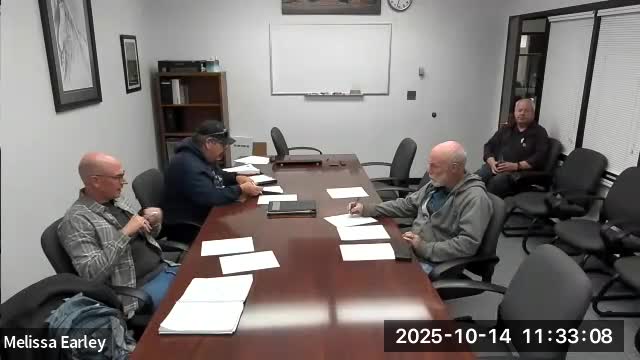
A Clallam County ethics committee meeting Oct. 14 advanced a revised draft of a charter amendment to establish an independent ethics review board, but members left the appeals process undefined and voiced repeated concern about the potential legal and staffing costs of investigating complaints.
A Clallam County ethics committee meeting Oct. 14 advanced a revised draft of a charter amendment to establish an independent ethics review board, but members left the appeals process undefined and voiced repeated concern about the potential legal and staffing costs of investigating complaints.
Committee members said the draft now includes a prohibition on retroactive investigations and a requirement that findings be based on firsthand knowledge rather than hearsay. "I think it's that fourth bullet point of who would select the ethics commissioners," said Jeff Tozer, Commissioner, District 1, summarizing edits including replacing a reference to the prosecuting attorney with a county department director and removing an aspirational sentence from earlier drafts.
Why it matters: the amendment would create a standing mechanism for handling complaints about elected officials. Committee members said they want the board to be investigatory and advisory, not a punitive enforcement body, but they repeatedly returned to whether and how those advisory findings could be appealed and who would bear the cost of any resulting legal work.
Discussion and key points
Appeals: The committee debated whether the charter should prescribe an appeals route or leave appeal rules to the ethics board itself. Rod Fweck, Commissioner, District 3, proposed adding a short sentence to the charter that any decision "may be appealed pursuant to the rules established by the ethics board regarding appeals." Members agreed that leaving appeal procedures to the board would avoid naming a separate appellate body — which could create conflicts if the board or commissioners were both subject to review.
Advisory authority and scope: Members noted the draft contains language that the ethics board "shall impose no penalties or sanctions," and framed the board as an investigative body that would refer potential criminal matters to prosecutorial authorities. "Once it goes into the criminal realm ... then it becomes a different animal altogether and it's out of the ethics board's hands," Tozer said.
Cost and litigation risk: Multiple members voiced concern that even advisory findings can generate substantial county costs through investigations, risk-pool involvement and outside counsel — even when complaints do not reach the courts. Janice (committee member) said she remains "concerned about costs," and others described both direct legal fees and substantial staff time as real fiscal exposures. Committee members agreed that the committee could not eliminate litigation risk, only attempt to limit how the process would operate.
Composition, appointment and duties: Committee members refined appointment language to clarify that members would be appointed by independently elected county officials and that appointing offices would take turns by lot to ensure rotation. Chris Noble, Commissioner, District 2, recommended wording to ensure representation "from each of the commissioner districts." The group also proposed duties that include conducting impartial reviews and issuing written findings publicly on completion of an investigation.
Charter placement and numbering: Members discussed where to place the new section in the county charter. The prevailing view was to add the ethics review board under Article 8 (Public Interest) with a sectional numbering scheme (examples given: 8.100 for establishment, with subsequent subsections for composition, appointments, duties and transparency).
Process and schedule: The committee identified a tight calendar: members said there are roughly five remaining meetings before a Dec. 31 deadline for final placement. "If the board doesn't approve it at this next meeting, then I don't think we come back with another amendment to them," Tozer said, urging a push to finalize wording for the next agenda. The committee agreed that Jeff Tozer will incorporate the edits and send the draft to staff (Lonnie) for placement on the next meeting agenda.
What the committee did not decide
- No formal appeals body was named; the committee favored leaving appeal procedures to rules the ethics board would adopt. - No formal budget estimate or cost cap was provided; members said potential litigation and staff costs are not yet quantifiable and therefore were "not specified." - No formal vote or final adoption of the amendment language occurred at this meeting.
Next steps
The committee will refine language and present a final draft at the next scheduled meeting. Staff will post the revised draft for committee and public review in advance of the Charter Review Commission and the board of commissioners meetings, with the goal of resolving any remaining wording before the Dec. 31 scheduling constraint.
Quotes (selected)
"I think it's that fourth bullet point of who would select the ethics commissioners." — Jeff Tozer, Commissioner, District 1
"Any decision may be appealed pursuant to the rules established by the ethics board regarding appeals." — Rod Fweck, Commissioner, District 3 (proposed wording)
"Once it goes into the criminal realm ... then it becomes a different animal altogether and it's out of the ethics board's hands." — Jeff Tozer, Commissioner, District 1
Ending
Committee members expressed a shared goal of giving voters a clear, workable ethics-review mechanism while trying to limit unintended fiscal and legal consequences. The committee set a path to finalize wording, send the draft to staff for agenda placement, and revisit the amendment at the next commission meeting ahead of the year-end schedule.