Get Full Government Meeting Transcripts, Videos, & Alerts Forever!
Get email alerts on the Criminal Justice topic
No spam. Unsubscribe anytime.
Appeals court hears challenge to remote child testimony and counsel performance in State v. Cassie Tolman
Summary
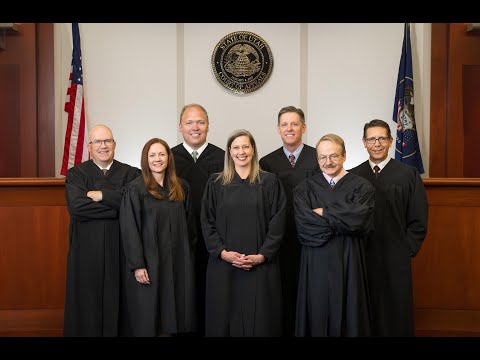
The Utah Court of Appeals heard an appeal from Cassie Tolman challenging the trial court’s use of remote testimony under Utah Rule 15.5 and multiple evidentiary rulings the defense says prejudiced the jury.
The Utah Court of Appeals heard argument in State v. Cassie Tolman about whether the trial court erred in allowing the State’s witnesses (three children) to testify remotely and whether trial counsel’s handling of objections and evidence amounted to ineffective assistance.
Appellant counsel (identified in the record as both Lila Mahmood and Vladimir Mahmoud at separate points) argued the state failed to satisfy Rule 15.5’s requirement that the court find each child would suffer severe emotional distress or would be unreliable if required to testify in the defendant’s presence. Counsel said the court made only a short, on‑the‑record statement granting the motion and did not make the individualized findings the rule requires. Appellant argued that, as a result, "Cassie's right to confrontation was violated," and that the jury’s seeing the defendant removed from the courtroom before the children testified created a reasonable likelihood of prejudice.
Counsel further argued ineffective assistance both on the Rule 15.5 stipulation and elsewhere. Appellant said defense counsel made strategic concessions after chambers discussions that amounted to stipulation to remote testimony (for logistics), and that counsel’s objections to the State’s reference to Children's Justice Center (CJC) interviews were limited to relevance rather than hearsay, which appellant says left the door open to officer testimony that bolstered the State’s narrative. Appellant told the court that because defendant was removed to a kiosk on another floor, counsel could not confer with her in real time and that the restricted conference opportunities and muted camera limited cross‑examination and communication.
The State (Karen Klosnick) responded that the record contains adequate basis for the court’s exercise of discretion, that defense counsel could have had reasonable tactical reasons for his objections or non‑objections, and that Strickland establishes a heavy burden on claims of ineffective assistance—often requiring a post‑trial record expansion (Rule 23B) if the record is incomplete. The prosecutor also said the prior recorded interviews might not have been necessary to the State’s plan and that defense counsel’s objections were consistent with a trial strategy to keep certain material from the jury.
The parties disputed whether a relevance objection (which defense counsel made) was objectively unreasonable where a hearsay objection could have had a different evidentiary consequence, and whether the admission of officer testimony about interview consistency was more prejudicial than playing the prior interviews themselves. Appellant urged the court to reverse and grant a new trial; the State urged affirmance. The court took the matter under advisement for a written opinion.