Get Full Government Meeting Transcripts, Videos, & Alerts Forever!
Get email alerts on the Land Use topic
No spam. Unsubscribe anytime.
Clallam County moves toward new RV, park‑model and ADU rules; public hearing set for Nov. 10
Summary
Clallam County planning staff on Oct. 13 proposed updates to the land‑use code that would regulate residential use of recreational vehicles (RVs) and park models, adopt state ADU requirements for urban growth areas, and clarify definitions and enforcement; a public hearing was set for Nov. 10.
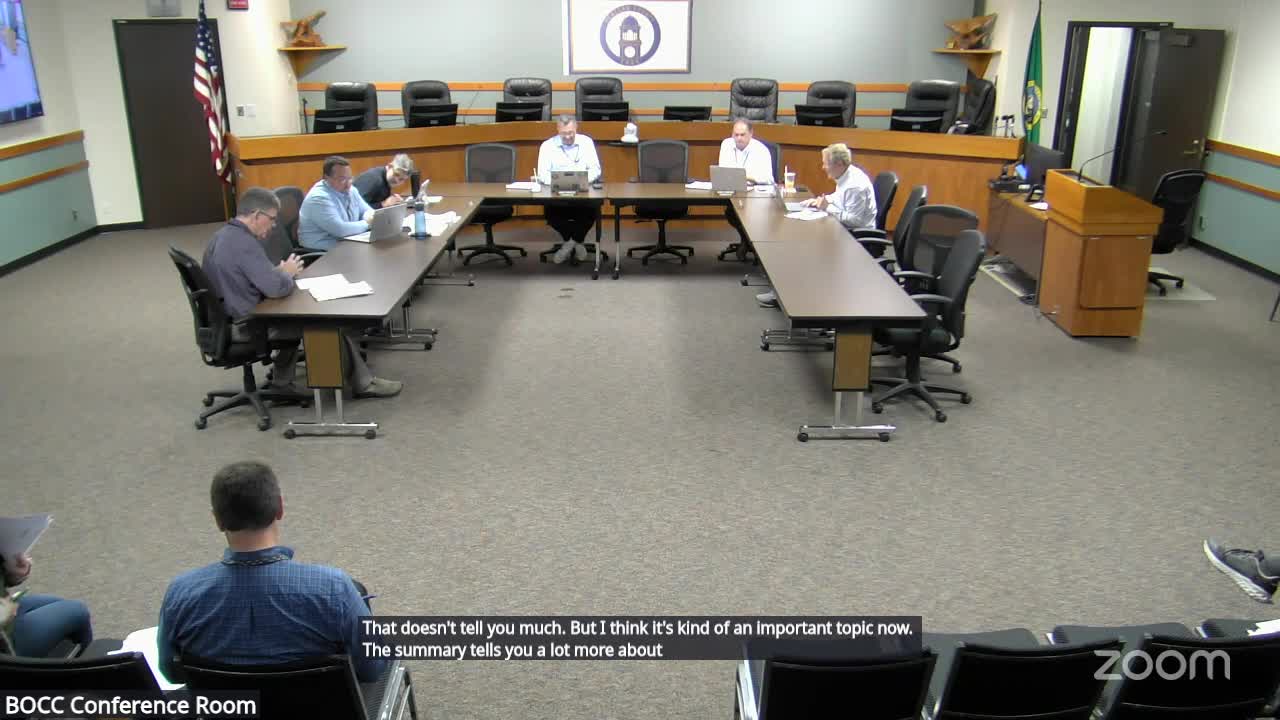
Clallam County planning staff on Oct. 13 proposed an update to the county’s land‑use code to address residential use of recreational vehicles (RVs), park models, tiny houses and accessory dwelling units (ADUs). The planning commission worked through multiple sessions earlier in the year and recommended a package of clarifying definitions, placement criteria, hookups and enforcement steps. The board scheduled a public hearing for Nov. 10.
Key elements of the proposed code amendments include updated definitions to distinguish RVs, park models and tiny houses; limiting occupancy of an RV used as a residence to 180 days within any 12‑month period in certain situations; and ADU changes required by the Growth Management Act (RCW 36 78 6 81 as cited in staff materials) for urban growth areas, including allowing two ADUs per lot in urban growth areas, removing owner‑occupancy requirements for ADUs in those areas and adjusting size and parking rules consistent with state requirements.
Planning staff explained that park models (permanent park model recreational units) were intended to remain short‑term vacation rentals under the county proposal, and that the code needed explicit language to make clear that no property may contain more than one vacation rental. A letter submitted by local realtor associations urged allowing one RV to be used year‑round on a property for hardship or family reasons provided hookups and sewage disposal meet environmental health standards; staff replied that the code proposes sewage disposal 'adequate as determined by the environmental health division,' which could mean sewer, an appropriately sized septic system or documented pumping receipts in limited circumstances.
Commissioners and staff discussed enforceability. Staff noted enforcement would generally require a complaint or environmental health referral and acknowledged the 180‑day limit could be difficult to enforce. Environmental health was identified as the division that would verify hookups and sewage disposal adequacy when necessary. Commissioners asked staff to secure additional input from environmental health before the hearing.
The ordinance package also incorporates state law changes for ADUs in urban growth areas that affect size limits (no minimum below 1,000 sq ft), owner‑occupancy waivers and parking rules near major transit stops. Staff said they would correct language where ‘‘rural zoning districts’’ should read ‘‘outside designated urban growth areas’’ for clarity.
Next steps: The board will open a public hearing on Nov. 10; the hearing may be continued if commissioners decide more time or additional analysis is needed. Staff encouraged public outreach and noted that the planning commission held public hearings in June.