Get Full Government Meeting Transcripts, Videos, & Alerts Forever!
Get email alerts on the Transportation Tip topic
No spam. Unsubscribe anytime.
Clallam County presents 6‑year Transportation Improvement Program, highlights safety plan and Olympic Discovery Trail gaps
Summary
County engineer reviewed the six‑year Transportation Improvement Program (TIP), describing roughly 42 funded capital projects and about 40–50 unfunded projects; staff announced a grant‑funded countywide safety action plan and added fish‑passage projects. Public questions focused on fund balances, trail easements and project prioritization.
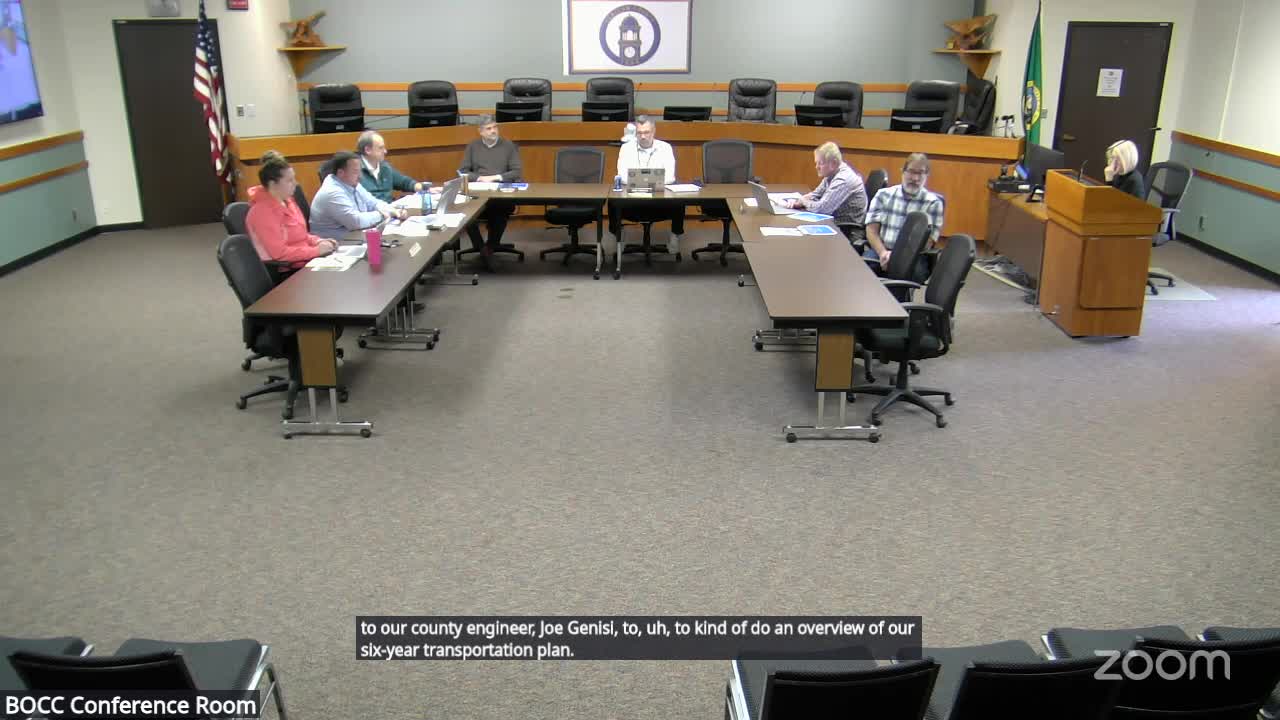
County Engineer Joe Donisi gave an overview of Clallam County’s six‑year Transportation Improvement Program at a public town hall, saying the TIP is “a 6 year transportation improvement program, and it's basically a capital plan for roads, for transportation.” The presentation described which kinds of roads the TIP covers, how projects move from the unfunded to the funded list, and how the public can comment on individual projects.
Donisi told attendees the TIP is designed as a capital program that focuses on collector and higher‑order roads rather than local access streets: many local access roads are not included because the county cannot feasibly program every small segment. He said the list contains roughly 42 funded projects and about 40–50 unfunded projects, and that projects can remain on the list for several years while right‑of‑way and design work are completed.
Donisi also highlighted three new categories added this cycle: a grant‑funded countywide safety action plan intended to identify high‑priority safety locations and support future grant applications, several new fish‑passage projects, and additions to the unfunded list that staff view as good candidates for future grants. He explained project descriptions on the TIP typically include target roadway width, an estimate of daily traffic, and the design standard the county is trying to reach.
Members of the public pressed staff on specific items. Jake Segars (District 3) asked whether the Olympic Discovery Trail is a county roads project and how easements or eminent‑domain issues will be handled; staff responded that the county typically negotiates easements and has not relied on eminent domain in the engineer’s 27‑year experience, and that ownership varies by region — some gaps cross private land, Department of Natural Resources parcels, and federal or tribal lands and will require route planning and negotiation before construction.
Attendees also asked about the road fund and maintenance. County staff said the road fund operates separately from the TIP’s capital program and that projected road fund reserves for the coming cycle were discussed during Q&A. Staff reiterated that the TIP is a planning and capital list; maintenance, emergency repair for slides or snow clearance, and routine work are handled through the county’s road‑maintenance budgeting.
Staff invited written comments, provided printed copies of the TIP and comment forms, and noted transportation staff would be available after the presentation to meet individually about roads on the list.
Ending: The county will accept written comments and hold the engineering handout and full TIP on the county roads website. Transportation staff said they will hold additional public meetings and be available in the courthouse lobby for follow‑up conversations about particular projects and routes.