Austin marks 10th anniversary of 2015 Onion Creek floods; officials urge continued investment in resiliency
Loading...
Summary
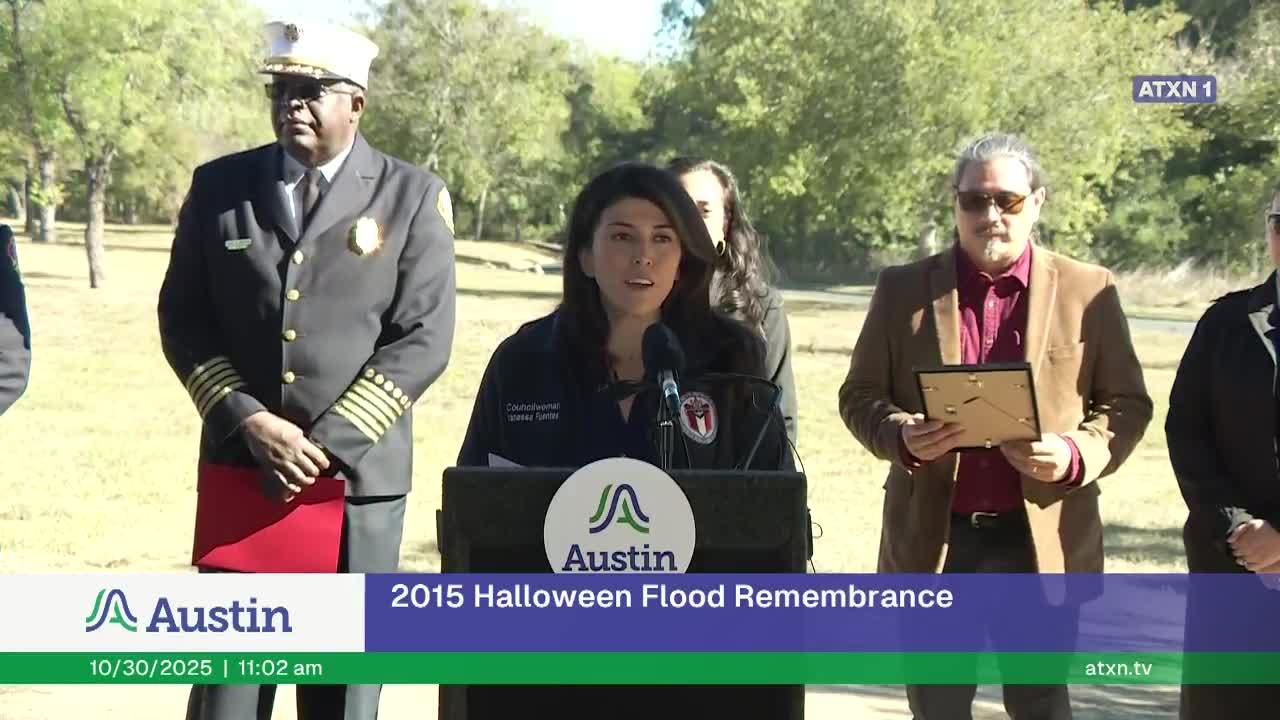
Austin officials, first responders and community leaders gathered at Onion Creek Metropolitan Park on Oct. 30 to mark the 10th anniversary of the 2015 Halloween floods and to urge continued investment in flood resiliency.
Austin officials, first responders and community leaders gathered at Onion Creek Metropolitan Park on Oct. 30 to mark the 10th anniversary of the 2015 Halloween floods and to urge continued investment in flood resiliency.
“Flooding remains one of the most pressing challenges in Austin and for communities across Texas,” Mayor Pro Tem Vanessa Fuentes, councilwoman for District 2, said while opening the commemoration and reading a proclamation designating Oct. 30, 2025, as the 10-year remembrance of the 2015 Halloween flood. “As we remember the lives that were lost and we honor the resilience of those affected, we also recommit to what matters most, keeping Austinites safe and informed and prepared.”
Why it matters: The 2015 storm was among the most destructive in the city’s recent history, in which city officials say three people died and thousands of homes were damaged or destroyed. City leaders said the disaster prompted a series of mitigation steps — including a home-buyout program, upgrades to early-warning systems and expanded community outreach — but warned that more frequent, intense rainfall events are creating new areas of risk.
What officials said they’ve done: Jorge Morales, director of the Austin Watershed Protection Department, said the city has purchased more than 480 properties in the area most exposed to flooding and has improved the flood-warning network and installed new flood-detection cameras. Fuentes said the city launched a flood-insurance assistance pilot that can provide homeowners up to $2,000 toward flood insurance, but she added that “because our federal government is shut down right now, we’re not able to facilitate those connections with the flood insurance program.”
Public-safety and operational changes: Joel Baker, chief of the Austin Fire Department, described operational changes made since 2015, including the establishment of a boat operations team and swift-water response vessels available around the clock and a partnership with the police air unit for helicopter search-and-rescue. Kevin Parker, assistant chief for Austin-Travis County EMS, said paramedics and medics continue to train with fire and police partners and to staff shelters and community assistance centers after flood events.
Parks and memorials: Jesus Aguirre, director of Austin Parks and Recreation, said a collaborative effort with the U.S. Army Corps of Engineers and Austin Watershed Protection transformed about 100 acres of Yarby Bend into recreational amenities, including a one-mile decomposed-granite loop trail, new restrooms and parking, multiple picnic pavilions, an expanded off-leash area and a connector trail to the Onion Creek Soccer Complex. Fuentes also noted a community-led orchard project near Perez Elementary and a memorial bench and plaque installed in the park; she announced a community screening of the documentary Floodplain at Perez Elementary at 6 p.m.
Remaining needs and next steps: Watershed officials said they have identified more than $1,000,000,000 in capital-improvement needs to address drainage and creek systems across the city and that Austin maintains roughly 1,300 miles of storm pipe. Morales said the department is updating hydrologic models for all city creeks and is developing localized-system models to better predict where flash flooding may occur. Officials emphasized proactive outreach — including communications to people experiencing homelessness and coordination on sheltering — as part of a prevention strategy.
Recent events and context: Morales and Fuentes also acknowledged more-recent floods, including flash flooding tied to July storms and fatalities during the weekend preceding the commemoration. Fuentes and Morales expressed condolences to the families of Amado Rebellos and Antonia Connor, who officials said died in the recent storms.
What officials did not decide: The event was a commemoration and information update; no council vote or formal policy adoption occurred at the ceremony. Officials described ongoing work and planning that will require future budget and policy decisions by the council and by regional or federal partners.