Get Full Government Meeting Transcripts, Videos, & Alerts Forever!
Get email alerts on the Disaster Recovery topic
No spam. Unsubscribe anytime.
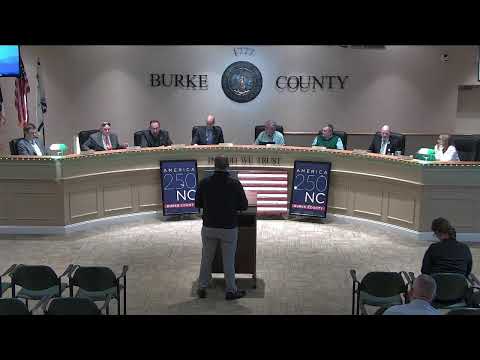
Burke County manager details slow FEMA public-assistance review, dispute over debris-monitoring volumes
Summary
Burke County Manager gave commissioners an extended Nov. 3 update on the county's FEMA public-assistance application for Hurricane Helene relief, saying Burke County spent roughly $11,400,000 on debris and response work and has received about $12,000 in reimbursements so far.
Burke County Manager gave commissioners an extended update Nov. 3 on the county's FEMA public-assistance application after Hurricane Helene, saying the county has paid roughly $11,400,000 for debris and related response and so far received about $12,000 in reimbursement.
The manager described the multi-step FEMA review process that Burke County has been through, including assignment of local FEMA project managers (PDMGs), a large-project review in Washington, D.C., and multiple rounds of technical review under the FEMA Public Assistance Program and Policy Guide (PAPPG). He said the county's final public-assistance application now contains four categories, with the largest share in Category A (debris removal). One earlier building-improvement category was removed after insurance covered those losses.
The county manager told the board that the application has been reviewed and adjusted several times and that rule changes and staffing turnover among FEMA PDMGs had complicated the process. He said the state's NC SMART program later assumed operational management for debris removal, but contractors and the county have continued to prepare the financial documentation required for FEMA.
A technical dispute with the monitoring vendor, the manager said, is the primary reason the county's large-project review was returned for additional work. He described how monitoring company DebrisTech used scanning technology to estimate trailer volume at alternate debris sites and reported a substantial number of trailers as 90% full; FEMA reviewers have questioned whether trailers could reach that percentage and are proposing a lower fill factor (roughly low-to-mid 80s percent), which would reduce reimbursable volumes. The manager said about 43% of Burke County's pay applications included trailers reported at 90% full, and that if FEMA reduces accepted fill rates the county could lose several hundred thousand dollars in reimbursement.
The manager said the county has been advised by its monitoring contractor and their attorneys to "sit tight" while they seek legal remedy, because DebrisTech stands behind its licensed methodology. He thanked county finance staff for extensive documentation efforts and said the county will continue pushing toward obligation from FEMA and the state.
Commissioners asked how the reimbursement timeline affects county cash flow and investments. The manager said using $11.4 million reduced the county's cash-on-hand and thus its investment returns, but he did not estimate a precise dollar loss. Commissioners also asked whether congressional offices had been engaged; the manager said he had engaged the local U.S. representative's office and saw subsequent movement.
The manager concluded that the FEMA public-assistance process is cumbersome, has changed during the review, and will require continued county effort to secure full reimbursement. He said staff will update the board at the regular meeting with any new developments.