Get Full Government Meeting Transcripts, Videos, & Alerts Forever!
Get email alerts on the Education Governance topic
No spam. Unsubscribe anytime.
Guam committee hears bill to extend and stagger Guam Education Board terms
Summary
A public hearing on Bill 201-38 COR considered extending elected and appointed Guam Education Board terms and introducing staggered seats to promote continuity. Witnesses and board members debated term length, election method, petition requirements and candidate age; no formal action was taken.
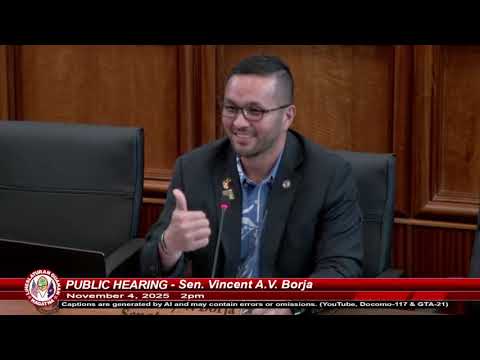
The Guam Legislature Committee on Education held a public hearing on Bill 201-38 COR, a proposal to extend terms and implement staggered elections for the Guam Education Board to increase continuity and institutional knowledge. The bill, introduced by committee chair Senator Vincent Borja, would change current term lengths and establish staggered cycles for elected seats.
Proponents said frequent turnover hampers long-term planning and institutional memory. "Effective long term planning and consistent policy implementation are impossible when leadership is in constant flux," Senator Vincent Borja told the committee. Dr. Eric Swanson, superintendent of schools for the Guam Department of Education, testified in support in his personal capacity and recommended adding a provision limiting elected members to two consecutive terms, with a two-year break required before seeking a third consecutive term: "I firmly believe these changes, with limits, will guarantee fresh voices in the work of educating our children."
Elected Guam School Board member Ron McNinch voiced support for longer, staggered terms but offered several alternate proposals. McNinch recommended electing all nine board members rather than retaining appointed seats, extending terms to six years so three members would be elected per cycle, lowering the minimum candidate age from 25 to 18, and simplifying petition paperwork for candidates. "I believe of the 9 members, we have 6 that are elected. I think you should elect all 9 of them," McNinch said, and suggested that longer terms would help strategic planning.
The Guam Election Commission, represented by Executive Director Maria Pangolinan, provided technical recommendations on electoral timing in the bill language. She said nomination windows should be clarified: no earlier than 100 days before a general election and no later than 90 days after a primary, and 40 days prior to a special election because special elections must be held within 60 days. Pangolinan characterized the commission's role as ministerial but offered to provide further information to finalize statutory timing.
Senators raised competing concerns. Some said longer terms and staggering would preserve institutional knowledge and help multi-year programs survive turnover; others warned extended terms could make it harder for voters to remove underperforming members. Committee members and witnesses also discussed parity with other nonpartisan positions—some senators signaled intent to propose eliminating petition-signature requirements that currently apply only to Guam Education Board candidates.
No formal vote was taken at the hearing. The chair closed the public testimony on Bill 201-38 and recessed the committee to prepare for the second bill. The committee will accept written testimony on the bill for seven days following the hearing.