
Hendry County delays cemetery ordinance after extensive debate on flags, lights and coping
Get AI-powered insights, summaries, and transcripts
Sign Up Free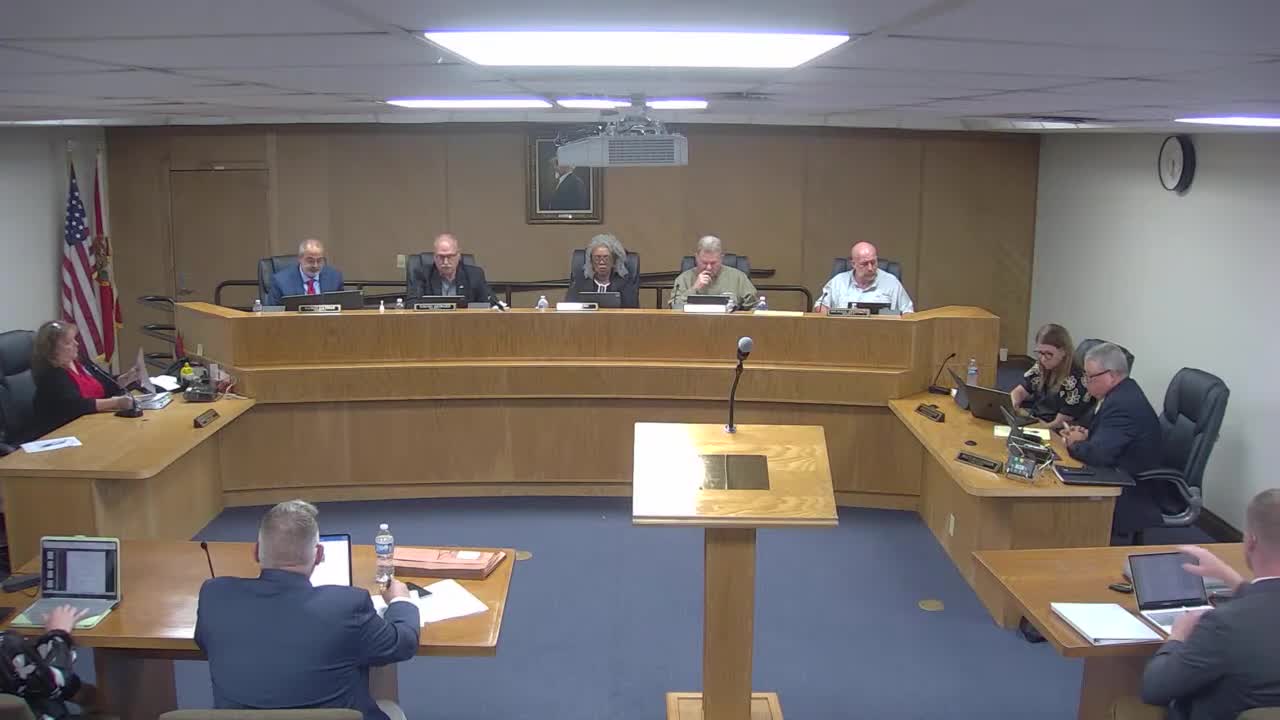
Summary
Hendry County commissioners continued a public hearing on proposed changes to the county cemetery ordinance, asking staff to return with photos and rewritten language on flags, solar lights, rocks and notice procedures before a final vote.
Hendry County commissioners continued a public hearing on proposed amendments to the county cemetery ordinance on Oct. 28 after an extended staff and commissioner discussion over what items should be allowed inside and outside grave coping, how to enforce removal, and how to notify families before county action.
County staff presented a draft ordinance that lists prohibited items and limits on personal mementos, and includes language that currently allows county removal of certain items without notice. Commissioners and cemetery staff questioned whether the written examples in the ordinance would be either too restrictive or too specific to account for the variety of materials families place on graves. Commissioners directed staff to return with clarified language and supporting photos before final action.
Key outstanding issues identified by the board and staff included: whether to allow small solar lights inside coping and, if so, how many per plot; whether rocks or mulch should be permitted inside coping and how that affects maintenance; whether American flags mounted on poles at individual plots may remain year‑round if they are not frayed; and whether the ordinance should say the county "may" remove prohibited items or that the county "will" remove items after notice. Cemetery staff noted that small ground‑level flags and silk flowers weather quickly and that national cemeteries typically display flags on graves only on specific days; staff emphasized operational limits for routine maintenance across all county cemeteries.
Although commissioners voiced differing views—some urging clearer, prescriptive rules so staff and the public know what is allowed, others urging authority for staff discretion to manage unusual or changing situations—the board reached several tentative preferences for the redraft: allow reasonable ornamentation inside coping but not outside the coping line; permit small solar lights inside coping with an increased limit (board discussion centered on changing the limit from two to four lights per plot for typical single or double plots); allow mulch or rock inside coping where families maintain it but provide a clear county process for removal if plots are not maintained; and permit American flags mounted on poles at graves provided the flags are kept in serviceable condition (frayed or faded flags should be removed and properly disposed of). Commissioners also requested a stronger notice process be added where items will be removed—several commissioners preferred a specified notice period rather than immediate removal without notice.
Staff and commissioners agreed to gather photographic examples of problem and acceptable plot conditions from multiple county cemeteries so the board can review possible ordinance language and enforcement protocols. Cemetery supervisor Daniel (name as recorded in the meeting) described operational realities and cautioned that some ground‑level items weather very quickly, while commissioners emphasized fairness and consistency across cemeteries.
Because multiple substantive clarifications were requested and staff will provide photos and proposed redraft language, the board voted to continue the cemetery ordinance public hearing to a time certain: Nov. 12, 2025, at 6 p.m. in Clewiston. No final changes were adopted at the Oct. 28 meeting.
The board asked staff to circulate the redraft and the photographic examples to the commissioners in advance of the Nov. 12 hearing so elected officials and the public can review the proposed ordinance language and the recommended notice and removal procedures.