Get Full Government Meeting Transcripts, Videos, & Alerts Forever!
Get email alerts on the Harm Reduction topic
No spam. Unsubscribe anytime.
Clallam County Board of Health recommends $50,000 in opioid settlement funds to sustain harm‑reduction supplies
Summary
After reviewing program metrics showing rising client contacts and naloxone reversals, the Board of Health on Oct. 21 voted to recommend that county commissioners allocate $50,000 of opioid settlement money to cover harm‑reduction supplies from January through June 2026 while a gaps analysis is completed.
The Clallam County Board of Health voted on Oct. 21 to recommend that the Board of County Commissioners allocate $50,000 in opioid settlement funds to support the Harm Reduction Health Center’s supplies for January–June 2026.
Lede: Health and Human Services staff told the board a Department of Health in‑kind supply funding stream had been reduced by about $100,000 locally; staff asked the board to recommend a six‑month, $50,000 allocation from opioid settlement funds to maintain current service levels while a county opioid gaps analysis is completed.
Why it matters: Harm‑reduction services distribute naloxone, wound‑care kits and provide on‑site partner referrals that staff and partners say reduce emergency visits and support connections to treatment. The funding recommendation is intended to prevent an immediate gap in life‑saving supplies while staff complete a broader needs assessment and present longer‑term priorities to the board.
Data presented: County epidemiology staff reported program metrics for 2025 through the first three quarters: average monthly participant encounters rose to 974 (from 508 in the same period in 2024); partner‑agency participant encounters increased (526 in 2025 vs. 238 in 2024); wound care kits distributed rose to 4,124 (vs. 2,695); and self‑reported overdose reversals during participant visits were 186 through the same period in 2025 (vs. 144 in 2024). Vital‑records data showed 16 confirmed fatal overdoses through July 2025 compared with 18 in the same timeframe in 2024. Staff said the increases largely reflect expanded outreach and more frequent contacts rather than evidence of an increase in the number of people who use drugs.
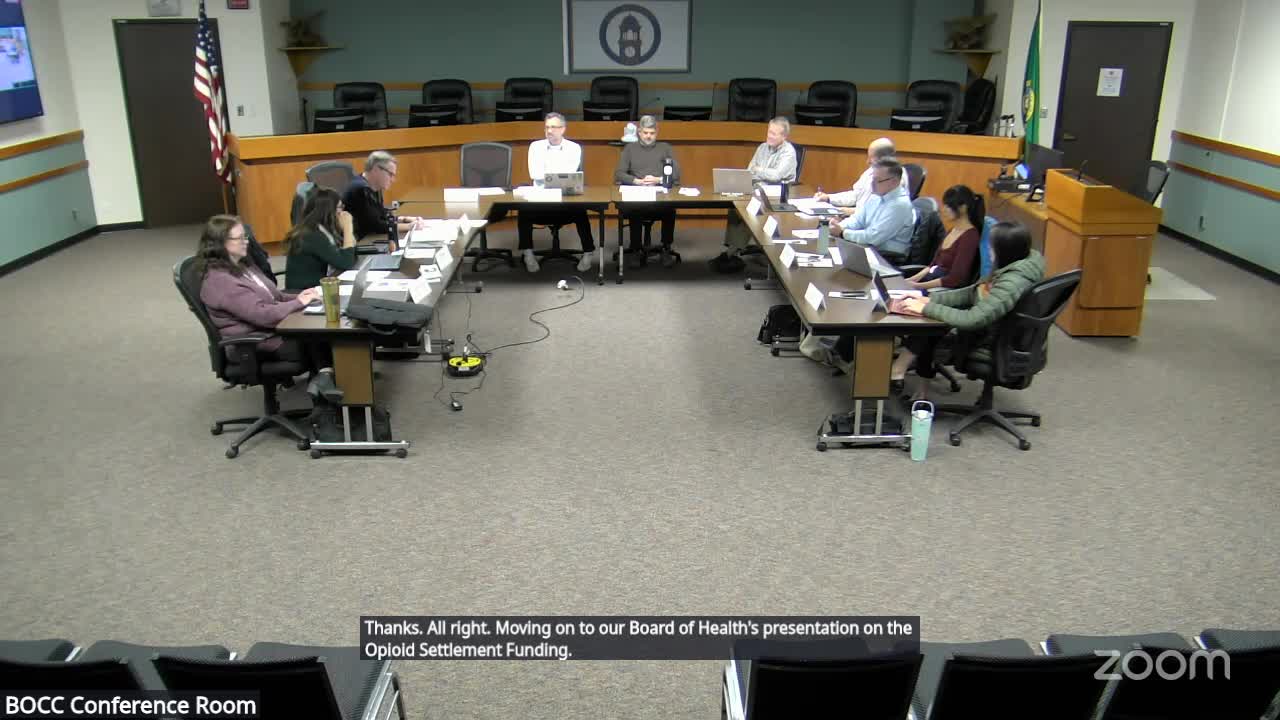
Board action: A board member moved that the board recommend $50,000 from opioid settlement funds be directed to harm‑reduction supplies for January–June 2026; another member seconded. Chair Mike French called for the vote; the assembly responded in favor and the chair said the motion would be forwarded to the county commissioners for final action and possible budget integration.
Budget note and follow‑up: Staff said the six‑month recommendation is intended to allow time for a forthcoming county opioid gaps analysis that will provide data to inform longer‑term funding choices. Board members asked for quarterly updates and for staff to work with partner agencies to collect referral outcome data where privacy and data‑sharing rules permit.
The board’s recommendation does not itself authorize county spending; it asks the county commissioners to apply opioid settlement funds to sustain supplies for the Harm Reduction Health Center through June 2026 while staff complete the gaps analysis.