Get Full Government Meeting Transcripts, Videos, & Alerts Forever!
Get email alerts on the Municipal Governance topic
No spam. Unsubscribe anytime.
Council adopts two code-cleanup ordinances clarifying emergency government and presiding-officer rules
Summary
The Leawood City Council unanimously adopted two ordinances clarifying municipal code language: one amends Section 1-118 (Emergency Government) to expand triggering conditions and one amends Section 1-209 to define who presides when the mayor and presiding officer are both absent.
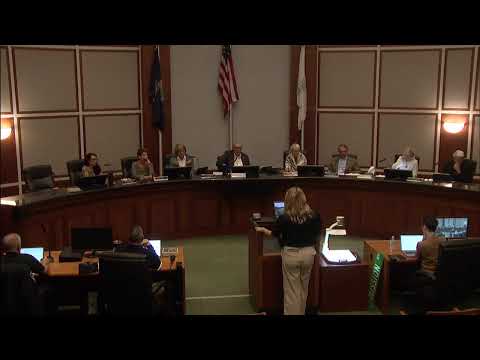
The council unanimously adopted two housekeeping ordinances during its Nov. 3 meeting that adjust municipal-code language on emergency succession and meeting presiding officers.
Emergency-government code change: City Attorney/Clerk Stephen Powell said the existing language triggered emergency government only in a catastrophe in which “all or majority of members of the governing body are fatally injured.” The adopted amendment to Section 1-118 clarifies triggering conditions to include resignation, fatal injury or instances in which a majority of the governing body are unwilling or physically unable to serve. Council voted by roll call; eight members voted aye and none voted no.
Presiding-officer rotation change: The second ordinance amends Section 1-209 to clarify who presides at a council meeting if the mayor and the presiding officer are both absent. The revised code allows the next person on the rotation list to serve as presiding officer until the mayor or presiding officer returns. The ordinance was adopted by roll call vote with eight ayes and no no votes.
Roll-call record: For each ordinance the clerk called the roll and recorded unanimous approval by the eight-member governing body present that night.
What it changes: Both ordinances are phrased as clarifications and do not change the size of the governing body or create substantive new powers; they specify succession and procedural detail for unplanned absences or incapacitation.