
Texas Supreme Court hears dispute over whether statute of limitations bars injunctions in flooding nuisance case
Get AI-powered insights, summaries, and transcripts
Sign Up Free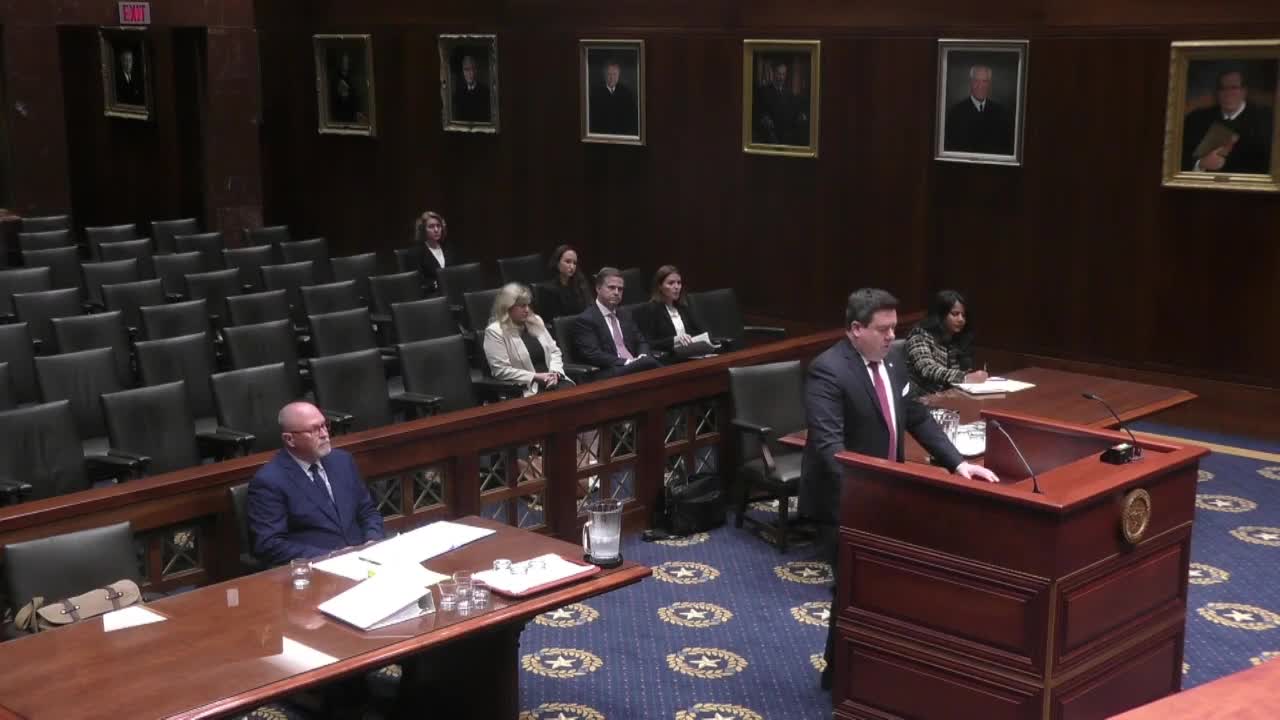
Summary
The Supreme Court of Texas heard argument in Family Dollar Stores of Texas v. JLMH Investments, No. 240543, addressing whether a two‑year statute of limitations that bars damages for trespass and related harms can also defeat a plaintiff’s claim for injunctive relief to stop ongoing flooding and nuisance.
The Supreme Court of Texas heard argument in Family Dollar Stores of Texas v. JLMH Investments, No. 240543, addressing whether a two‑year statute of limitations that bars damages for trespass and related harms can also defeat a plaintiff’s claim for injunctive relief to stop ongoing flooding and nuisance.
Petitioners’ counsel, Mister Downey, told the court the second court of appeals erred and that a plaintiff must prove a viable cause of action to obtain equitable relief. He argued that “the injunctive claim perishes along with the damages claim when a limitations defense proves that the claim accrued more than two years prior to filing,” and asked the justices to treat the limitations defense as dispositive of both legal and equitable remedies in this case.
Respondent counsel, Mister Wert, urged the court to preserve long‑standing Texas rules protecting property owners’ rights to abate nuisances. “Property rights are valued in Texas,” he told the court, and petitioners’ approach would, in his view, “weaken property rights.” Wert emphasized precedent dating to Rhodes v. Whitehead (1863) and subsequent cases that, he said, distinguish prescriptive easements (which can arise after prolonged use) from a nuisance that may be abated regardless of the running of the damages statute.
The bench pressed both sides on the interaction among three doctrines: the two‑year limitations period commonly applied to damages for trespass or other injury to land; the ten‑year prescriptive/adverse‑possession rules that can establish an easement or possessory rights; and equitable doctrines such as laches that can, in extraordinary circumstances, bar equitable relief. Counsel discussed a series of cases cited in argument (including Schneider, CrossTex, Snyder, Rhodes, and others) and whether those authorities require the court to read limitations as cutting off access to injunctions or instead to leave injunctive remedies intact even where damages are time‑barred.
Respondent described the underlying factual setting — an engineered drainage system the defendants contracted to build with the City of Fort Worth that, according to the pleadings, was not completed and has led to ongoing flooding on plaintiffs’ land. Wert said his client was seeking abatement of the nuisance rather than money damages and asked the court to preserve someone’s ability to seek an injunction to stop continuing harm.
The justices asked practical questions about the effect of the rules on subsequent purchasers, bona fide purchasers without notice, and how courts should balance an interest in finality and repose with the need to prevent continuing injury to property. Counsel disagreed over whether the equitable remedy should survive a limitations defense and whether laches or other equitable doctrines provide backstop protections.
No opinion was announced at argument’s end. The court’s decision could affect whether property owners may obtain injunctive relief to stop ongoing flooding where their damages claims are time‑barred and would clarify the interplay of Texas statutes and equitable doctrine in nuisance and trespass cases.