
Board keeps solar and battery-storage law hearings open after residents cite safety, setback and application concerns
Get AI-powered insights, summaries, and transcripts
Subscribe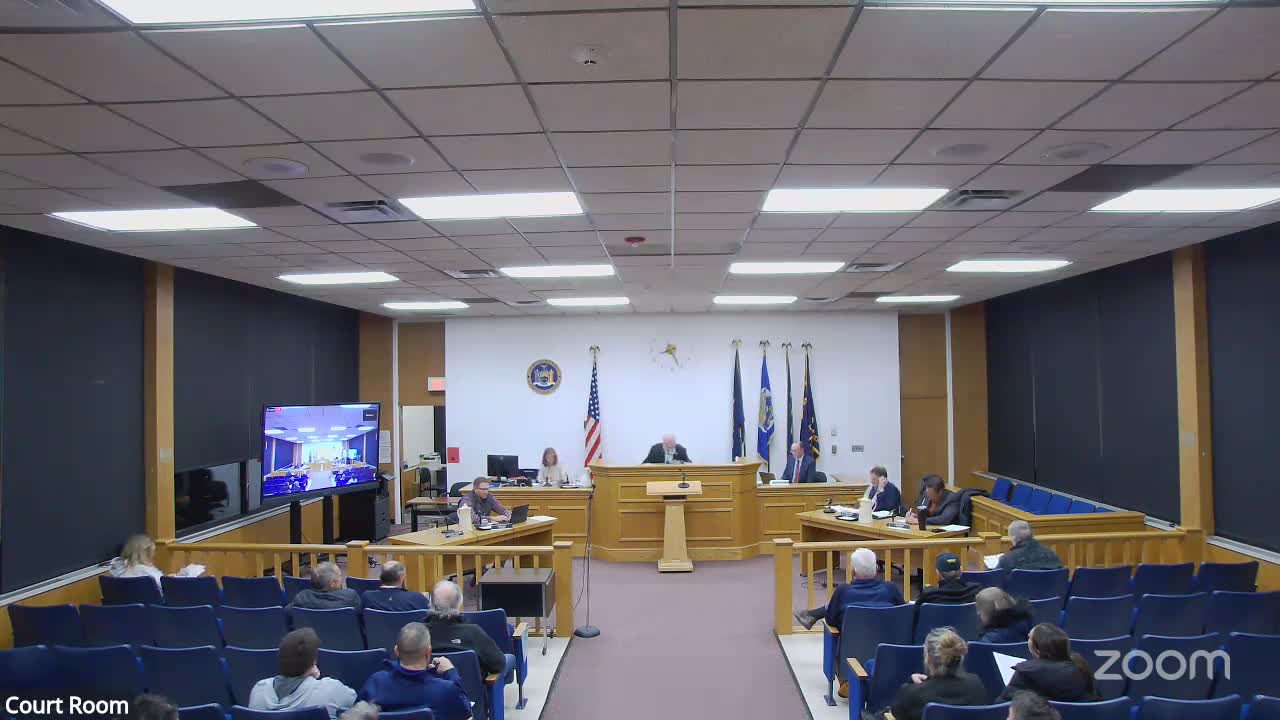
Summary
The Town Board left open public hearings on proposed solar and battery-storage local laws after residents urged stricter safety standards, larger setbacks and stronger application requirements.
The Grand Island Town Board on Nov. 3 read notices and kept open two linked public hearings on local-law proposals addressing solar energy facilities (Local Law No. 4 of 2025, amending chapter 407-165.1) and battery energy storage systems (Local Law No. 5 of 2025).
Multiple residents told the board they support solar in principle but are worried about large-scale installations and, especially, the placement of lithium-ion battery storage close to homes. Bob Davis said early enthusiasm for rooftop and small-scale solar has been replaced by concern about large battery systems sited near neighborhoods. Davis cited incidents in California and asked the board to consider chemistry limits and larger setbacks; he said the U.S. Environmental Protection Agency suggests a 330-foot setback on its website.
Jim Daigler provided detailed written comments he said he had marked up in the draft local law and urged additional, specific application requirements: a defined operator with clear authority and responsibility, a monitoring and maintenance-management plan to be part of the application, a noise-impact study for cooling and HVAC equipment, detailed decommissioning cost estimates, and wetland mitigation plans where wetlands are present. Daigler also raised a procedural question, saying the proposal could be a Type I action under SEQR and asked where the long EAF and the significance determination are in the record.
Other speakers urged evacuation planning and suggested the town prohibit lithium-ion chemistry or at least require newer, less-risky chemistries. Kathy Veil said: "We live on an island. There are only two ways on and off. Unless we have some kind of evacuation plan ... I don't think this should go forward at all."
The board moved to leave both hearings open and forward comments and marked-up materials to the planning board for its review. No final regulatory language or local-law adoption occurred at the meeting; the planning board will review the draft laws and the town will consider revisions based on the planning-board input and additional materials requested by residents.
What was requested by commenters: larger setbacks for battery storage, an evacuation plan, explicit application requirements (operator designation, monitoring/management plans, noise study, decommissioning costs), wetland mitigation and confirmation of all required state and federal permits before issuance of a local special-use permit.