Richmond tourism posts stronger 2024; leaders cite lost conventions without headquarter hotel
Loading...
Summary
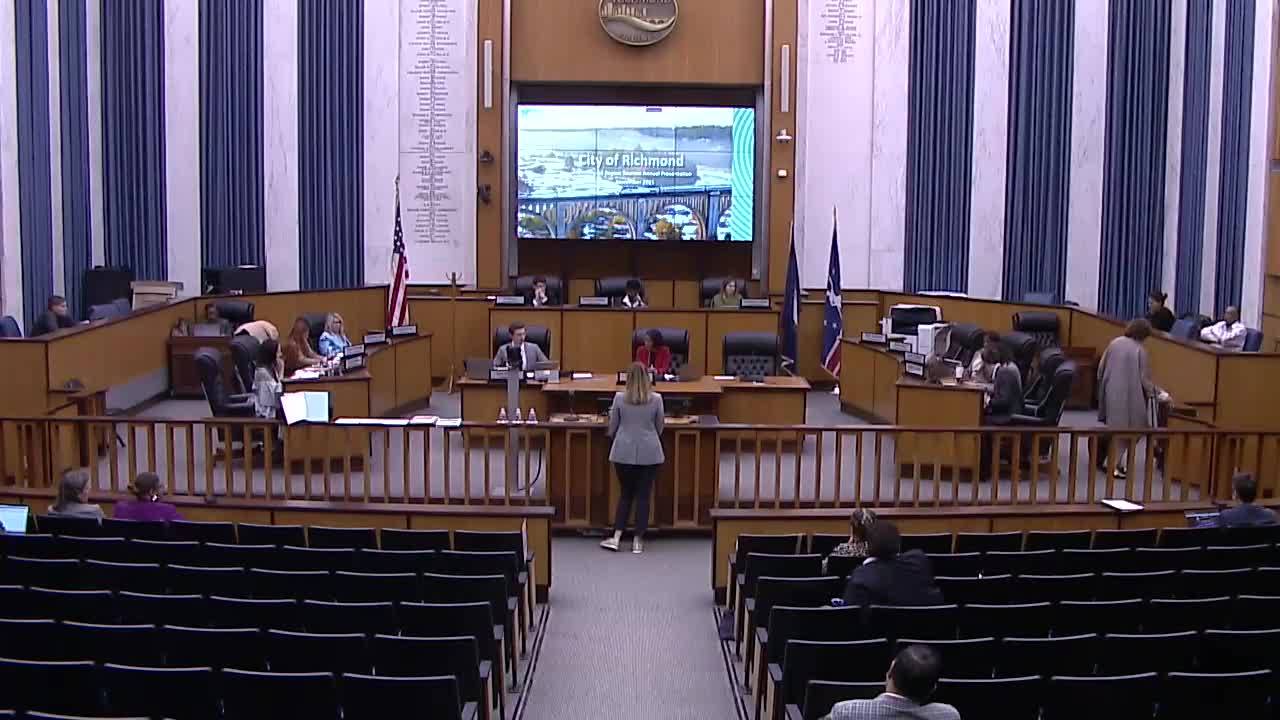
More than 18 million visitors spent nearly $4 billion in the Richmond region in 2024, the Richmond Region Tourism director told city council committee members, citing 8.2% growth in city tourism spending and nearly 9,000 local jobs supported.
More than 18,000,000 visitors spent nearly $4,000,000,000 in the Richmond region in 2024, and tourism officials said that represents about a 5% increase from the prior year, Catherine O'Donnell told the Organizational Development Standing Committee. “We are having a terrific trend in tourism and this fiscal year is continuing the same,” she said.
O'Donnell, who led the Richmond Region Tourism presentation, said tourism is an economic driver and a jobs creator: city tourism spending was up 8.2% for calendar year 2024, generating about $51,200,000 in local taxes and supporting nearly 9,000 jobs. She credited new and existing assets — notably the Allianz Amphitheatre — and a regional marketing approach covering seven localities.
“It's been such a driver,” O'Donnell said of the Amphitheatre, noting some events draw more than half their attendees from out of state and that those visitors spill into downtown hotels, restaurants and attractions. Sports and group business remain a major segment of convention center activity, she said, naming USA Boxing and multi‑sport tournaments among recent convenings that bring attendees who stay and spend locally.
O'Donnell gave specific figures on forgone business tied to hotel capacity: since January 2019 through September 2025 the city has lost 238 events that were considering Richmond because it lacks a headquarter hotel adjacent to the convention center, she said — roughly 421,000 room nights and about $337,000,000 in economic impact that did not occur. She also cited regional competition: a 900‑room Kalahari resort being built in Spotsylvania and a 500‑room headquarter hotel under construction near Raleigh.
Marketing funded by the Tourism Improvement District (TID) supports year‑round advertising, O'Donnell said. She cited a major influencer and advertising push that produced tens of millions of impressions and attributed roughly $4,400,000 in economic impact to TID‑funded campaigns. O'Donnell highlighted an upcoming TBEX meeting in June — estimated at 500 content creators and planners — and said those events drive long‑term earned media and visitation.
Danielle Fitzhugh, vice president of community relations for Richmond Region Tourism, described workforce and community programs that accompany marketing. Fitzhugh said the team has run education and workforce initiatives (including VCU activations that engaged students and families), a digital “I'm tourism” program, and a gamified set of regional digital trails tied to next year's Richmond Region 250 commemoration. She also described grants to local sports organizers and the second annual Black RVA community awards. “It's an honor for our team who loves this community so dearly to be the ones that get to share it with the world,” Fitzhugh said.
Council members asked about year‑to‑date metrics, and O'Donnell said hotel occupancy and monthly revenue metrics point to continued growth but that final visitor‑spending figures lag by many months. Members also asked about funding and the TID; O'Donnell explained the local hotel occupancy tax and the TID fee both generate revenue for Richmond Region Tourism and that contributions vary by locality based on room inventory and occupancy.
The tourism presentation closed with council praise for the team and a reminder from presenters that additional hotel capacity — specifically a headquarter hotel near the convention center — remains a central constraint on capturing larger convention and event business.
Looking ahead, O'Donnell and Fitzhugh urged continued investment in the TID, coordinated regional marketing, and community partnerships to convert visitation into local spending and to support workforce pipelines for hospitality jobs.