Get Full Government Meeting Transcripts, Videos, & Alerts Forever!
Get email alerts on the Police Commission topic
No spam. Unsubscribe anytime.
Commission weighs police commission's role on complaints, promotions and budget approval
Summary
The commission debated draft charter changes affecting police commission responsibilities: whether it should "review" (not "investigate") citizen complaints, how the commission and chief should collaborate on promotions, and whether the police commission should approve the police budget prior to town-manager submission.
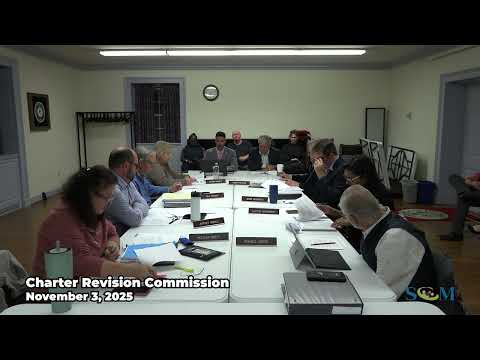
Commissioners, police commissioners and town staff spent a large portion of the Nov. 3 meeting reviewing proposed charter language that would change the police commission's duties on citizen complaints, promotions and budget approval.
Citizen complaints and investigations
Commissioners raised concerns about language that would change the police commission's duty from a mandatory obligation to a permissive one. Several participants said shifting from "shall be responsible" to "may" would make review of complaints optional and could undermine the commission's oversight role. One commissioner said she was "very uncomfortable" with language that would make complaint review optional. Police commissioners and the town attorney clarified the intent of the proposed edit: the commission would not conduct field investigations or interview complainants but would "review the investigation" performed by department investigators.
Police budget: submission and approval
The meeting also focused on whether the police commission and the chief should have a formal role approving the department's proposed budget before it is submitted to the town manager. Supporters said continuing to submit the police department's initial request directly to the board of selectmen had been a local practice and an MOU in a prior administration intended to ensure the selectmen saw the department's needs. Mark (town manager) said the town manager ultimately submits the consolidated town budget and that the chief's budget normally flows through the town manager's office; he acknowledged there had been an MOU in the past to provide the board of selectmen early visibility. Commissioners considered a compromise to require that the commission "review and approve" the proposed police budget and that it be submitted to the town manager (and optionally also provided to the board of selectmen for informational purposes).
Promotions and HR/collective bargaining
Commissioners expressed caution about inserting promotion authority into the charter. Several speakers noted promotions follow a written exam, multi-stage interviews, departmental recommendations, collective-bargaining rules and HR procedures. The police chief and commission members said the commission receives the chief's recommended candidate after the exam/interview process and then votes. Commissioners suggested tabling sections that would change appointment, promotion or removal authority (sections E and F) until the commission could consult further with the police commission, the chief and the town manager and review any relevant MOUs and union contract provisions.
Outcome
The commission did not finalize charter language on these items that evening. Commissioners agreed to solicit additional input from the police commission, the chief, the town manager and the town's labor/HR staff and to bring back revised wording that clarifies that the police commission reviews department investigations (rather than conducting field investigations), defines the budget submission path, and respects collective bargaining and HR roles on promotions.
Direct quotes are limited to the speakers listed in the attribution section below.