Get Full Government Meeting Transcripts, Videos, & Alerts Forever!
Get email alerts on the Board Of Finance Reporting topic
No spam. Unsubscribe anytime.
Charter debate centers on Board of Finance's authority to request monthly reports
Summary
The Simsbury Charter Revision Commission debated whether the Board of Finance should have express authority in the charter to require regular financial reports, with proponents saying monthly reporting would catch problems earlier and opponents warning it could imply supervision of town staff.
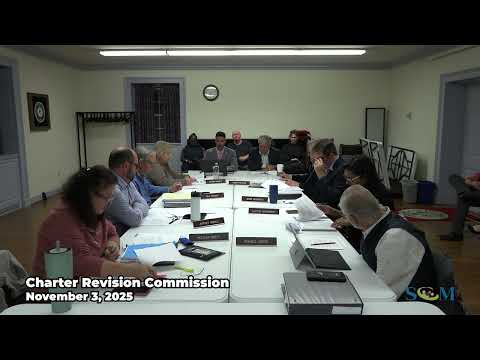
The Simsbury Charter Revision Commission spent significant time Nov. 3, 2025, discussing whether the town's Board of Finance should have explicit authority in the charter to require periodic financial reports, including monthly updates from the Board of Education.
Proponents, including members of the Board of Finance who addressed the commission, said monthly or "reasonable" reporting would let the board spot deficits and trends earlier. "We learned of deficits from the Board of Education right before the end of the fiscal year, which we would have seen coming if we'd been getting better reports," one Board of Finance member said. The speakers argued the board exists to provide independent oversight of town finances and the charter should give it the tools to do that.
Opponents cautioned against encoding supervisory authority over town employees in the charter. Mark (no last name given), who spoke in his capacity as town manager during the meeting, said the town manager's office is responsible for administering the budget and providing resources and reports to boards and commissions. "The town manager has primary responsibility for administering the town and seeing that those policies and programs are carried out," Mark said. Staff and some commissioners said the town manager's duties already include supplying information necessary for boards to carry out their duties.
Legal advisers and several commissioners raised practical concerns about scope and resources. They asked who would determine when requests were "reasonable," and whether the finance director (who is also town treasurer) would have the capacity to prepare the additional reports without diverting staff from other duties. One commissioner suggested using the word "request" or "require" with a qualifier such as "reasonable" rather than "direct," to avoid implying the board would supervise town employees.
The commission also discussed existing statutory and charter language. Town counsel noted that the charter already contains provisions (in a separate section) directing the town manager to provide resources, information and analysis to boards and commissions. Supporters of the Board of Finance's proposal said that language has not prevented prior shortfalls from being discovered only late in the fiscal year.
The commission did not adopt final text at the Nov. 3 meeting. Commissioners asked staff to rework draft language so it is consistent across the charter and to present a one-page proposal the Board of Finance and staff can agree on. The discussion ended with a proposal to resolve the wording (for example: "may request," "shall require," or "may request on a reasonable basis") in a future draft after consulting with the finance director and town manager.
Proponents said the change is intended as an oversight tool for future elected boards as well as a means to protect taxpayers from unexpected shortfalls; opponents said the town manager system should retain primary administrative control over staff and the mechanics of reporting.
No formal charter amendment vote was taken that evening.