Council denies Mountain Manor Springs rezone after planning commission recommendation
Summary
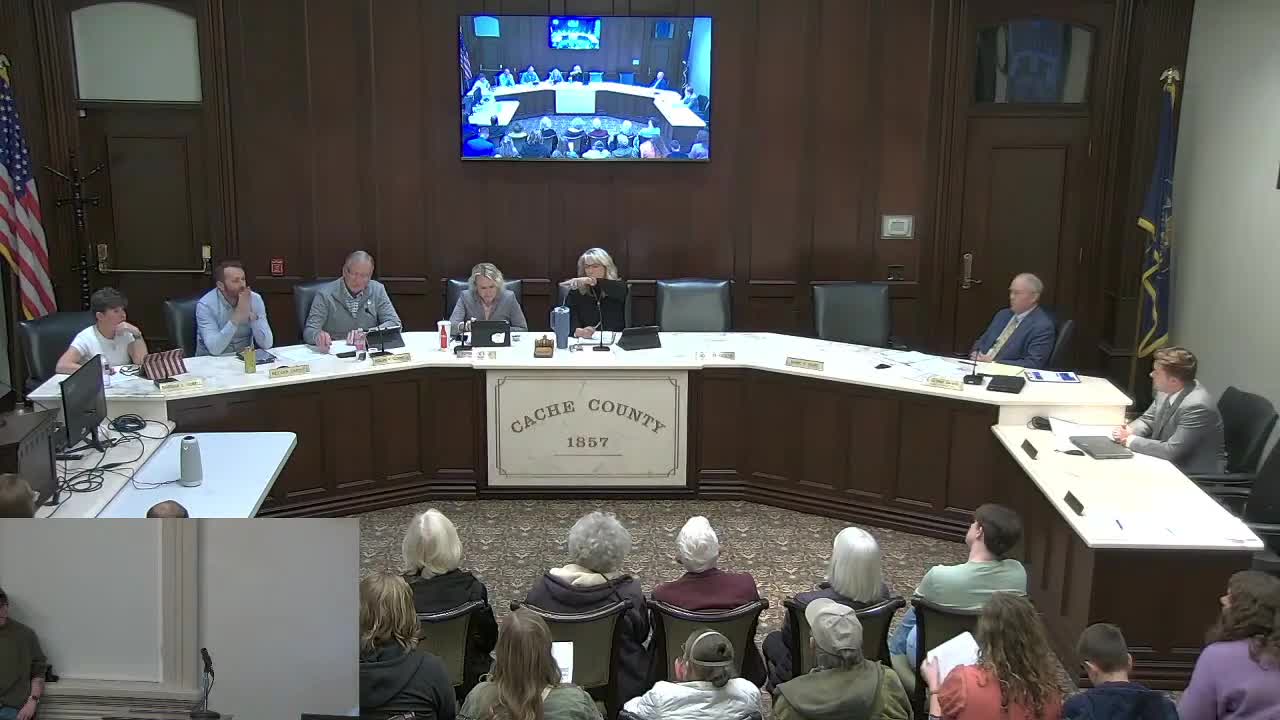
The Cache County Council denied a proposal to rezone nearly 99 acres in the Mountain Manor Springs area from agricultural A-10 to RU-2 rural residential, following a unanimous planning commission recommendation that the site is not suitable for that density or services.
The Cache County Council voted to deny a rezone request for a 98.6-acre parcel known as Mountain Manor Springs that sought to change zoning from A-10 (agriculture) to RU-2 (rural residential), which could have allowed up to 49 lots.
Angie Zederquist, interim director of Development Services, summarized the application and the planning commission’s findings. The planning commission had held a public hearing on Oct. 2 and recommended denial 6–0, concluding the request was not compatible with RU-2’s purpose, was not close to a municipal boundary (Mendon is about 1.65 miles away), was inconsistent with the general plan (the area is identified as agricultural and ranching/mountain-rural/conservation), and was not appropriately served by public roads — the only access was a private drive.
A public commenter, Benjamin Chandler of Providence, spoke in opposition to the rezone, saying Cache County is losing farmland and that vacant commercial lands in incorporated cities could provide development opportunities. No proponents appeared at the hearing. After the public comment period closed, the council suspended the rules and followed the planning commission’s recommendation to deny the rezone; the motion passed by voice vote.
The planning commission and council emphasized concerns about infrastructure (lack of secondary access and public services), compatibility with the general plan’s agricultural and conservation designations, and municipal concerns about service impacts.